


The Eswatini Water and Agricultural Development Enterprise (EWADE) has cemented its position as one of the country’s most influential platforms for local economic participation, using its procurement function to drive widespread enterprise growth.
Over the past three years, EWADE has channelled more than E1.06 billion to Eswatini owned companies, a scale of spending that places the institution at the centre of the country’s push for inclusive growth, rural upliftment and private sector competitiveness.
The allocation has strengthened domestic supply chains, stabilised small contractors, expanded business capacity and supported thousands of jobs across the agricultural, construction and services sectors. As Eswatini works to build a more resilient and diversified economy, EWADE’s strategy demonstrates how development financing can be deliberately structured to retain economic value within the country rather than flowing outward through foreign procurement.
LOCAL SPENDING GROWTH
EWADE’s procurement commitments to local businesses have expanded significantly over the past three financial years, driven by a corporate philosophy that views procurement not as a procedural task but as a tool for economic stimulation.
In the 2022/23 financial year, when the national economy was still rebalancing after the severe strain of the COVID 19 pandemic, EWADE spent E274.9 million on local businesses for land development, bush clearing, irrigation system installation, on farm infrastructure and a range of technical services. The spending provided liquidity to smaller firms that had struggled to recover from the pandemic’s contraction in capital availability and market demand.
Momentum accelerated in the 2023/24 financial year. Local procurement surged to E712.5 million, with Eswatini’s growing base of Micro, Small and Medium Enterprises (MSMEs) capturing the majority of contracts. These firms delivered construction works, agricultural services, operational support and irrigation infrastructure, reinforcing their position as a central engine of national economic growth. The allocation also demonstrated a strategic shift towards enabling long term enterprise competitiveness rather than short term project delivery.
The trend continued in the 2024/25 financial year. Although procurement disbursements eased to E71.04 million, the spending was focused on broadening participation among emerging and mid-tier contractors, especially in land preparation, bush clearing and water infrastructure support services. The intent was to ensure that localisation benefits were not confined to large or established firms but diffused across different levels of enterprise maturity.
Combined, the three years reflect a procurement strategy engineered to strengthen domestic industry and embed national firms within long term agricultural and water infrastructure value chains.
PROJECT LEVEL IMPACT
A large proportion of EWADE’s recent spending has been driven by the MkhondvoNgwavuma Water Augmentation Programme, (MNWAP) one of the most ambitious water security projects undertaken in the country. Under MNWAP Phase 1A, the construction of the Mpakeni Dam has become a focal point of domestic enterprise participation.
Since construction began on February 1, 2024, more than E660.3 million has been disbursed to Eswatini subcontractors and equipment suppliers. Nearly 200 local companies have benefited from downstream opportunities generated by the project. These include firms providing quarry materials, transport services, bush clearing, security, machinery hire, fuel supply, mechanical works and labour.
The scale of participation directly challenges long standing criticism from detractors who have claimed that EWADE favours foreign companies at the expense of local industry. What these criticisms overlook is that MNWAP is a multi-phasal programme, with different project layers designed to create both upstream and downstream openings for domestic enterprises.
The disbursements show that while certain highly technical activities require international expertise, the bulk of local value creation is achieved through subcontracting, labour mobilisation and equipment support. EWADE’s approach ensures that large infrastructure investments recycle money back into the domestic economy, stimulating rural commerce, contracting services and ancillary business activity.
NATIONAL POLICY ALIGNMENT
EWADE’s procurement model aligns closely with national development priorities across several strategic policy frameworks. The institution’s philosophy is anchored in strengthening domestic supply chains, improving the competitiveness of local enterprises, reducing reliance on imported services and advancing job creation.
The National Development Plan 2023 to 2028 emphasises economic diversification, private sector development and employment expansion. EWADE’s procurement structure directly supports these objectives by ensuring that development spending remains within the domestic economy and is channelled to businesses capable of stimulating local value chains, particularly in rural communities.
Vision 2022, although officially concluded, remains a reference point for national ambition. Its emphasis on building a self sustaining, resilient economy is reflected in EWADE’s decision to invest more than E1 billion in local companies. The focus on agricultural infrastructure, water management and rural development aligns strongly with the Vision’s core priorities of poverty reduction, private sector dynamism and improved national competitiveness.
The Eswatini Strategic Road Map prioritised job creation, revitalised private sector activity and enhanced service delivery. EWADE’s direct engagement of local contractors and MSMEs advanced these commitments by stimulating productivity and widening economic participation.
The Post COVID 19 Recovery Strategy stressed the need for localisation, economic diversification and enterprise resilience. EWADE’s procurement outlays offered critical support to firms strained by the pandemic, helping restore employment, inject liquidity and secure the survival of small and medium businesses that form the backbone of the economy.
ENTERPRISE DEVELOPMENT OUTLOOK
Through its structured procurement model, EWADE is shaping a stronger domestic private sector landscape. The institution has become an important stabiliser for contractors, machine suppliers, engineering firms, labour providers and agricultural service providers.
Its spending has expanded local technical capacity, improved the sophistication of small enterprises, boosted investment in equipment and helped contractors scale up to meet the demands of modern infrastructure development. In rural regions, the impact has been particularly visible, where new income flows have supported smallholder communities and local service providers.
As Eswatini prepares for long term water and agricultural investments designed to underpin food security and commercial agriculture, EWADE’s role in consolidating local enterprise participation will be essential. Its localisation approach positions the institution as a central development catalyst in the country’s economic trajectory.
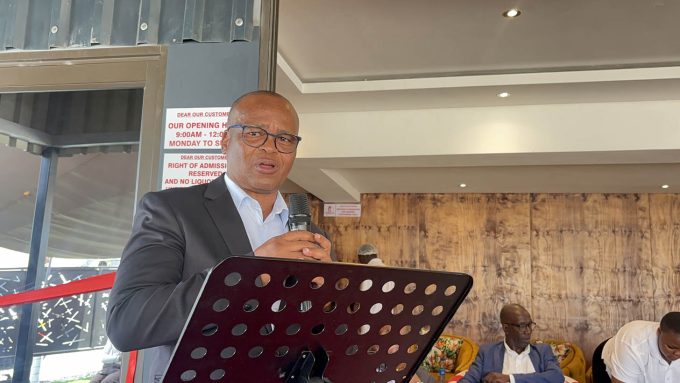
Chief Executive Officer Dr Samson Sithole said the organisation’s focus on supporting local companies reflects a strategic and principled development approach.
“Our commitment to supporting local companies is not driven by favour but by principle,” he said. “At EWADE, our procurement function is grounded in transparency, accountability and strict adherence to legislation, funding agency requirements and our internal governance systems. We go beyond compliance. Our model is designed to mitigate risk, promote sustainability and create long term national value.”
Dr Sithole highlighted that local MSMEs remain a critical pillar of the institution’s development philosophy.
“Micro, Small and Medium Enterprises are essential drivers of job creation, innovation and economic resilience. When they grow, the country grows. This is why we deliberately channel opportunities to domestic firms wherever capacity is available. MNWAP is a clear example, with hundreds of Eswatini companies benefiting from subcontracting opportunities.”
He added that procurement remains one of EWADE’s most effective instruments for stimulating domestic economic activity.
“Our infrastructure investments are designed not only to expand water security and agricultural productivity, but also to strengthen domestic supply chains and widen economic benefits for local communities. Eswatini’s development must create value for Eswatini’s people, and this principle informs our decisions at every level.”
LONG TERM NATIONAL IMPACT
Through this procurement centred approach, EWADE has repositioned procurement as an economic lever rather than an administrative function. Its investment in local businesses has supported thousands of livelihoods, expanded skills capacity, generated business sustainability and contributed to national productivity.
As the institution continues to advance transformative water and agricultural infrastructure, its commitment to domestic enterprise development will remain central to the country’s long term growth prospects.



















Leave a comment