

MBABANE – As Eswatini steps into 2026, the country does so with renewed economic optimism, underpinned by upbeat projections from international financial institutions.
In their reports released during the course of 2025, the international financial institutions foresaw the kingdom entering a phase of stronger, investment-led growth.
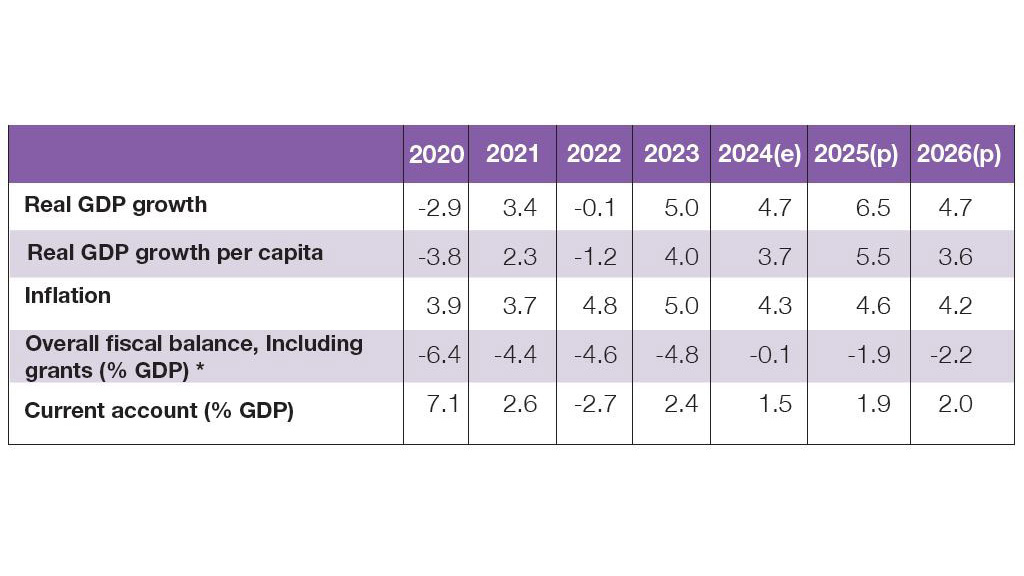
According to the International Monetary Fund (IMF) Country Report No. 2025/279, Eswatini’s real Gross Domestic Product (GDP) is projected to accelerate to 4.6 per cent in 2026, driven largely by a surge in domestically funded public and private capital projects.
The outlook positions 2026 as a year in which major projects move from planning to execution, setting the pace for economic activity across multiple sectors.
In its assessment, the IMF notes that ‘near-term growth is expected to strengthen,’ supported by ‘domestically funded public and private capital projects,’ before moderating later as the investment impulse fades. For 2026, however, the message is clear: Investment will be the defining feature of the year ahead.
The IMF identifies a range of projects expected to underpin growth momentum, spanning energy, infrastructure and industrial development. These investments are expected to lift domestic demand, stimulate construction activity and generate spill-over benefits for transport, manufacturing and services.
Among the flagship initiatives shaping the outlook is the Strategic Oil Reserve Project, which is expected to strengthen Eswatini’s energy security while stimulating activity in construction, logistics and storage services. The project is viewed as particularly important in reducing the country’s exposure to global oil supply disruptions and price volatility.
At the same time, energy generation projects, including biomass and solar electricity investments, are expected to expand domestic power capacity.
The IMF has repeatedly highlighted that Eswatini imports between 70 and 80 per cent of its electricity, leaving the economy vulnerable to external shocks. Progress in domestic generation is, therefore, seen as a structural improvement that could enhance competitiveness and reduce production costs over time.
*…
Stable financial sector supports growth prospects
MBABANE – The growth outlook for 2026 is further supported by a stable financial system.
The International Monetary Fund (IMF) reports that Eswatini’s banking sector remains well capitalised and liquid, with capital adequacy and liquidity ratios comfortably above regulatory thresholds.
However, it also cautions that borrowing costs for the private sector may remain elevated, partly due to government financing needs.
The fund notes that containing fiscal pressures will be important to ensure that credit remains available for productive investment during the growth phase.
Macroeconomic stability remains a key pillar supporting the positive outlook. The IMF projects that inflation will ease slightly to about 3.5 per cent in 2025, before edging up in 2026 due mainly to negotiated electricity tariff increases.
Inflation is expected to broadly follow South Africa’s trajectory, reflecting Eswatini’s currency peg.
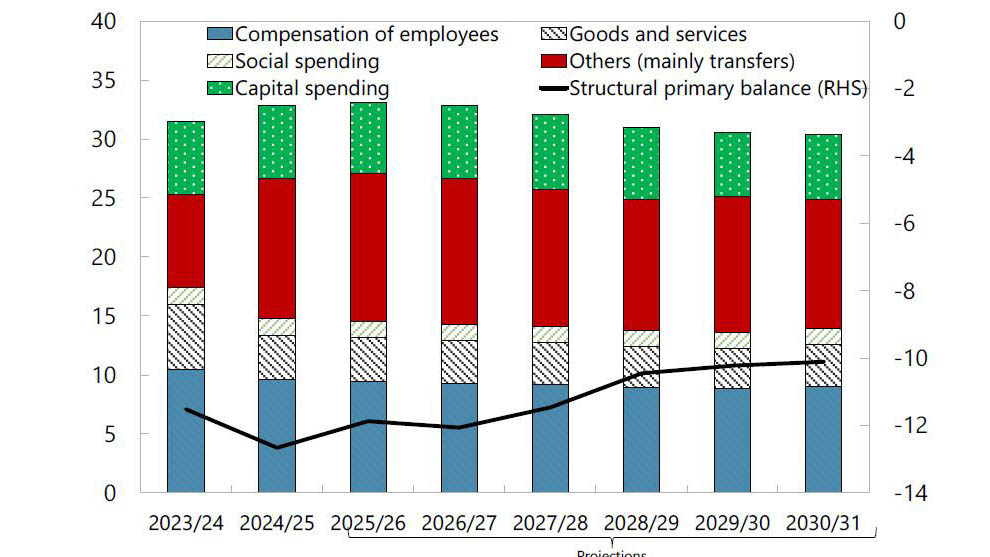
On the fiscal front, the IMF notes that public debt remains moderate, standing at around 39 per cent of GDP, while the authorities have made progress in reducing arrears and strengthening public financial management.
The narrowing of the policy rate differential with the South African Reserve Bank has also helped support the exchange rate peg and reduce capital outflow pressures, contributing to a more predictable environment as 2026 begins.
Externally, Eswatini’s current account is expected to shift temporarily from surplus to a small deficit in 2026, largely due to higher imports linked to capital projects.
The IMF insists that this deterioration is investment-driven rather than structural and should ease as export capacity expands.
*Full article available in our publication
















Leave a comment