


The Kingdom of Eswatini stands at a pivotal juncture, where last year’s achievements, attained alongside persistent challenges, provide an air of optimism for 2026.
Drawing from the prime minister’s End of Year Statement, the optimistic reflections of Business Eswatini’s President Mvuselelo Fakudze, and an independent review of the business sector by our Business Desk, citing insights from the World Bank, IMF and other authoritative sources, there emerges a striking consensus that 2025 was a year of tentative progress, thanks to the resilience of our economy.
This progress, while encouraging, falls short of the transformative leap our nation requires.
At the heart of this consensus is the economy’s modest rebound. Prime Minister (PM) Russell Dlamini highlighted a 3.4 per cent increase in real Gross Domestic Product (GDP) in the second quarter, a figure that aligns with the IMF’s projection of approximately 4.3 per cent growth for the year, a performance outpacing regional averages.
This growth was driven by recoveries in manufacturing, construction and services, offsetting contractions in primary sectors such as forestry and mining. The independent business review echoes this, noting how secondary and tertiary sectors drove expansion, with inflation easing to create a more stable environment for households and enterprises.
The positive news is how this economic uptick translated into tangible job creation, a priority echoed across all sources. The PM reported attracting E4.77 billion in investment commitments, resulting in over 4 700 new jobs, with pipeline projects valued at more than E38 billion poised to generate thousands more. Business Eswatini’s President celebrated collaborative efforts, such as the Eswatini–South Africa Joint Action Plan for streamlined border operations and the launch of a Developer’s Guide for Solar PV Embedded Generation, which underscore the private sector’s role in promoting growth.
The independent analysis concurs, citing the Eswatini Investment Promotion Authority’s (EIPA) facilitation of nearly 2 000 jobs between April and June, alongside a 215 per cent surge in foreign direct investment inflows from the previous year. Diversification into mining and renewable energy, including prospective licences for coal at Lubhuku and a 40MW power purchase agreement with Ubombo Sugar.
However, the close to 5 000 jobs created represents only half of the ambitious 10 000-target set for 2025. There could have been more jobs if the Judiciary could expedite commercial cases so we do not have a scenario like the Galp versus the Calu family, the owners of Big Tree Complex, that has dragged on for years, while innocent people are lying idle without jobs.
The PM is well aware that macroeconomic indicators alone do not suffice; they must permeate the daily lives of emaSwati. In his statement, he aptly noted: ‘Government will continue to work towards a double-digit growth rate and to ensure that this economic growth is felt in practical ways at the individual level and not only observed on paper.’ This sentiment resonates deeply in a nation where poverty and unemployment remain high.
The business community’s reflections touch on this sector, with President Fakudze praising initiatives like the MSME Digital Marketplace and the disbursement of E12.5 million through the MSME Revolving Fund, which supported 317 small enterprises and trained over 1 000 in essential skills. However, without ensuring these translate to more money in the pockets of ordinary citizens through higher wages, reduced living costs and broader access to opportunities, these figures risk becoming mere abstractions.
One glaring omission in the PM’s otherwise data-rich statement that undermines its credibility is the lack of concrete metrics on the fight against corruption. He described it as a ‘scourge that has spread its tentacles to all arms of government.’ Corruption was flagged at Sibaya as a core crisis, yet the end-of-year address offers only a call to ‘expose and report’ it, devoid of specifics on prosecutions, recovered assets or institutional reforms.
The business sector review implicitly touches on this through calls for ethical practices and submissions on bills like the Public Procurement Act. However, without quantifiable anti-corruption achievements, the narrative of national transformation feels incomplete. In 2026, transparency must be prioritised, with regular updates on the Anti-Corruption Commission’s activities to rebuild public trust.
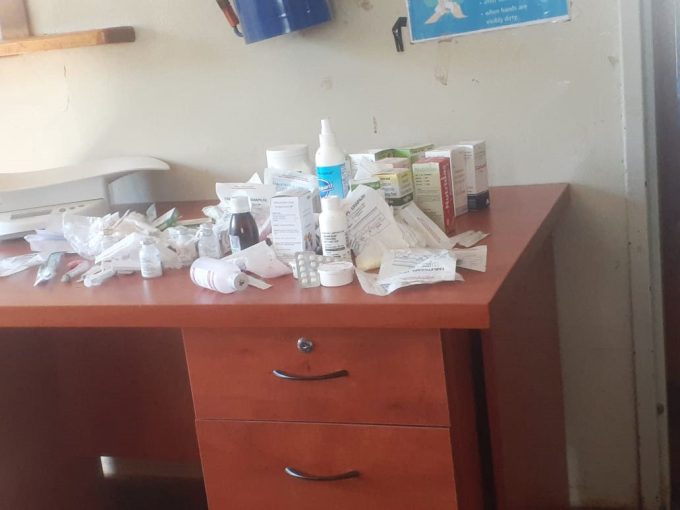
Equally pressing is the need for expediency in reforming the drugs management system, where delays continue to put lives at risk. The PM acknowledged improvements in drug stock levels at health facilities and expressed gratitude for public patience during acute shortages.
The approval of the Eswatini Medical Supplies Agency Bill, converting the Central Medical Stores into a semi-autonomous entity, is a step forward, promising efficiency in procurement and distribution. The stumbling blocks in bureaucracy can no longer be tolerated.
As we look to 2026, the need to diversify the economy cannot be overstated. Eswatini’s heavy reliance on Southern African Customs Union (SACU) receipts, which constitute over 40 per cent of government revenue, leaves us vulnerable to fluctuations in regional trade dynamics. Diversification is not optional but essential to fill the revenue gap and foster self-reliance.
Summarily, 2025 has shown that Eswatini possesses the resilience and capacity to overcome its challenges. The consensus from the PM, business leaders and independent observers presents a clear picture that progress is underway, but it must double, if not triple, the acceleration level for us to feel it in our pockets. Wishing all a prosperous 2026!















Leave a comment