

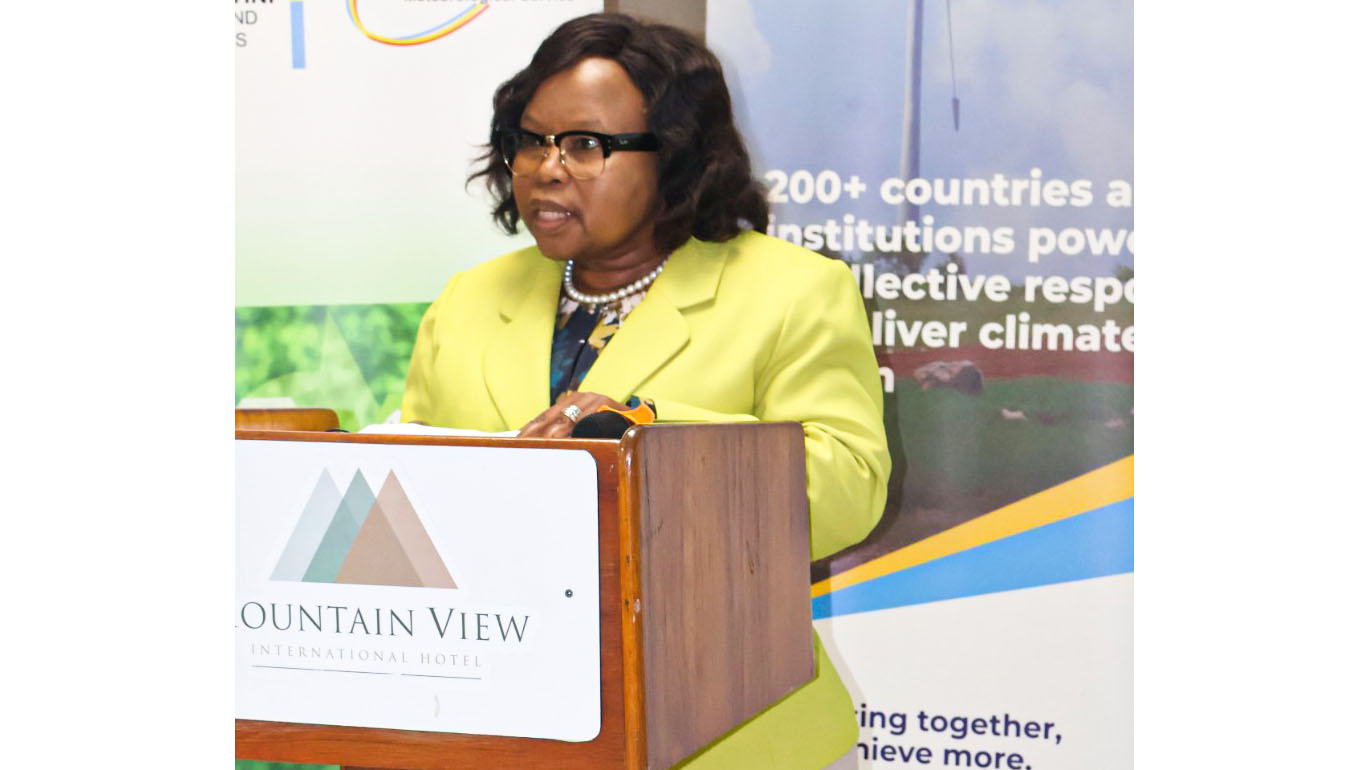
MBABANE – Eswatini has formally launched consultations to develop its Long-Term Low Emission Development Strategy (LT-LEDS), aligning its climate ambition with national development priorities in support of Vision 2050.
Minister for Tourism and Environmental Affairs, Jane Simelane, described the gathering as a historic moment for the kingdom.
“Today, we take a bold step forward in securing the future of our kingdom. We are not just planning for the next five years, but we are looking towards Vision 2050, defining the trajectory of our nation for the next two and a half decades,” she said.
She explained that the LT-LEDS process is intended to ensure that Eswatini remains resilient, prosperous and climate-smart, at a time when climate change is increasingly intersecting with economic growth and social development.
Referring to Article 4, paragraph 19 of the Paris Agreement, the minister noted that countries are encouraged to formulate long-term strategies that strive towards low greenhouse gas emissions, forming a cornerstone of the global effort to limit warming to 1.5 degrees Celsius and reach net-zero emissions by mid-century.
The minister expressed gratitude to the United Nations Development Programme (UNDP), particularly its Climate Promise initiative, for its support in spearheading the LT-LEDS development alongside government.
Delivering a statement on behalf of UNDP, Resident Representative Henrik Franklin reinforced the urgency and global context of the discussions. He described climate change as the greatest challenge of our time, noting that it is part of a broader triple planetary crisis encompassing climate change, biodiversity loss and pollution.
“This crisis is actively reversing decades of development progress across the globe,” Franklin said. “Every stride that countries have made in poverty reduction, health and economic growth is now under threat.”
He warned that the cost of inaction is particularly high for developing countries such as Eswatini, where climate impacts translate into more frequent droughts, floods and economic shocks. These impacts, he said, undermine livelihoods, strain public resources and threaten national stability.

















Leave a comment