

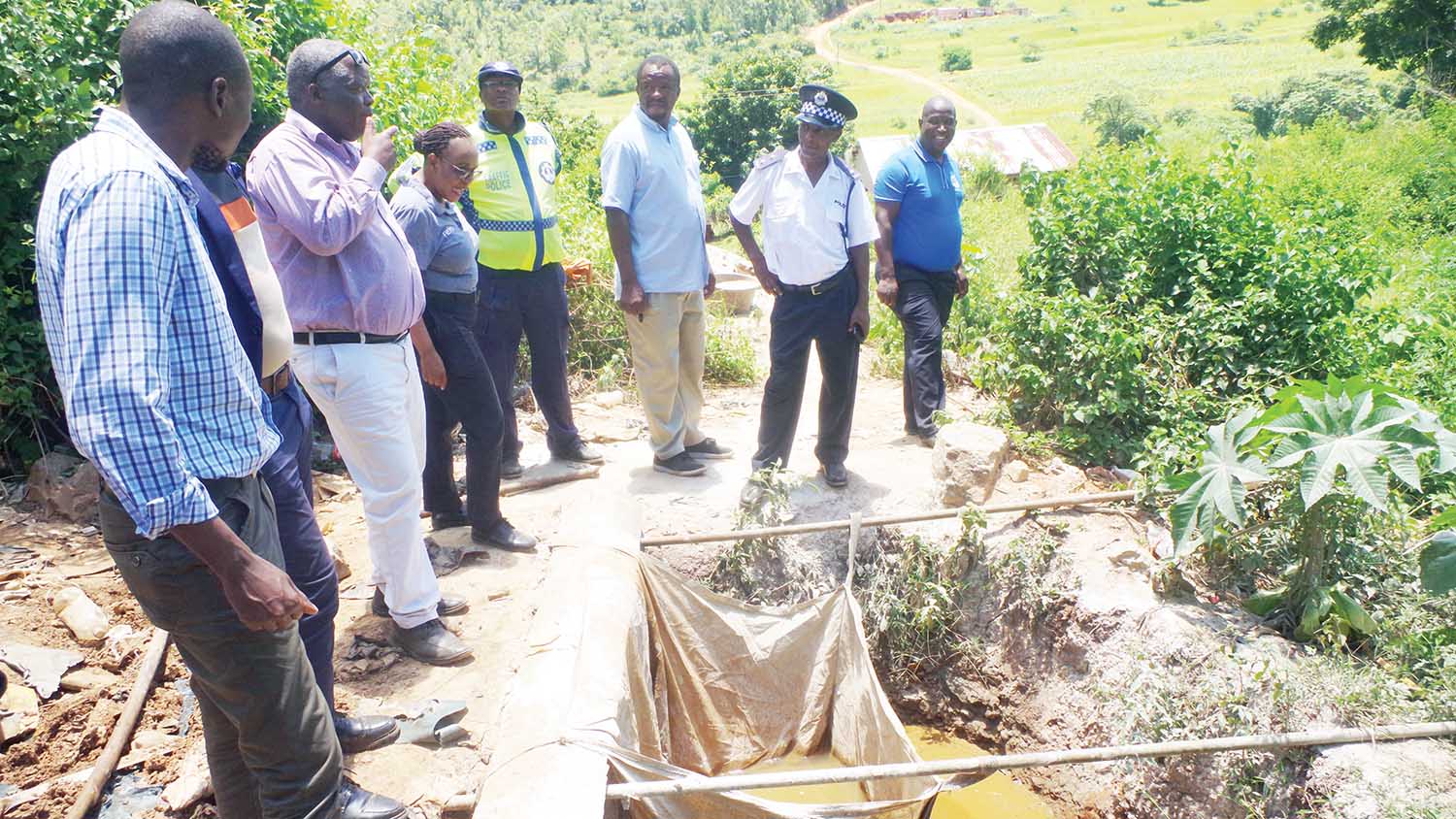
MBABANE – Eswatini is bleeding millions of Dollars every year as organised criminal syndicates loot gold from abandoned and illegal mines, exploiting unemployed youth, deploying firearms and operating with increasing sophistication in what security officials describe as a growing transnational threat.
Eswatini is a landlocked country in southern Africa, bordered by South Africa and Mozambique, with a population of just over 1.2 million. Its relatively small size and extensive cross-border links make it particularly exposed to regional criminal activity.
Once characterised by desperate individuals digging blindly for survival, illegal gold mining in the kingdom has evolved into a well-organised, armed and regionally connected criminal enterprise, driven by gold prices, weakly secured abandoned shafts and cross-border syndicates with access to advanced technology. In Eswatini, criminals have re-opened a mine that was closed over 40 years ago and turned it into a thriving ‘gold rush spot’.
Despite constant arrests or apprehension by both the members of the army and the police, the criminals have continued mining.
However, the Royal Eswatini Police Service (REPS) has now come up with a highly tactical operation that mirrors only those in more advanced countries like South Africa (SA). This has exposed the scale, structure and violence behind illegal mining activities, popularly known as ‘zama zama’ operations – A term long associated with illegal mining networks in southern Africa.
Investigations by Times of Eswatini have established that illegal gold mining in the country is now dominated by regional and transnational criminal gangs, that operate in groups of 30 or more, often armed with guns to secure shafts, guard extracted ore, and prevent robberies by rival groups.
These gangs target abandoned or closed mines, many of which still contain significant gold deposits. Armed guards are positioned at entry points, while selected teams work underground for days at a time, extracting ore that is later processed and smuggled out of the country through informal and cross-border routes.
Security sources say firearms are no longer an exception but a core feature of illegal mining operations, particularly as competition for gold-rich sites intensifies.
This surge in illegal mining comes at a time when it has been recently uncovered that Eswatini still holds thousands and thousands of tonnes of gold underground, much of it in old or abandoned mines. In fact, the gold in Eswatini is said to be found along the ‘Barberton Greenstone Belt (BGB)’, which is a globally significant, ancient geological formation in South Africa's Kaapvaal Craton, known for its exceptionally old (Archaean) rocks, containing some of Earth's oldest fossil evidence (3.5 billion years old) and hosting world-class gold deposits, making it crucial for understanding early life and tectonics, alongside a rich gold rush history.
While much of this gold remains unexploited through normal channels, illegal miners are extracting and selling it daily, depriving the country of revenue running into millions of Dollars.
Despite this mineral wealth, Eswatini currently has only one operating gold-mining company, leaving vast gold-bearing areas vulnerable to illegal exploitation.
Illegal miners, popularly known as zama zamas, are often recruited from unemployed youth, many of whom see illegal mining as one of the few available income opportunities.
The Times of Eswatini has uncovered that foreign-operated criminal gangs actively recruit unemployed locals, offering them access to shafts, tools and protection — at a steep cost.
Speaking to Times of Eswatini during investigations, illegal miners revealed how transnational gangs control access to mining sites. In the latest incident reported by this publication, illegal miners were required to pay E5 000 (about US$312) per person to be allowed entry into abandoned mines.
An illegal miner, who spoke on condition of anonymity for fear of being targeted, said it was impossible for many locals to raise such money on their own.
“Most of us are unemployed. There is no way we can come up with E5 000,” the miner said. He said without these gangs, one cannot enter the mine as they control everything.
According to miners interviewed, the gangs often ask for the entry fee, equipment and food in advance, yet take control of the gold extracted, locking miners into exploitative arrangements that resemble debt bondage.
In the past, illegal miners often risked their lives digging without knowing whether gold was present. Today, this has changed as the Times of Eswatini has established that foreign gangs enter the country with advanced mineral-detecting equipment, allowing them to identify gold-rich areas with precision.
This shift has transformed illegal mining from a gamble into a targeted extraction operation, increasing both profitability and environmental destruction.
Security analysts warn that this technological advantage has made illegal mining faster, more profitable and harder to disrupt, particularly when combined with armed enforcement.
In response, members of the Royal Eswatini Police Service (REPS) are currently carrying out a highly tactical operation aimed at dismantling illegal mining networks and reclaiming abandoned shafts.
The operation mirrors tactics used in Operation Val’umgodi, a well-known South African crackdown targeting zama zama operations, where police raid abandoned mines and seal off access points.
According to recent arrests, illegal mining in Eswatini is being carried out by locals as well as foreign nationals, particularly from South Africa and Zimbabwe. In the past, authorities have also reported involvement of individuals from Lesotho, Botswana, Mozambique and Tanzania.
Deputy Chief Police Information and Communications Officer Assistant Superintendent Nosipho Mngunu confirmed that the operation is ongoing.
Asked whether the latest operation would finally deal a decisive blow to illegal mining, Mngunu said policing was an ongoing responsibility.
“The duty of the police is to constantly fight crime,” she said. “The operation is still ongoing, and we will continue to act wherever criminal activity is detected.”
Police sources say the sustained presence at targeted sites has already forced some illegal miners to abandon operations, although syndicates are known to return once enforcement pressure eases.
Eswatini’s army, Umbutfo Eswatini Defence Force (UEDF) has also acknowledged illegal mining as a growing national concern.
Recently, the army stated that it would intensify operations to curb illegal mining activities. UEDF Public Affairs Officer Major Sandile Gwebu noted that illegal mining had, until recently, become a daily occurrence in some areas.
“It was happening almost every day,” Gwebu said. “But the army is now curbing this activity.”
The involvement of the military underscores the security dimension of illegal mining, which authorities increasingly view as organised crime rather than petty economic survival.
Eswatini’s struggle mirrors a broader southern African crisis, where illegal gold mining has become a multibillion-Dollar underground economy stretching from South Africa to Zimbabwe and beyond.
In South Africa alone, zama zama syndicates are estimated to generate billions of Rands annually, funding wider criminal networks involved in weapons trafficking, drug smuggling and money laundering.
Security experts warn that without sustained enforcement and regional cooperation, Eswatini risks becoming a soft target for syndicates displaced by crackdowns elsewhere.
The transnational nature of these gangs means that illegal mining is no longer just a local crime problem, but a regional security and economic issue with implications for border control, environmental protection and national revenue.
As gold prices remain high, the incentives driving illegal mining are unlikely to disappear. What has changed is the level of organisation, weaponisation and exploitation now defining the trade.
With millions of Dollars in gold being looted, unemployed youth being recruited into dangerous operations, and armed gangs entrenching themselves underground, the battle against illegal mining has become one of the most pressing security challenges facing Eswatini.
For authorities, the question is no longer whether illegal mining can be ignored – but whether sustained enforcement, regional cooperation and economic alternatives can outpace the gangs digging deep beneath the kingdom’s soil.



















Leave a comment