


MBABANE – The South African Reserve Bank (SARB) has shared insights into its evolving cash management strategy with the Central Bank of Eswatini (CBE).
This was part of ongoing regional collaboration aimed at improving the circulation and integrity of the Rand within the Common Monetary Area (CMA).
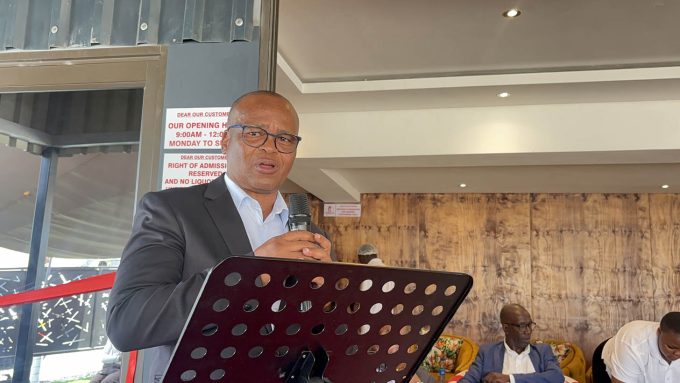
This followed an information-sharing session held yesterday between SARB experts and the CBE Currency Division during the South African central bank’s periodic visit to CMA member central banks.
The visits are conducted under existing memoranda of understanding between the regional monetary authorities and are designed to ensure policy coordination and operational alignment on the circulation of the South African Rand, which is legal tender across CMA countries alongside their domestic currencies.
Eswatini, Lesotho and Namibia form part of the CMA with South Africa, an arrangement that allows the Rand to circulate freely within the region, while the respective central banks maintain their own national currencies. In Eswatini’s case, the Lilangeni remains pegged at par with the Rand.
During the session, the SARB team unpacked its Cash Smart Strategy, an initiative designed to reduce the high costs associated with cash handling and distribution.
According to the SARB delegation, the strategy is aimed at improving efficiency across the entire cash value chain – from the central bank to commercial banks, businesses and ultimately, the public.
A key focus of the strategy is lowering the operational expenses linked to transporting and distributing physical currency, which remains a significant cost driver for central banks and financial institutions.
Although digital payment systems are expanding rapidly across Southern Africa, cash continues to play a critical role in day-to-day transactions, particularly among small businesses and rural communities.
As a result, central banks in the CMA are increasingly looking at ways to optimise the management of cash circulation, while ensuring the continued availability of reliable and secure currency.
Another major topic discussed during the session was the growing challenge of uncontrolled dye-stained banknotes, a problem commonly linked to attempted cash-in-transit robberies and attacks on automated teller machines (ATMs).
Dye-staining systems are widely used in the cash industry as a security measure. When triggered during a robbery attempt, the system releases indelible dye onto banknotes, permanently marking them and rendering them easily identifiable as stolen currency.
*Full article available on Pressreader*



















Leave a comment