

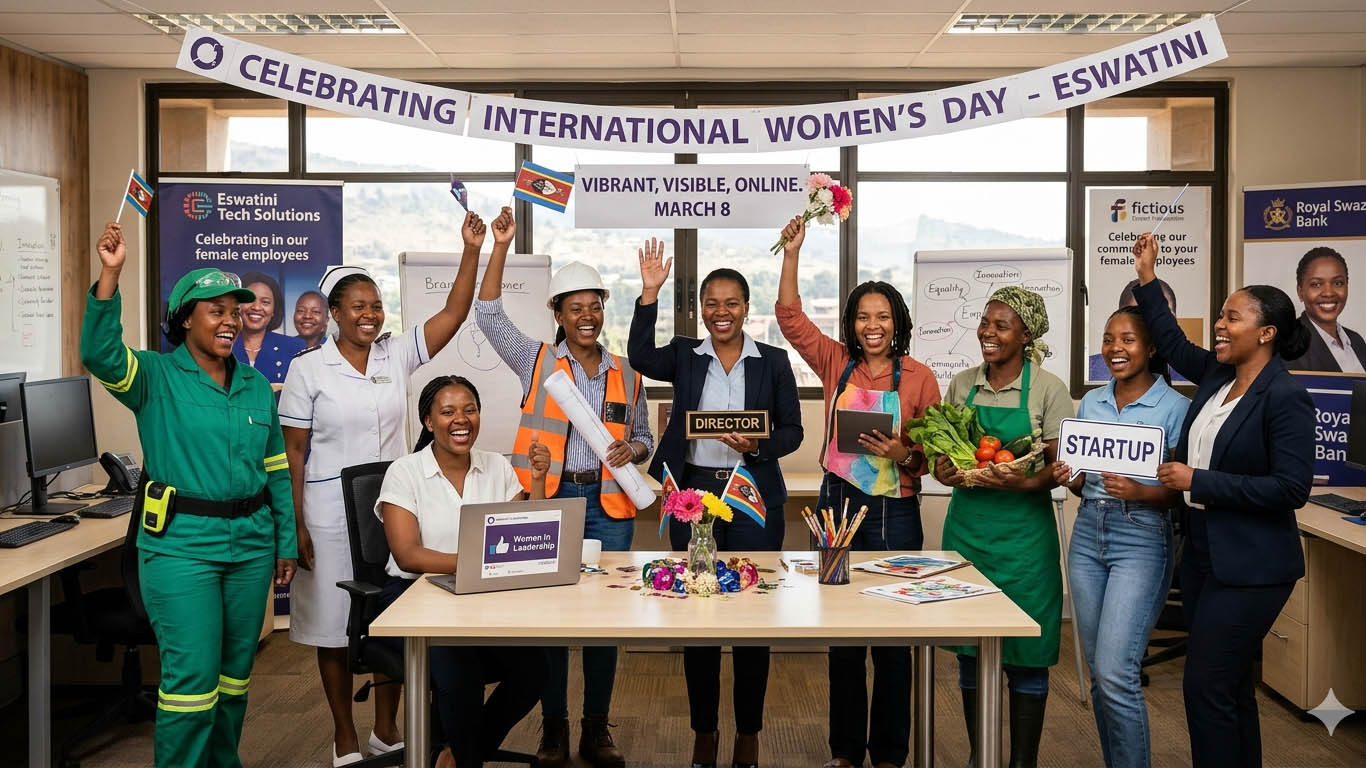
Every year on March 8, the world commemorates International Women’s Day, a day meant to celebrate women’s achievements while reflecting on the ongoing pursuit of gender equality. In many places, the day carries a strong sense of activism and recognition of the social, economic, cultural and political contributions women make to society. In Eswatini this year, as in recent years, the celebrations were vibrant, visible and very much online. Scrolling through social media, it was interesting to see how many companies and institutions chose to mark the day. Corporate pages were filled with posts highlighting their female employees. Photos of women in uniforms, women behind desks, women on factory floors and women in leadership positions.
Many posts featured captions praising the dedication, strength and resilience of the women who help keep these organisations running. In many ways, it was refreshing.
For a long time, the professional contributions of women have been overlooked or taken for granted. Seeing companies intentionally place their female employees in the spotlight felt like an important step towards recognising the value women bring to workplaces across the country. It served as a reminder that behind every successful institution are women who work tirelessly, managing teams, solving problems, innovating and keeping systems moving. Recognition matters.
When organisations publicly acknowledge the work of their female employees, they send a message that women’s contributions are not invisible. It also gives younger women and girls something powerful to see: Women occupying professional spaces, excelling in their roles and being celebrated for it. Representation, even in something as simple as a social media post, can inspire. As the celebrations unfolded online, another pattern quietly emerged. Alongside the recognition of professional achievements, many posts began to blend Women’s Day with another kind of celebration altogether, Mother’s Day. Some companies highlighted female employees, specifically as ‘mothers who do it all’. Others framed their appreciation around women’s nurturing roles at home, praising their ability to balance work and family life. Again, this sentiment comes from a place of admiration.
Motherhood is one of the most demanding and meaningful roles many women undertake. Mothers shape families, nurture communities and carry immense responsibility in raising the next generation. Their strength and dedication deserve appreciation not only once a year, but every day.
However, the blending of Women’s Day with Mother’s Day raises an interesting reflection on how society understands and celebrates women. When the focus shifts primarily to motherhood, it can unintentionally narrow the way we see women’s identities. It suggests that the most meaningful way to honour women is through their role as mothers. However, women’s lives and contributions are far more diverse than that.
Not every woman is a mother and not every woman defines herself through motherhood. Some women are focused on building careers, pursuing education, starting businesses, creating art or contributing to their communities in countless other ways. Others may want children but have not had them, while some have chosen different life paths altogether.
All these experiences are valid. International Women’s Day, at its core, is meant to celebrate women in their full diversity, not only as caregivers, but as leaders, innovators, thinkers and changemakers.
Perhaps what we witnessed this year reflects a society that is still learning how to celebrate women in broader ways. Motherhood has long been one of the most visible and socially accepted roles for women, so it naturally becomes the lens through which appreciation is often expressed.
However, Women’s Day gives us an opportunity to expand that lens.
The corporate posts we saw this year were a good start. Highlighting female employees acknowledges that women are not only part of the workforce but essential to it. These posts help normalise the presence of women in professional environments and affirm that their work deserves recognition. Imagine how powerful this could become if it continues to grow.
Companies could use Women’s Day to share stories of women leading projects, mentoring colleagues, driving innovation and shaping the future of their industries.
They could highlight the diverse talents, ambitions and experiences of women within their organisations. Such recognition would reflect the many dimensions of women’s lives.
Women’s Day does not need to compete with Mother’s Day. Both celebrations have their own significance. Mother’s Day honours the unique journey of motherhood, while Women’s Day invites us to celebrate the broader spectrum of women’s contributions to society. As Eswatini continues to grow and evolve, so too can the way we celebrate women.
This year’s corporate posts showed us something encouraging: Women are increasingly visible in workplaces and organisations are beginning to recognise that visibility.
The next step may simply be to ensure that when we celebrate women, we celebrate them fully as professionals, as leaders, as creators, as community builders and yes, sometimes as mothers too, because women are many things at once and our celebrations should reflect that richness.

















Leave a comment