

MBABANE – A new report by the World Bank is calling on countries, particularly developing economies such as Eswatini, to adopt more strategic and targeted approaches to industrial policies.
This, according to the World Bank, will help to drive sustainable growth, job creation and economic resilience.
Titled Industrial Policy for Development: Approaches in the 21st Century, the report signals a major shift from past thinking, arguing that governments can and should play a more active role in shaping their economies.
However, it cautions that success will depend not on the scale of intervention, but on how precisely and effectively policies are designed and implemented.
For decades, economic development strategies across the world were built on a relatively straightforward formula: Governments focused on maintaining macroeconomic stability, investing in education and infrastructure and opening markets, while the private sector led economic activity.
That model, the report argues, is now under pressure. Slower global growth, rising protectionism, supply chain disruptions, and rapid technological change have made it more difficult for countries to rely solely on market-driven growth.
In response, governments around the world are increasingly turning to industrial policy, defined as deliberate efforts to promote specific industries or economic activities, as a tool to stimulate growth and diversify their economies.
According to the World Bank, this shift is not limited to advanced economies. In fact, developing countries are often more active users of industrial policy, with many targeting multiple sectors simultaneously in their national development plans.
*…
… industrial policy tools
MBABANE – A key contribution of the report is its comprehensive framework for understanding industrial policy.
It identifies 15 distinct policy tools, grouped into three broad categories:
- Public inputs tailored to specific industries
- Market incentives that influence business decisions
- Macroeconomic interventions that affect the entire economy
Among these, the World Bank highlights ‘first-choice’ tools that are more effective and less costly, particularly for developing economies. These include industrial parks, skills development programmes, market access support and quality infrastructure.
Industrial parks, for example, can help address coordination challenges by clustering businesses in a single location, allowing them to share infrastructure, labour and knowledge.
Capabilities
Skills development programmes, on the other hand, ensure that the workforce has the capabilities needed to support targeted industries.
Market access support and quality infrastructure – such as standards and certification systems – can help local businesses compete in regional and global markets by improving product quality and reducing information gaps.
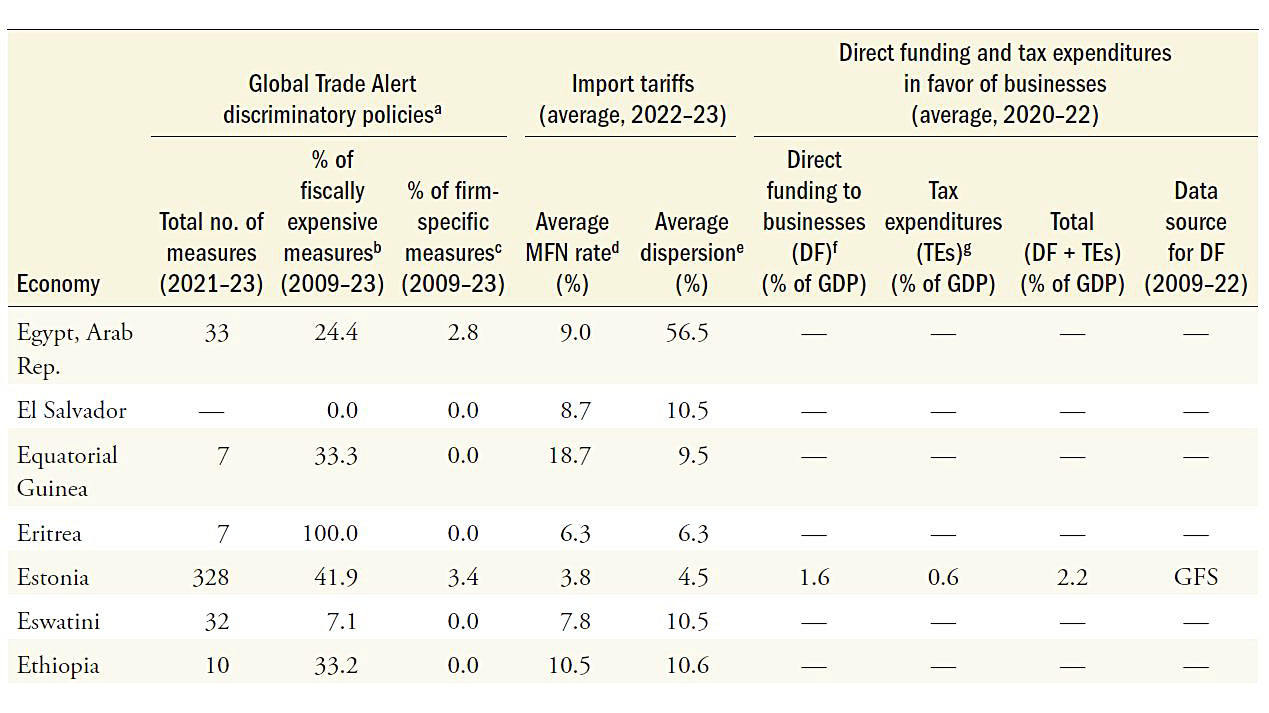
For Eswatini, these tools align closely with ongoing efforts to strengthen manufacturing, agro-processing and export-oriented industries.
One of the report’s central messages is that there is no one-size-fits-all approach to industrial policy. Instead, the choice of policy tools should be guided by three key factors:
- The size of the domestic market
- The capacity of government institutions
- The level of available fiscal resources
Countries with small markets, limited administrative capacity and constrained budgets, conditions that apply to many developing economies, are better suited to simpler, lower-cost interventions.
*Full article available on Pressreader*


















Leave a comment