


MBABANE – Business Eswatini has entered into a strategic partnership with AeTrade Group in a move set to reshape the small and medium enterprise (SME) landscape and unlock new opportunities for intra-African trade.
The collaboration follows a high-level meeting held at the Business Eswatini ‘War Room’ in Emafini, where AeTrade formally identified the organisation as a key stakeholder in rolling out its country programme.
The initiative is part of a broader continental effort anchored on decisions of the African Union to advance financial and digital inclusion across member States.
At the heart of the partnership is a pilot programme targeting three countries, Eswatini, Ethiopia and Rwanda, aimed at building a robust ecosystem for SMEs.
The programme seeks to address long-standing structural challenges that have hindered SME growth, particularly limited access to markets, finance and critical business knowledge.
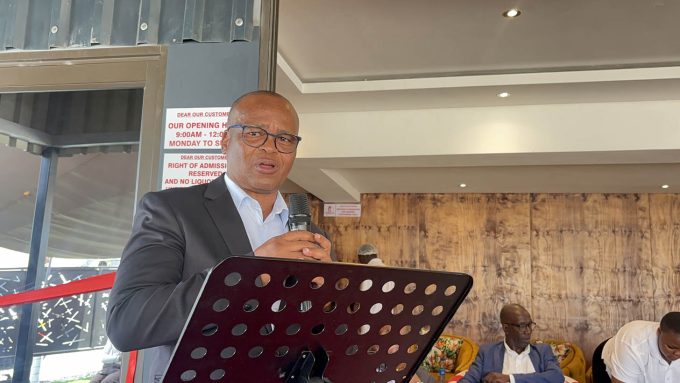
AeTrade Group Chief Executive Officer Mulualem Syoum highlighted that SMEs across Africa face a staggering financing gap estimated at US$330 billion annually.
Despite their central role in job creation and economic activity, many SMEs remain excluded from formal financial systems.
“Many financial institutions see SMEs as high risk and, therefore, can only finance with high interest rate facilities, which in turn cripples SMEs,” Syoum said.
This perception, stakeholders agreed, has created a vicious cycle in which businesses struggle to grow due to limited financing, while lenders remain reluctant to provide affordable credit due to perceived risks.
To break this cycle, AeTrade Group has proposed a comprehensive framework that focuses on de-risking SMEs through financial literacy programmes, market linkages and the development of pre-approved credit scoring systems. A structured four-year graduation programme is also being introduced to support SMEs in transitioning from informal operations to sustainable, bankable enterprises.
The initiative will be anchored on the Sokokuu.Africa Integrated Ecosystem, a digital platform designed to connect African producers with African consumers.
Unlike conventional e-commerce platforms, AeTrade emphasised that its model is not intended to compete with local businesses, but rather to complement them.
“The platform is a mall, not competition,” Syoum explained, noting that it will provide SMEs with a centralised marketplace to showcase their products across the continent.
This approach is particularly significant given that more than 850 digital platforms currently operate across Africa, the majority of which focus on imports rather than promoting intra-African trade.
By contrast, AeTrade’s model aligns with the objectives of the African Continental Free Trade Area, which seeks to boost trade among African countries by reducing barriers and creating a single continental market.
Business Eswatini Chief Executive Officer Nathi E. Dlamini welcomed the initiative, but raised critical questions about how the SME ecosystem could be effectively de-risked to unlock financing at scale.
*Full article available on Pressreader*


















Leave a comment