

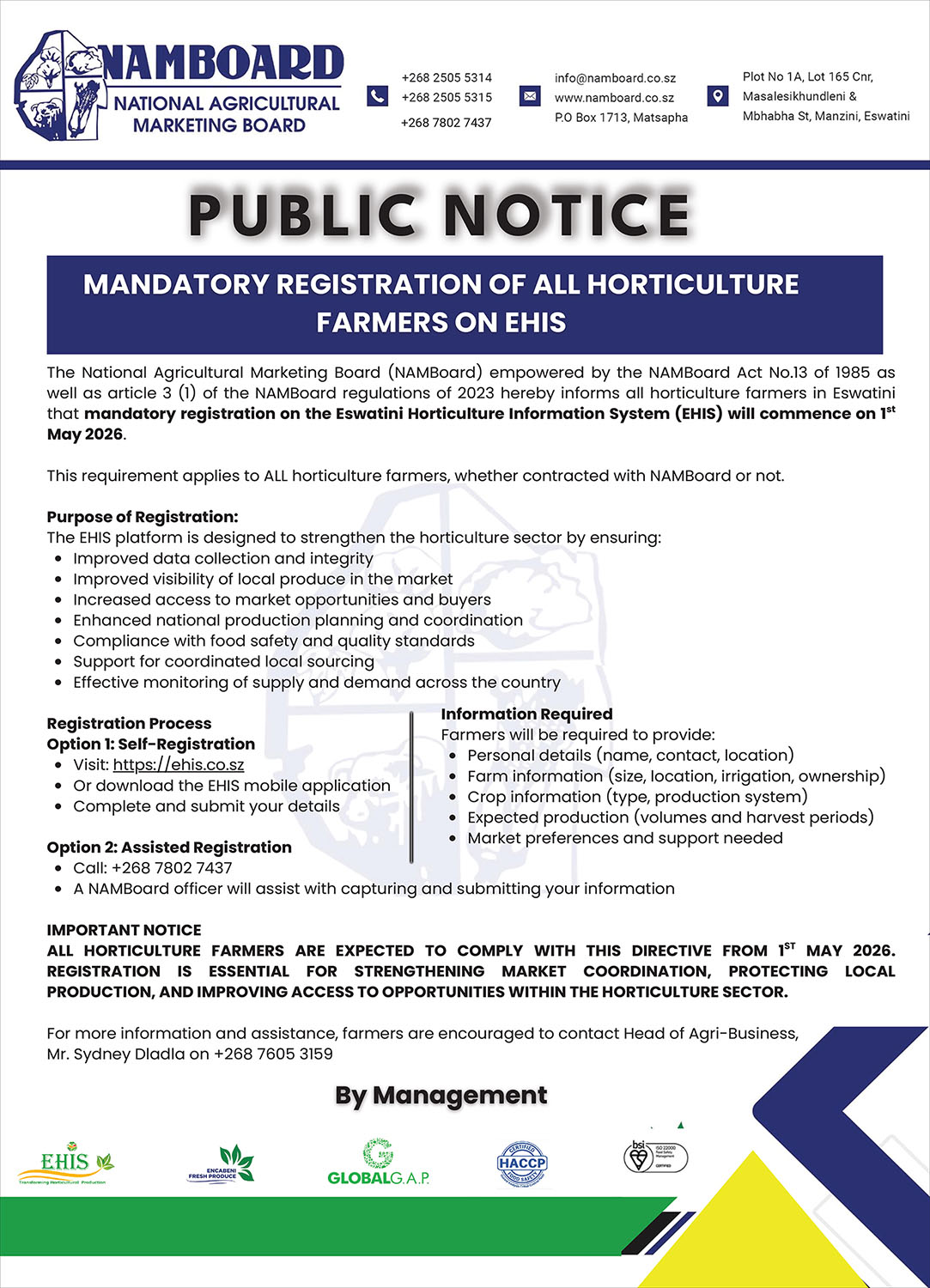
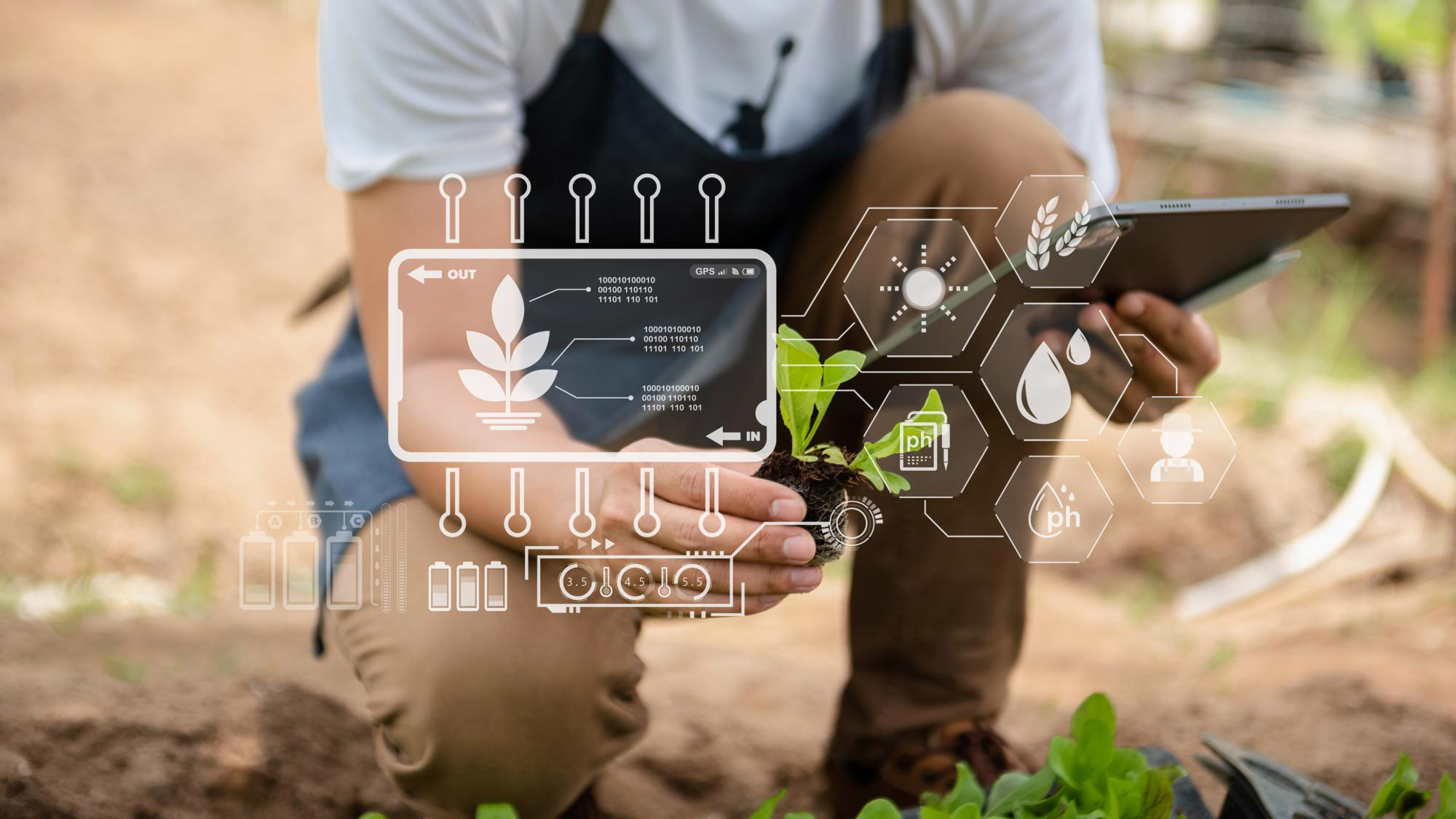
Eswatini’s agricultural sector is entering a new era, one shaped not only by soil, seasons and skill, but increasingly by data.
At the centre of this transformation is the Eswatini Horticulture Information System (EHIS), a digital platform designed to bring visibility, structure and intelligence to the country’s horticulture industry.
Developed by the National Agricultural Marketing Board (NAMBoard), EHIS represents a strategic shift towards technology-driven agriculture, where informed decisions replace guesswork and data becomes a key driver of productivity, market stability and farmer success.
What is EHIS?
EHIS is a national digital registry and information platform for all horticulture farmers in Eswatini, whether contracted with NAMBoard or operating independently. It captures critical data on farmer profiles, production activities, crop types and expected yields.
Beyond registration, the system provides farmers with access to real-time market information, including local buying prices, weekly selling prices, input costs and quality standards required for formal markets.
In essence, EHIS is not just a database, it is a decision-support tool that connects farmers to markets, while giving stakeholders a clear picture of the country’s horticulture landscape.
How the system works
Farmers register on EHIS through an accessible digital process, providing details such as personal information, farm location, production capacity, irrigation methods and crops grown. This data is then aggregated and analysed to generate insights on national production levels.
Through its web, mobile and USSD platforms, EHIS ensures inclusivity, allowing farmers from different regions and technological backgrounds to participate.
For policymakers and industry players, the system offers a real-time view of what is being produced, where and in what quantities, enabling more accurate planning, coordination and intervention.
Driving data-driven agriculture
Historically, agricultural production has often been influenced by assumptions or delayed information.
EHIS changes this by introducing real-time, data-driven decision-making into the sector.
Farmers can align their production with market demand, reducing oversupply and avoiding price drops. At the same time, buyers and aggregators can plan procurement more efficiently, knowing what will be available and when.
For NAMBoard, the system strengthens its ability to deliver on its core mandate, supporting farmers, facilitating markets and regulating trade in scheduled agricultural products.
Balancing local production and imports
One of the most significant impacts of EHIS lies in its role in managing the balance between local production and imports.
By providing accurate data on local supply, EHIS enables informed decisions on when to allow or restrict imports.
When local production is sufficient, imports can be limited to protect farmers from unnecessary competition.
Conversely, when supply is low, imports can be facilitated to ensure food availability.
This approach helps to:
- Reduce market saturation
- Stabilise prices
- Protect farmer incomes
- Promote local sourcing
In this way, EHIS becomes a critical tool in building a resilient and self-sustaining agricultural economy.
Benefits to farmers
- For farmers, the value of EHIS is both practical and transformative. The platform:
- Provides visibility in formal markets, increasing opportunities for sales
- Offers access to reliable market information, supporting better planning
- Enhances linkages with buyers, financiers and input suppliers
- Encourages structured production aligned with demand
- Supports compliance with quality and market standards
- Ultimately, EHIS empowers farmers to operate not just as producers, but as informed agribusiness players.
Advancing NAMBoard’s mandate
The introduction of EHIS directly reinforces NAMBoard’s mandate to develop farmers, facilitate efficient market access and regulate the agricultural sector.
By improving data accuracy and market transparency, the system enhances NAMBoard’s ability to:
- Coordinate supply chains
- Advise government on production and demand trends
- Support evidence-based policy decisions
- Strengthen national food security
A digital future for agriculture
As Eswatini continues to modernise its agricultural sector, EHIS stands as a clear example of how technology and data can unlock growth, efficiency and sustainability.
With increased farmer participation and stakeholder collaboration, the platform has the potential to reshape the horticulture industry, creating a system where local produce is prioritised, markets are stabilised and farmers are empowered through information.
In a rapidly changing agricultural landscape, EHIS is more than an innovation, it is a foundation for the future of farming in Eswatini.



















Leave a comment