

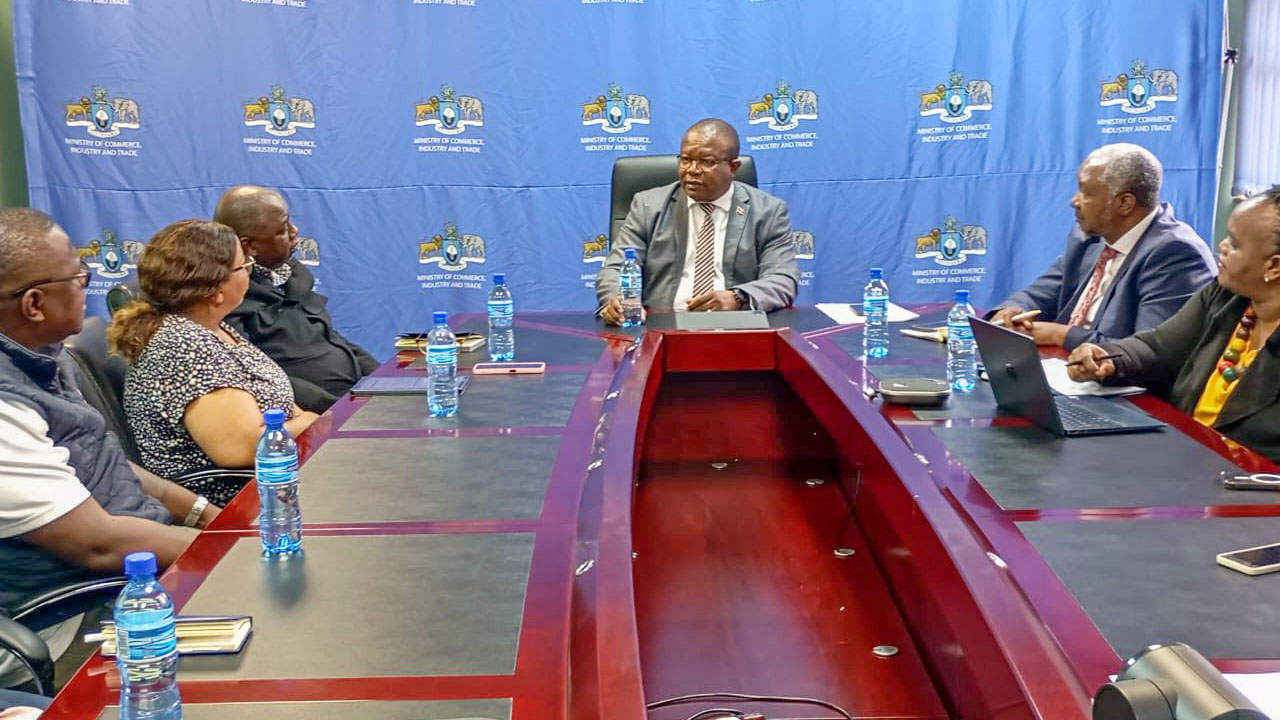
MBABANE – The Business Federation of Eswatini (BUFE) has proposed that 30 per cent of procurement opportunities linked to national events hosted by government be reserved for local businesses.
This seeks to place indigenous enterprise development at the centre of preparations for the upcoming Common Market for Eastern and Southern Africa (COMESA) Summit.
The proposal was tabled during a high-level engagement with the Ministry of Commerce, Industry and Trade, led by Minister Manqoba Khumalo, as stakeholders explored ways to ensure that emaSwati businesses fully participate in the economic opportunities associated with hosting the regional summit.
BUFE stressed that ring-fencing at least 30 per cent of procurement for local enterprises, particularly those operating under the Made in Eswatini initiative, would unlock growth, deepen economic participation and strengthen domestic value chains.
The federation argued that such a move would ensure that the benefits of hosting large-scale international events are not concentrated among external suppliers, but instead create meaningful opportunities for micro, small and medium enterprises (MSMEs) across sectors such as catering, transport, logistics and event management.
“This is about making sure local businesses are not spectators in their own economy, especially during major events of this magnitude,” said BUFE.
The proposal comes amid increasing calls for localisation policies that prioritise indigenous businesses and enhance their competitiveness, particularly as Eswatini seeks to position itself more strongly within regional markets.
Minister Khumalo welcomed the engagement and described it as a critical platform for aligning government priorities with private sector expectations.
He encouraged businesses to formally raise procurement-related concerns through established channels such as Parliament and the Eswatini Competition Commission, noting that structured engagement would be key to driving sustainable reforms.
Khumalo further pointed to the forthcoming Citizens Economic Empowerment Act as a major step towards strengthening the participation of emaSwati in the mainstream economy.
The legislation is expected to provide a more robust framework for promoting local ownership, improving access to opportunities and addressing long-standing barriers faced by indigenous enterprises.
*Full article available on Pressreader*


















Leave a comment