

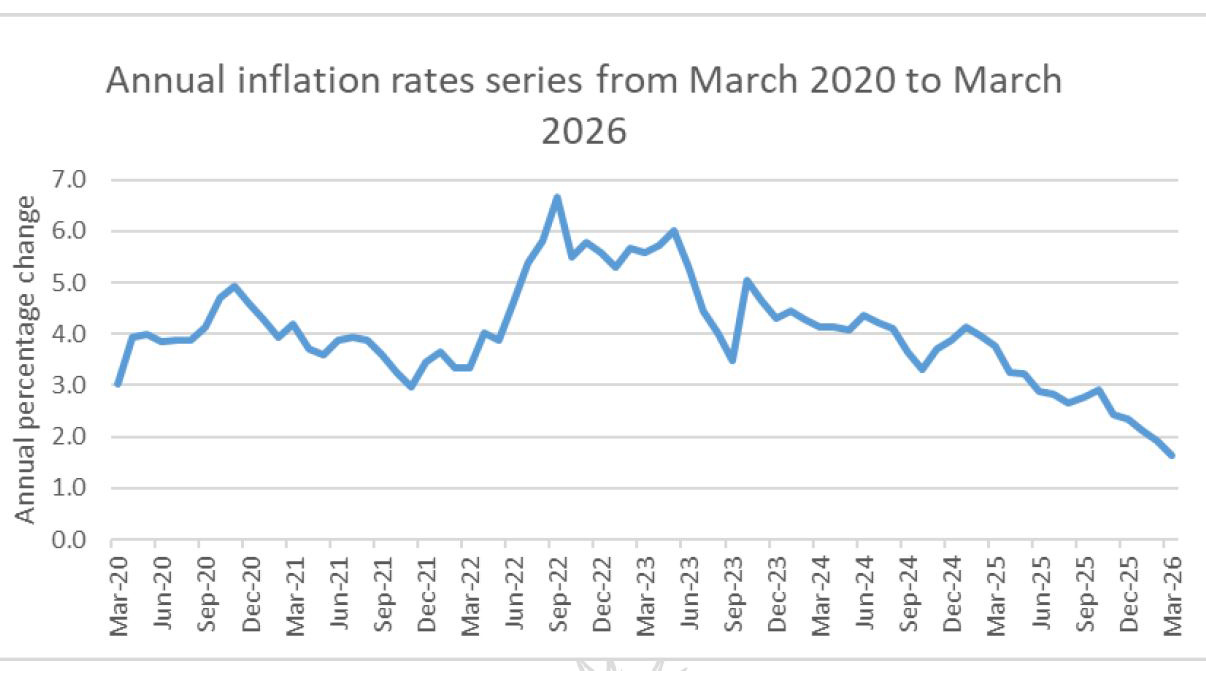
MBABANE – Eswatini’s inflation rate continued its downward trajectory in March 2026, but emerging global risks, particularly geopolitical tensions, are expected to keep the outlook uncertain.
According to the latest Consumer Price Index (CPI) report released by the Central Statistical Office (CSO) yesterday, annual inflation slowed to 1.6 per cent in March 2026, down from 1.9 per cent in February 2026 and significantly lower than 3.8 per cent recorded in March 2025.
This marks one of the lowest inflation levels in recent years, signalling a sustained easing of price pressures across the economy.
On a month-on-month basis, prices declined marginally by 0.1 per cent, reflecting subdued demand conditions and easing costs in key categories.
*…
Food, transport stable prices provide relief
MBABANE – Consumers also benefitted from price stability, and in some cases declines, in essential categories.
Food and non-alcoholic beverages recorded a slight annual decline of –0.1 per cent, while transport costs fell by –0.6 per cent year-on-year.
The decline in transport inflation was largely driven by lower fuel prices, with fuels and lubricants dropping by 5.0 per cent annually. However, the recent hikes in fuel prices are expected to impact consumers and further shift inflation up.
This has provided much-needed relief to households, as transport costs typically have a ripple effect across the broader economy, influencing the cost of goods and services.
However, not all food items followed the same trend. Prices for items such as fruit rose sharply by over 12 per cent, highlighting persistent volatility in specific sub-categories.
Despite the overall slowdown, inflation continues to be supported by increases in housing-related costs.
Housing, water, electricity, gas and other fuels recorded annual inflation of 3.9 per cent, making it one of the largest contributors to the headline inflation figure. Electricity prices alone rose by nearly 6.9 per cent, highlighting ongoing cost pressures in administered prices and utilities. Clothing and footwear also remained elevated at 5.5 per cent, reflecting continued price adjustments in imported goods.
*Full article available on Pressreader*





















Leave a comment