
Home Business CBE moves to revive export credit guarantee scheme
Business

CBE moves to revive export credit guarantee scheme

Share
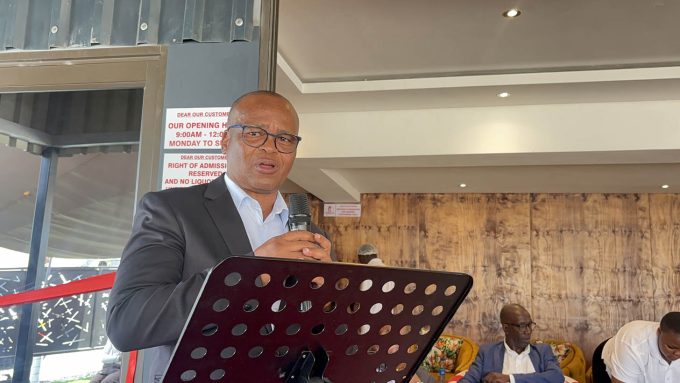
Central Bank of Eswatini Director-Financial Regulation Lungile Dlamini.
Share

MBABANE – The Central Bank of Eswatini (CBE) has signalled renewed urgency to revitalise the country’s Export Credit Guarantee Scheme (ECGS).

The bank seeks to position the scheme as a key lever to unlock export-led growth and strengthen support for micro, small and medium enterprises (MSMEs).

This emerged during a workshop held last week at the CBE complex, where stakeholders across government, financial institutions and the private sector gathered to explore ways of resuscitating the scheme and improving access to export financing.

Delivering remarks on behalf of the deputy governor was Director of Financial Regulation, Lungile Dlamini, who acknowledged that while the Small Scale Enterprise Loan Guarantee Scheme (SSELGS) has remained active over the years, the ECGS has been dormant since 2009 — a development described as a ‘missed opportunity’ for the country’s exporters and broader economy.

Dlamini noted that MSMEs remain the backbone of Eswatini’s economy, playing a crucial role in job creation, innovation and economic activity at grassroots level. However, the inactivity of the ECGS was also seen as a reflection of a deeper structural challenge — the limited number of local enterprises producing for export markets.

“The inactivity is an indicator that fewer MSMEs produce or are ready to produce for exports,” Dlamini said, adding that this could be attributed to a range of constraints facing small businesses.

The ECGS was originally established in the early 1990s alongside the SSELGS to address financing challenges faced by SMEs. Both schemes are managed by the CBE and were designed to mitigate credit risk for lenders, thereby improving access to finance for small businesses.

However, despite its strategic importance, the export-focused facility has remained largely unused for over a decade, raising concerns among policymakers and financial sector players.

At the workshop, the CBE reaffirmed its commitment to financial inclusion and pledged to work closely with stakeholders to create an enabling environment for MSMEs to actively participate in export trade.

The bank emphasised that the ECGS has been identified as a ‘pivotal instrument’ in advancing export-led growth, particularly in light of the need to strengthen the country’s foreign exchange position and diversify its export base.

 “The scheme is viewed as a key mechanism for unlocking export financing, mitigating risk for lenders and enhancing the competitiveness of local exporters in regional and international markets,” Dlamini noted.

Nevertheless, she cautioned that financing alone would not be sufficient to build a robust export-oriented MSME sector. Instead, a holistic approach would be required, including improving productive capacity, addressing structural bottlenecks and enhancing market readiness among local businesses.

*Full article available on Pressreader*  

Key stakeholders present at the workshop included representatives from the Ministry of Commerce, Industry and Trade, Eswatini Investment Promotion Authority, the Eswatini Bankers Association, Industrial Development Company of Eswatini and the Small Enterprises Development Company, among others.
Chief Executive Officer of the Eswatini Bankers Association Zakhele Lukhele.
Share
Written by
Nhlanganiso Mkhonta

Nhlanganiso Mkhonta serves as Business Editor at the Times of Eswatini. He reports on business, economics, finance, investment, entrepreneurship and public policy, producing insightful coverage and analysis of the issues driving Eswatini’s economy and the wider African business environment.

Leave a comment

Leave a Reply

Your email address will not be published. Required fields are marked *

Don't Miss

Swazipharm blames ministry delays, commits to compliance

LOBAMBA – After being implicated in the delivery of medical drugs that were later recalled, prominent pharmaceutical supplier Swazipharm has reaffirmed its commitment...

Family sues EEC over E6m for Mpolonjeni child electrocution

MBABANE - The Eswatini Electricity Company (EEC) is facing lawsuit of more than E6 million following an electrocution incident that allegedly claimed the...

Labour minister calls for healthy wages

MBABANE – The Minister for Labour and Social Security, Phila Buthelezi, has called upon Wages Councils to negotiate for fair wages. The minister...

Shembe forgives Zulu King after video fallout

MBABANE – Members of the Nazareth Baptist Church in Eswatini have rallied behind His Holiness Unyazi Lwezulu Shembe after he publicly forgave Zulu...

Six pupils earn once-in-a-lifetime US exchange opportunity

MBABANE- Six different Mbabane high schools pupils have earned a once-in-a-lifetime opportunity to represent Eswatini in the United States, after emerging as top...

Related Articles

FDI inflows plunge to E810m in 2025

MBABANE – Eswatini attracted approximately E810 million (US$45 million) in foreign direct...

EIPA defers 2nd Investment conference

MBABANE – Government has postponed the highly anticipated second edition of the...

Tribunal clarifies insurance tax rules in landmark ruling

MBABANE – The Revenue Appeals Tribunal Eswatini (RATE) has delivered yet another...

Business confidence improves as credit to enterprises up to E13.2bn

MBABANE – In a clear sign that local corporate entities are aggressively...