

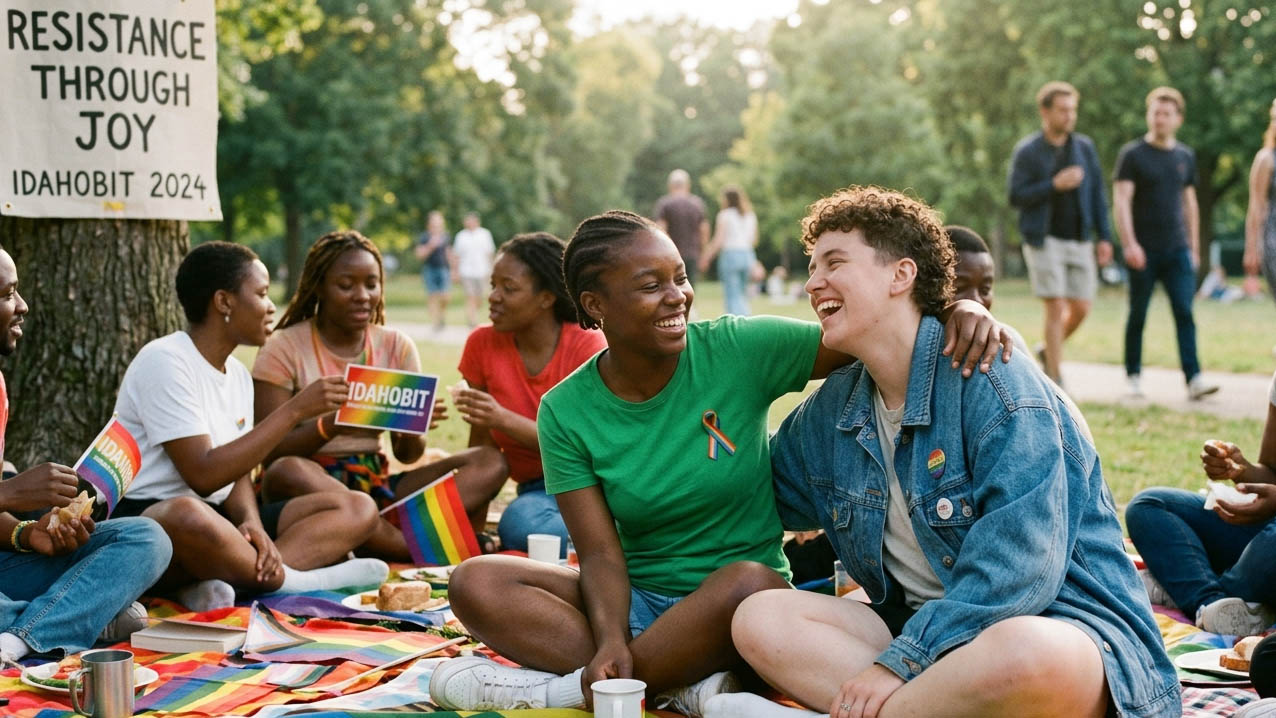
There is something deeply contradictory about organising an International Day Against Homophobia, Biphobia and Transphobia event in a society where homophobic slurs are still treated as humour, casual conversation, or cultural normalcy. You spend weeks preparing a space rooted in dignity and inclusion, while people outside that space still casually weaponise identity for entertainment.
This year, I successfully hosted an IDAHOBIT event in exactly that kind of environment. The success of the event was not measured only by attendance, decorations or whether the programme ran smoothly. It was measured by something far more meaningful: People showed up despite fear. People laughed freely without policing themselves. People spoke openly about identity, safety, discrimination and hope in a country where many still believe queer existence should remain invisible. That alone made the event powerful. In many African societies, homophobia often survives through language long before it manifests through policy. Slurs become so normalised that many people no longer recognise them as violence. They are passed around as jokes between friends, shouted at strangers in public spaces, and used to humiliate boys who are ‘too feminine’, women who are ‘too masculine’ or anyone who refuses to conform to rigid gender expectations. The frightening thing about normalised hate speech is that it creates an environment where discrimination feels acceptable because it sounds ordinary. When society laughs at queer people openly, it teaches others that queer pain is not serious enough to deserve empathy.
This is what made hosting IDAHOBIT emotionally complex. There is a unique exhaustion that comes with creating joy for a community that constantly has to defend its humanity. Yet there is also something revolutionary about insisting on joy anyway. Our event became a temporary world where people could exist without having to shrink themselves. The picnic setting, the rainbow colours, the games, the conversations and the music may have seemed simple on the surface, but they carried political significance.
In hostile environments, queer joy itself becomes resistance. What stood out most during the event was not only the resilience of LGBTQIA+ people but the quiet bravery of allies. In countries where queerphobia is socially rewarded, allyship can come with consequences, too. Some allies risk social exclusion, professional criticism or becoming targets themselves simply because they choose compassion over conformity. Their presence mattered. The event also reminded me that visibility changes things slowly, even when progress feels invisible. Every public conversation challenges silence. Every rainbow shirt worn openly disrupts shame. Every stakeholder who agrees to attend an IDAHOBIT event chips away at the idea that queer people are undeserving of community support.
Change rarely arrives dramatically. Sometimes it arrives disguised as a picnic. Of course, hosting such an event does not erase the realities LGBTQIA+ people still face afterwards. Participants return home to families that may not accept them, workplaces that remain discriminatory, churches that condemn them and online spaces filled with mockery. Many still navigate daily fear, isolation and mental exhaustion. However, even temporary spaces of affirmation matter deeply. For a few hours, people were able to breathe differently. They were able to exist without anticipating ridicule.
They experienced what community can feel like when it is rooted in care rather than survival. That matters more than many people realise. One of the biggest misconceptions about events like IDAHOBIT is that they are merely celebrations of identity. In reality, they are also acts of healing. They remind marginalised people that they are not alone, not abnormal and not disposable. In societies saturated with hostile language, that reminder can become lifesaving.
Hosting this event also forced me to reflect on how activism is often misunderstood. As the event came to an end, I realised that success was not about perfection. It was about persistence. It was about refusing to let hostility dictate whether LGBTQIA+ people deserve visibility, softness and joy.


















Leave a comment