


MBABANE – The Central Bank of Eswatini (CBE) has provided a crucial update on several failed investment schemes that collectively cost thousands of emaSwati millions of emalangeni.
The bank also assured the public that efforts to recover funds and hold promoters accountable remain ongoing.
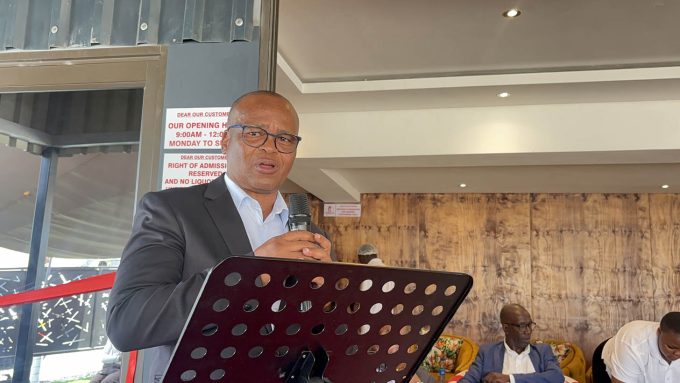
The update was delivered by the bank’s Head of Legal and Board Secretariat, Sikhumbuzo Fakudze, during the Central Bank’s annual media engagement dubbed Coffee with the Governor 2.0, held at Sibebe Resort on Friday.
Fakudze outlined the legal and regulatory measures available to the Central Bank when dealing with unauthorised deposit-taking activities, commonly associated with Ponzi schemes and provided progress reports on some of the country’s most notorious collapsed investment schemes, including Diamond Africa, QZ Asset Management, Channel S, Swaziland Women Economic Empowerment Trust (SWEET) and Ecsponent Eswatini Limited.
His presentation painted a picture of the complexity involved in recovering investor funds, particularly when scheme operators dissipate assets before regulators intervene.
Ponzi schemes have emerged as one of the most significant threats to financial consumers in Eswatini over the years.
According to Fakudze, the schemes often attract investors with promises of unusually high returns and lucrative investment opportunities.
However, when the schemes collapse, investors frequently find themselves unable to recover their money because promoters have already spent or hidden the funds.
He explained that the Financial Institutions Act of 2005 provides the central bank with both administrative and criminal enforcement powers to address unauthorised deposit-taking activities.
Where the bank suspects an individual or company is operating such a scheme, it first issues a cease-and-desist order directing the operators to stop accepting deposits immediately.
At the same time, the institution is required to submit information relating to its operations, including business details, bank account information and other relevant records.
Once investigations confirm unauthorised deposit-taking activities, the central bank may seek court orders to attach funds and assets belonging to promoters.
Fakudze explained that the bank has extensive powers to pursue recovery efforts.
Through ex-parte court applications, the central bank can obtain interim orders allowing for the attachment of funds and assets belonging to promoters and key individuals behind the schemes.
Significantly, the assets seized do not necessarily have to be directly linked to the unauthorised deposit-taking activities.
The law also empowers the Central Bank to appoint liquidators to take over the affairs of collapsed schemes.
These liquidators assume control of available assets, assess creditor claims and manage the sale of assets to generate funds for distribution to affected investors.
“The liquidator prepares an inventory of assets and lodges this with the High Court together with a statement of the nature and quantum of claims lodged by each creditor or depositor,” Fakudze explained.
*Full article available on Pressreader*



















Leave a comment