

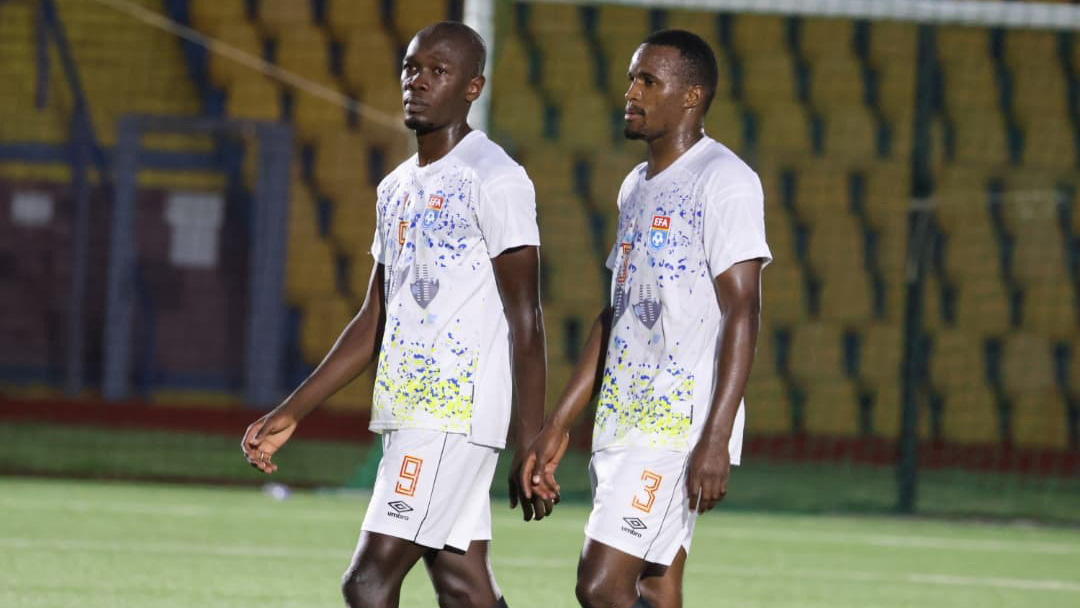
MBABANE – An inactive Sihlangu Semnikati remain rooted near the basement of global football.
According to the latest International Federation of Association Football (FIFA)/Coca-Cola Men’s World Rankings published on June 11, which was just hours before the expanded 48-team FIFA World Cup got under way in North America, Eswatini stagnated at 165th in the world. The ranking mirrors the dismal position first recorded in April following a catastrophic drop triggered by disappointing results against Eritrea in the Africa Cup of Nations (AFCON) Qualifiers. On the continental stage, the picture is equally bleak. Eswatini currently sit 48th out of the 54 Confederation of African Football (CAF) member associations, reflecting a deeply challenging competitive cycle.
While several African rivals capitalised on recent international friendlies to bolster their coefficients, Sihlangu’s inactivity has left them frozen in place. The current placement leaves Eswatini a staggering 77 places below their historic high of 88th, achieved during the 2016/17 season under the stewardship of former Head Coach Harries ‘Madze’ Bulunga.
While Eswatini stall, there has been significant movement at the absolute summit of the game. Reigning world champions Argentina have reclaimed the number-one spot just in time for their title defence. Following a series of pre-World Cup warm-ups, which marked the second scheduling window to employ FIFA’s real-time ranking updates during active international fixtures, Lionel Messi’s side surged to the top on the back of successive victories over Iceland and Honduras. Argentina displace Spain, who drop to second after being held to a draw by Iraq before bouncing back against Peru. Meanwhile, France have slipped to third in the world after suffering a surprise defeat to Côte d’Ivoire, despite a subsequent recovery victory over Northern Ireland. Further down the elite bracket, Morocco have made history. The ‘Atlas Lions’ climbed to seventh, marking their highest-ever global position since the inception of the official FIFA ranking system in August 1993. The North African powerhouses look poised to climb even further following their resilient 1-1 draw against Brazil in their World Cup opening match on Sunday, June 14.
For developing football nations like Eswatini, these global standings are far more than a source of superficial vanity; they dictate a country’s competitive destiny. When draws for major tournaments that include the FIFA World Cup and the Africa Cup of Nations are conducted, teams are seeded into distinct ‘pots’ based entirely on their FIFA ranking. By languishing in the lowest tiers, lower-ranked nations are effectively guaranteed a place in a tournament ‘Group of Death’, forcing them to square off against multiple elite powerhouses in the opening rounds. For Sihlangu Semnikati, escaping the bottom of the FIFA rankings is not merely an issue of national pride, but a mathematical necessity if they are ever to make meaningful progression on the continental stage.















Leave a comment