


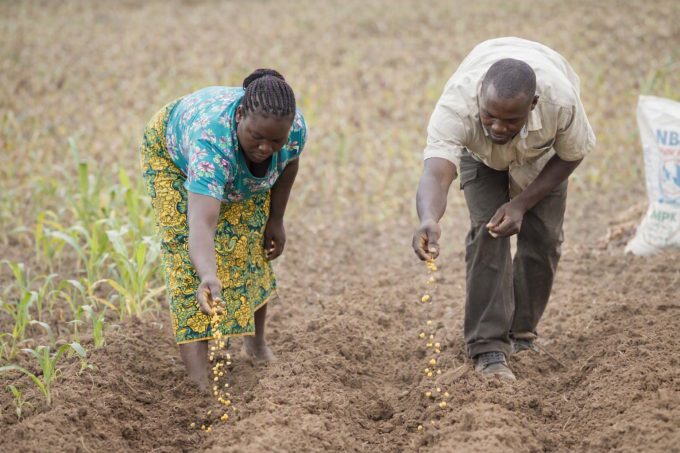
THE escalating impacts of climate change continue to threaten food security and nutrition across all countries in Africa. Smallholder farmers, particularly women, who produce 70-80 per cent of the food consumed in eastern and southern Africa face increasing risks from droughts, floods, cyclones and pests and diseases.
This has prompted the Eastern and Southern Africa Small Scale Farmers Forum (ESAFF) Eswatini to host a meeting yesterday at Mountain View in Mbabane, to engage with relevant government ministries and departments on issues of climate change, adaptation and mitigation and how small-scale farmers participate and benefit from such. ESAFF went on to assign Agri-Buiness Con¬sultant for Climate Change Sandile Bhembe to look deep into the challenges faced by small-scale farmers, more especially in the Lubombo Region and countrywide, to see how the small-scale farmers and government can assist each other.
“Small-scale farming is one of the ways that are used for a country to be food secure. With the rising costs of food, by investing in small-scale farmers we make sure the country is food secure and it leads to improved food security and environmental sustainability. When people take steps to increase their food security, they are building greater resilience in the face of rising food costs,” said Bhembe.
IMPACTS OF CLIMATE CHANGE
Climate change threatens the natural resource base that small-scale farmers depend on. “Climate change accelerates ecosystem degradation and makes agriculture/ farming more risky.
In the Lubombo Region extreme weather such as drought, hot waves and violent storms are more frequent and small-scale farmers are impacted more immediately,” he mentioned.
Bhembe went on to add that small-scale farmers and their families are more vul¬nerable because they have no assets to fall back on and limited ability to recover like commercial farmers. He said that the extreme weather in the Lubombo Region affects both crops and livestock. “Also, small-scale farmers also depend on natural/ wild fruits for survival, but cli¬mate change threatens their lively hood (e.g emaganu),” he added.
Eswatini Government’s intervention
“The Government of Eswatini is working hand in hand with non-governmental organisations (NGOs) like COSPE and World Vision in the Lubombo Region.
Through the Ministry of Agriculture, government together with NGOs, has a presence in the region to promote conservation agriculture (CA), which is wide¬ly used in the region,” said Bhembe.

















Leave a comment