

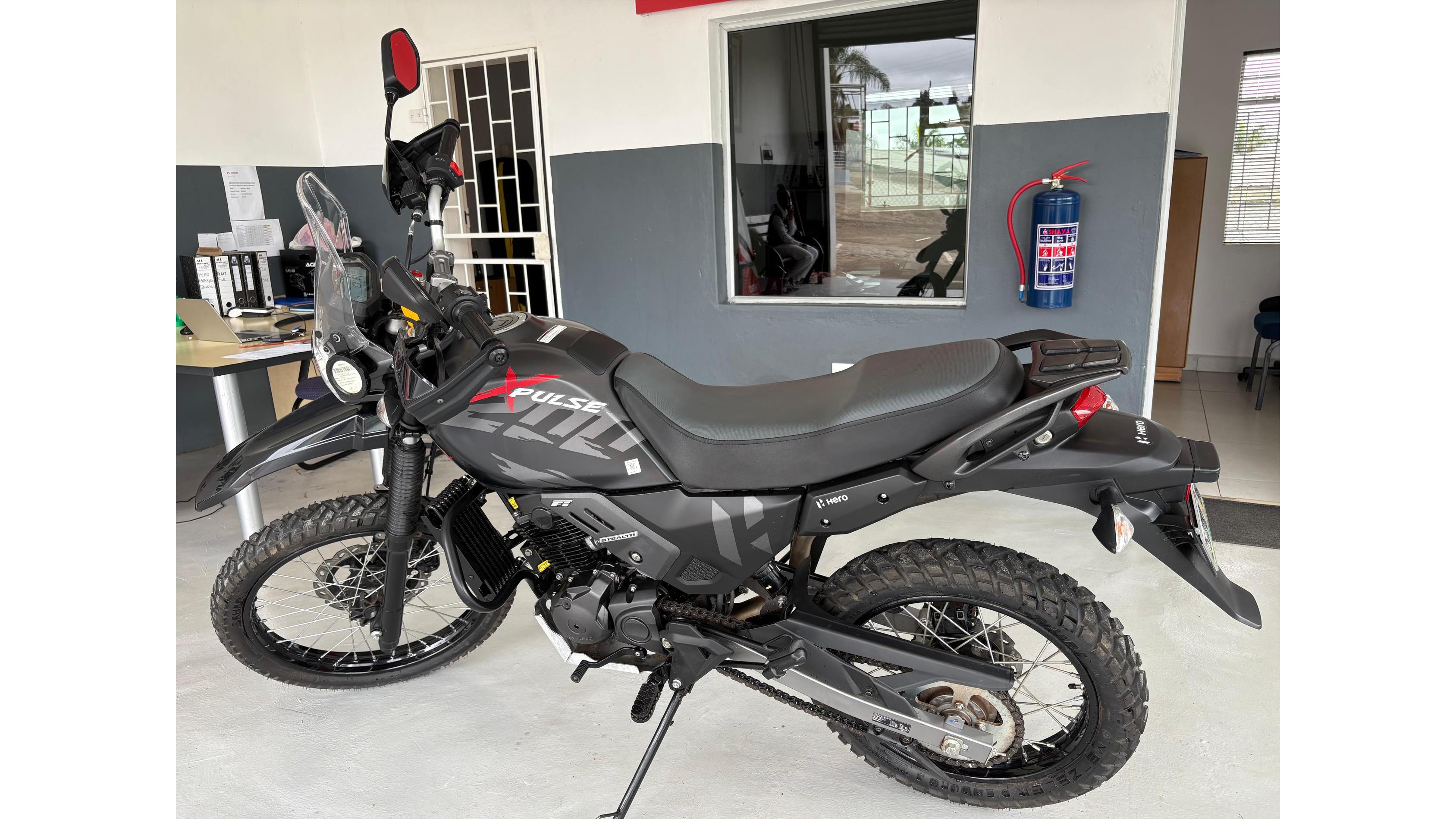
As Eswatini looks for smarter, cleaner and more cost-effective mobility, Hero Motorcycles’ line-up, led locally by the Eco 150 commercial and the Xpulse 200 (2V and 4V), deserves a fresh look. These bikes are built for utility, economy and durability and they arrive with tech that modern riders expect: USB charging, smartphone/Bluetooth connectivity and turn-by-turn navigation.
Why these bikes were built
Hero MotoCorp designs the Eco 150 and Xpulse 200 families to meet two clear needs, reliable, low-cost everyday transport for commuters and commercial users (Eco 150) and a durable, multi-terrain affordable adventure/utility machine (Xpulse 200). The Eco is targeted at delivery fleets and small businesses (features such as delivery-box brackets and a high-output USB port underline this), while the Xpulse brings an approachable dual-sport package with enough torque and suspension travel to handle poor rural roads and light off-road work.
QUICK SPECS:
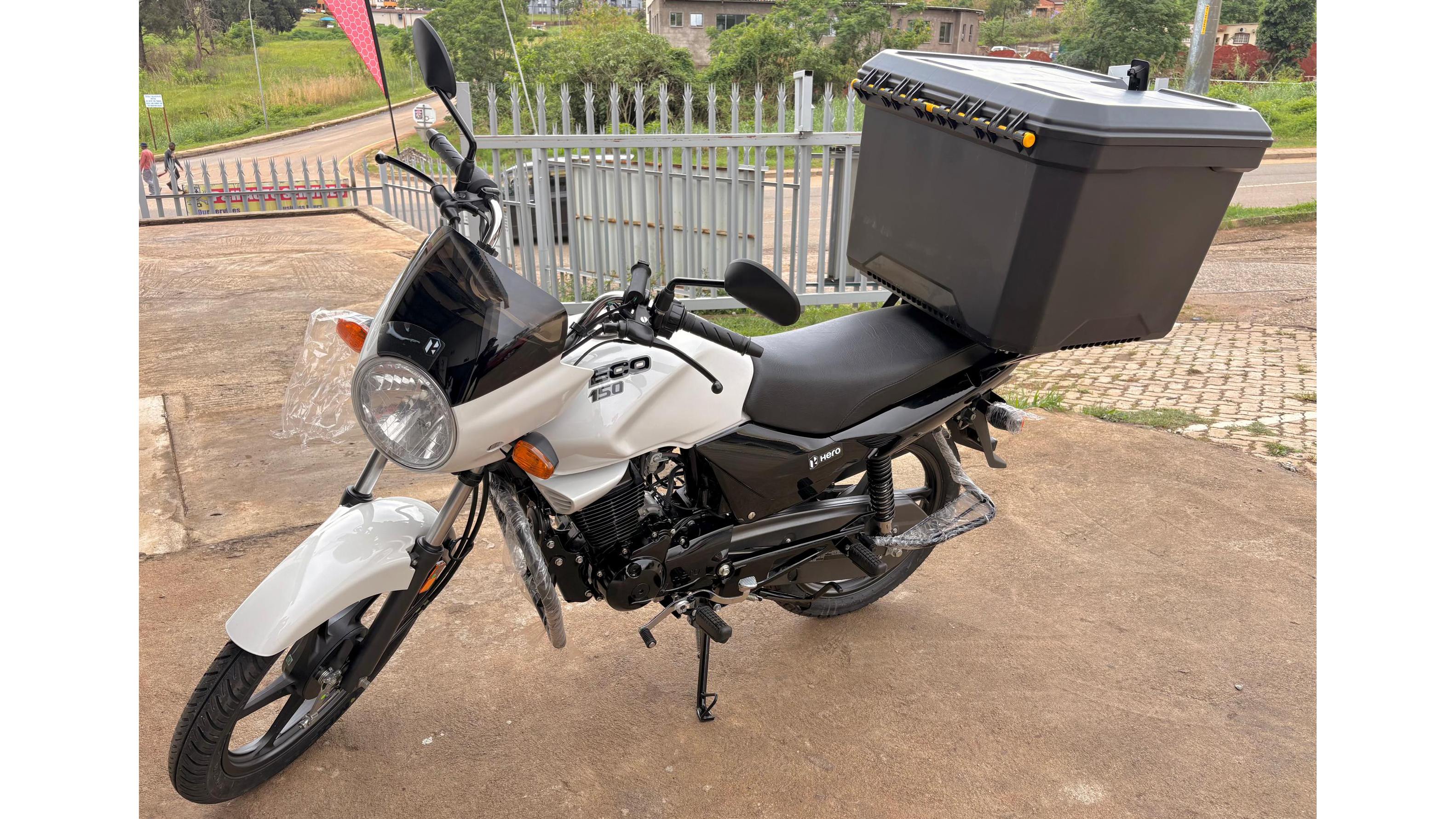
Hero Eco 150 (Commercial) – Practical commuter/commercial:
Engine: 150 cc, high-torque 1-cylinder commuter motor.
Transmission: 5-speed.
Fuel tank: 12.5L. Claimed fuel economy: Up to 60–65km per litre in commercial/commuter tune (manufacturer/dealer claims).
Kerb weight: 140kg.
Notable features: high-output USB charging port, delivery-box mounts, sealed chain guard, centre stand – built for duty.
Hero X-Pulse 200 (2V and 4V): Versatile dual-sport / adventure commuter:
Engine: 199.6 cc single; 2-valve (earlier) and 4-valve (improved breathing) variants; oil-cooled on newer models.
Power/torque: Roughly 17–19bhp and 16–17.5Nm (varies by 2V/4V).
Fuel tank: 13L.
Claimed fuel economy: commonly reported between 36–42km per litre depending on test cycle/variant – Xpulse 4V ARAI figures and independent reviews vary but all show excellent economy for an adventure bike.
Top speed / comfortable cruising: Generally, 110–125km/h top; best midrange cruising 80– /h.
Features: Fully digital instrument cluster with Bluetooth mobile connectivity, SMS/call alerts, turn-by-turn navigation and an on-bike USB charger; single-channel ABS on many variants, long-travel suspension for rough roads.
How these motorcycles can impact Eswatini’s economy and household budgets
1. Lower running cost for individuals and businesses: High fuel efficiency (Eco claimed up to 60km/l; Xpulse commonly 36–42km/l) means far fewer litres bought per month – direct savings for commuters and delivery fleets. Reduced fuel spend translates to more disposable income or better margins for micro-entrepreneurs.
2. Affordable parts and simple maintenance: Hero’s massive production scale and wide dealer/service network (Hero is the world’s largest two-wheeler manufacturer) help drive down parts cost and availability – meaning shorter downtime and lower workshop bills. Many Hero models are designed for long service intervals and easy field servicing, helping small businesses keep vehicles moving.
3. Jobs and local business: Broader adoption of motorcycles for delivery, last-mile logistics and small commercial uses can increase demand for riding-jobs, delivery services, spares shops and maintenance garages – a modest multiplier for local employment. While the exact number depends on adoption rates, the bikes’ low purchase and running costs make them accessible to a larger slice of the population. (For fleet planning, employers should calculate monthly fuel + maintenance + operator wages against alternative transport costs.)
Carbon footprint and eco-benefits
Motorcycles consume less fuel per km than most cars, so switching suitable short-trip and delivery work from cars or trucks to fuel-efficient motorcycles can reduce overall fuel burned and CO₂ emitted per trip. The Hero Eco 150’s very high km/l claims and the Xpulse’s strong fuel economy position them as lower-carbon options for everyday transport – especially when used to replace inefficient, older larger vehicles. (Exact CO₂ savings depend on local fuel carbon intensity and real-world fuel use.)
Features that matter to Eswatini riders
USB charging: Keeps phones and navigation powered during long trips or deliveries.
Bluetooth / smartphone pairing and navigation: Xpulse 200’s connected instrument cluster offers turn-by-turn directions and call/SMS alerts – important for riders who rely on mobile maps.
Comfort and durability: Longer travel suspension, crash bars and sturdy frames make these bikes suited to rough rural roads.
Service intervals, reliability and ownership cost
Hero publishes service schedules with reasonably spaced intervals (consult the owner’s manual for your specific variant). The company’s extensive dealership and service network, plus plentiful spare parts, keep maintenance costs lower than many imported niche brands. Warranties and dealer support for commercial variants (like the Eco) are tailored for business use. Prospective buyers should obtain local price and service packages from dealers to calculate monthly total cost of ownership.
Hero MotoCorp: A brand that’s stood the test of time
Hero MotoCorp is a global leader in two-wheelers, with substantial production, R&D and a long history of high-volume sales. In recent years the company has expanded into higher-technology bikes, invested in sustainability projects and diversified into new mobility segments – actions that underline their capacity to support long-term parts supply and aftersales for markets like Eswatini. These strengths translate into reassurance for fleet buyers and private customers alike.
It’s time to change how Eswatini looks at motorcycles
Motorcycles are not just a cheap alternative to cars – when chosen and used intelligently they are tools for economic inclusion: Lowering costs for small businesses, expanding access to work and saving fuel (and emissions) on everyday trips. The Hero Eco 150 and Xpulse 200 (2V & 4V) combine efficiency, ruggedness and modern connectivity at prices and running costs that suit our local context. For businesses planning fleets and for families balancing transport budgets, these bikes deserve serious consideration.













Leave a comment