

For many professionals across Eswatini, from corporate workers to government employees, the transition to working from home has become an enduring reality.
What began as a temporary measure for many emaSwati professionals has revealed a crucial distinction; there is a significant difference between merely working from home and establishing a truly productive, sustainable home office. The kitchen table and a mobile data connection might have sufficed initially, but for long-term success, creating a stable and intentional workspace has become essential.
The challenge facing remote workers in the kingdom is no longer simply about location but about creating effective systems. The boundaries between professional responsibilities and home life have become increasingly blurred, creating potential for both distraction and burnout, while technical limitations and frequent interruptions can undermine work efficiency. Establishing a space that balances productivity with personal well-being has emerged as a critical requirement for Eswatini’s evolving workforce.
The foundation: Defining your workspace
The initial step is physical. “The most successful remote workers in Eswatini understand that a dedicated workspace isn’t a luxury, it’s a necessity for maintaining professional focus, this does not require extensive space, but it does demand clear boundaries.
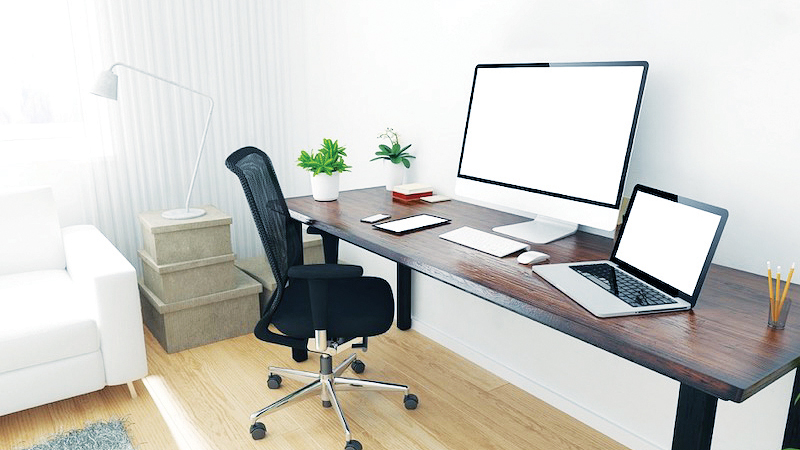
Whether it’s a quiet corner in the living room, a converted storage area or a partitioned section of a bedroom, consistency is key. This helps condition your mind to recognise “work mode” when you enter that space and encourages household members to respect your working hours. The ideal location avoids high household traffic and where possible, offers some separation from domestic activities.
The toolkit
The rhythm: Establishing productive routines
A successful home office extends beyond physical setup to include the systems and habits that structure the workday.
- Start and end rituals: Create transition routines. Begin the day with a brief activity like reviewing goals while drinking tea and conclude work by properly shutting down equipment and tidying the workspace to mentally separate from professional duties.
- Time management: Allocate specific blocks for focused work, meetings and administrative tasks.
- Using timers can maintain discipline and prevent the workday from becoming fragmented and inefficient.
- Scheduled breaks: Regular movement away from the workstation is vital. The 20-20-20 rule (looking at distant objects every 20 minutes) reduces eye strain, while short walks or stretching breaks can rejuvenate focus more effectively than stationary screen time.
Ultimately, building a productive home office in Eswatini represents an active commitment to designing an environment that supports both professional achievement and personal well-being. It’s about transforming temporary arrangements into permanent, effective workspaces suited for the kingdom’s changing professional landscape.
Call Wanderport Networks Eswatini today for a Reliable Internet Connection, we offer various packages to suit your everyday needs from 50Mbps to 1Gbps.



















Leave a comment