

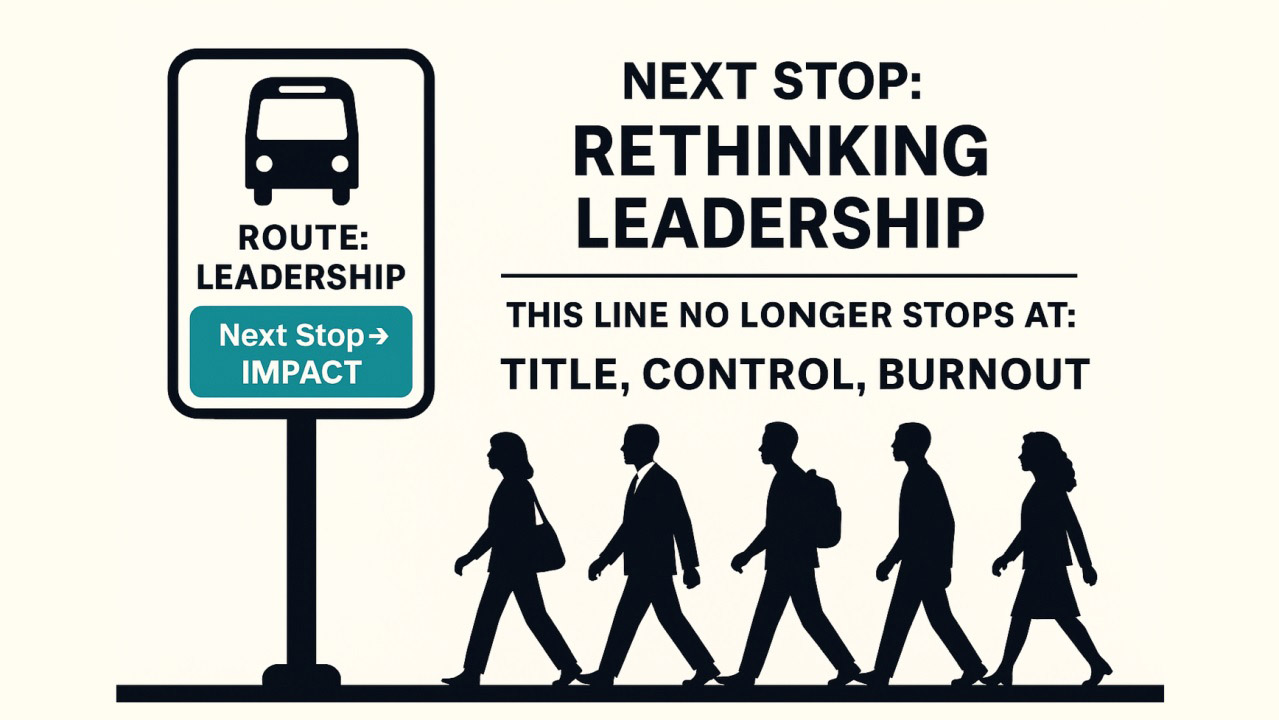
Leadership is often celebrated as the engine that drives organisational success. But what happens when that engine begins to pollute instead of propelling? When leadership turns from an asset into a liability, even the most talented teams begin to stall.
Toxic workplaces rarely start with policies; they start with people in positions of influence who misuse that influence. A single insecure or unaccountable leader can trigger a ripple effect across an entire organisation. Fear replaces initiative, compliance replaces creativity and eventually, disengagement becomes normalised.
Not all toxic leaders shout or threaten. Some manage through manipulation, favouritism or selective communication. Others create confusion by constantly changing expectations or withholding information.
The damage is subtle but cumulative staff lose trust, teams lose clarity and the business loses momentum.
When leadership becomes inconsistent or emotionally unpredictable, employees begin to prioritise self-protection over performance. Over time, people stop sharing ideas, avoid taking initiative and operate solely within what feels ‘safe,’ creating a quiet organisational slowdown long before results show the true impact.
Research by Gallup and the Harvard Business Review consistently link poor leadership behaviour to high turnover, absenteeism and reduced profitability.
In contrast, employees who trust their leaders are four times more likely to be engaged and twice as likely to stay.
Effective leadership, therefore, isn’t just about targets, it’s about trust.
In Eswatini, we often see talented managers promoted for technical excellence, but given little guidance on people management.
The result is well-intentioned leaders struggling with communication, conflict resolution or emotional intelligence.
Leadership training, coaching and honest feedback are not signs of weakness they are signs of maturity and commitment to growth.
Toxic leadership thrives in silence. When colleagues, HR practitioners or even boards ignore problematic behaviour because ‘that’s just how they are,’ the organisation begins to quietly decay from the top down. The most loyal employees are often the first to burn out because they try to hold things together without real authority or support.
The solution lies in accountability not punishment. Performance evaluations should include leadership behaviour as a measurable outcome, not just financial or operational metrics. Anonymous employee surveys, mentorship programmes and 360-degree feedback systems can help leaders see themselves through the eyes of those they lead.
Healthy leadership is self-aware leadership. It asks hard questions: How do my actions make others feel? Do people grow under my supervision or shrink?
When leaders model humility and fairness, employees mirror it. Culture shifts not through memos, but through example. Because at its core, leadership is not about titles it’s about the tone you set. And when that tone is toxic, no policy can save the music.


















Leave a comment