

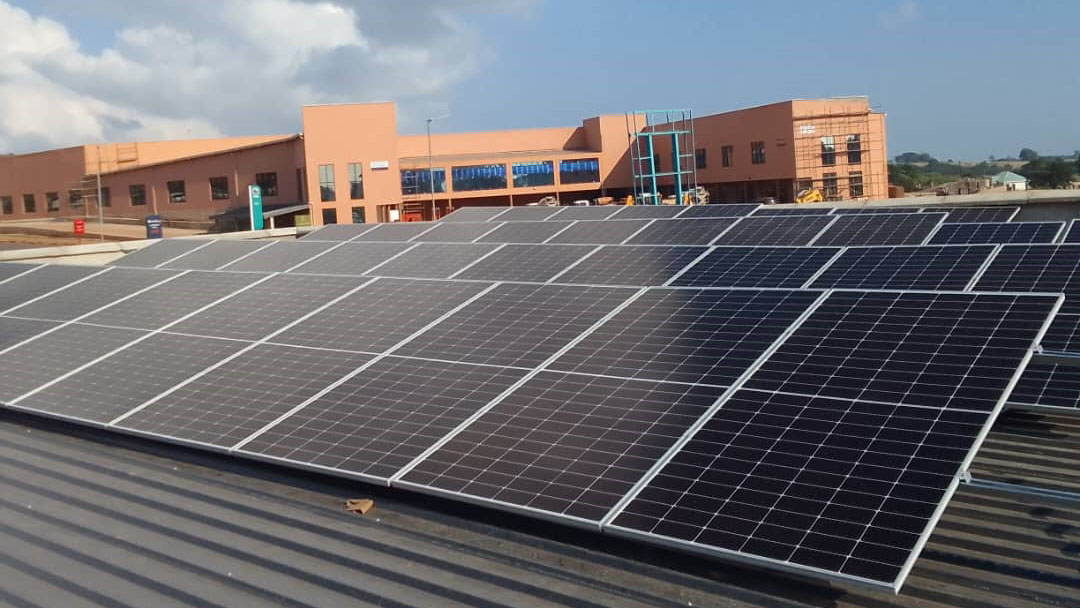
As emaSwati brace for a proposed electricity tariff hike that may come into effect by April this year, many households and businesses are exploring alternatives that can protect them from rising energy costs and unreliable supply.
Solar energy has emerged as one of the most practical long-term solutions, offering both energy independence and cost certainty.
With the assistance of Ecosy Energy Director, Mpendulo Dlamini, we unpack how solar systems work, what a typical solar installation looks like and most importantly, how much you realistically need to budget to go solar in Eswatini. The goal is simple: To help you understand how deep you may need to dig into your pockets today in order to save on electricity expenses tomorrow.
How a solar power system works
Dlamini mentions that a standard solar power system is made up of three key components: Solar panels, an inverter and batteries.
“Solar panels are responsible for generating electricity from sunlight. When the sun shines on the panels, they produce electrical power in the form of direct current (DC). This DC power cannot be used directly by most household appliances, which operate on alternating current (AC),” shares the director.
This is where the inverter comes in. “The inverter is the brain of the solar system and performs several critical functions. First, it converts the DC power generated by the solar panels into AC power that can be used by household appliances such as televisions, fridges, lights and cookers. Secondly, during daylight hours, the inverter charges the batteries until they are fully charged.
“The batteries act as an energy storage solution. Their main role is to store excess power generated during the day so that electricity remains available when the sun sets or during cloudy periods. This ensures that the household continues to enjoy uninterrupted power supply even when solar panels are no longer actively producing electricity,” mentions Dlamini.
Understanding solar system costs in Eswatini
One of the most common questions emaSwati ask is: How much does it actually cost to install a solar system? According to Dlamini, the price of a solar system largely depends on the size of the system and the energy demands of the household or business. Note: Prices may vary according to the contractor you use.
Entry-level solar system: 3kVA
The smallest system offered by Ecosy Energy is a 3kVA solar system, priced at approximately E42 000, including installation.
This system is ideal for basic household needs and can comfortably power:
- A refrigerator
- Television
- Lights
- Wi-Fi router
- Microwave
This setup is suitable for small households looking to reduce reliance on the grid while covering essential daily power needs.
Mid-range option: 5kVA system
A 5kVA solar system costs around E69 000, inclusive of installation. This system offers greater flexibility and can support a wider range of appliances.
It can power:
- Cooker
- Refrigerator
- Kettle
- Iron
- Microwave
- Geyser
This option is well-suited for medium-sized households with higher daily electricity consumption.
High-capacity systems: 8kVA and 10kVA
For households with heavier energy demands, Ecosy offers an 8kVA system, priced at approximately E118 000, including installation.
This system is capable of running:
- Geyser
- Stove
- Heater
- Microwave
- Refrigerator
- Iron
- Kettle
- Pool pumps
- Water pumps
In essence, the 8kVA system can handle almost all standard household electrical loads.
For even greater capacity, a 10kVA system is available at around E136 000. While it powers similar appliances to the 8kVA system, it provides additional headroom for larger homes, higher simultaneous usage, or future expansion.
What determines the final cost of a solar installation?
The final cost of installing a solar system is influenced by several factors, with the most important being the base load of the customer.
According to Dlamini, Ecosy Energy begins every project with a load analysis. This process assesses how much power a household or business consumes under normal conditions. “Based on this analysis, engineers design a system capable of supplying the required loads while accounting for system losses and maintaining steady-state operation.
“If a household has a high energy demand, such as multiple high-power appliances running simultaneously, the system design becomes larger and more complex.
“Naturally, this leads to higher costs. In simple terms, the more power you need, the bigger the system required and the more you will pay upfront,” he said.


















Leave a comment