

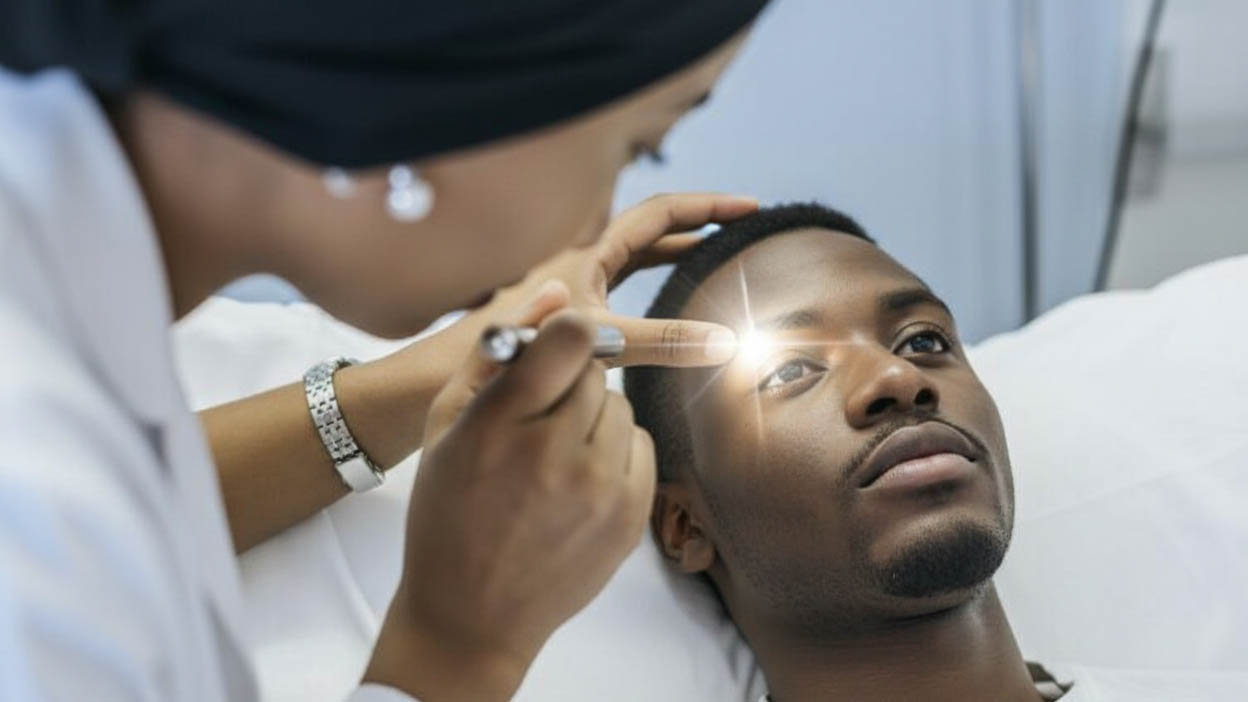
January is National Glaucoma Awareness Month, an important time to spread the word about this sight-stealing disease.
Glaucoma is one of the leading causes of vision loss and blindness. It is actually a group of diseases where pressure builds up and damages the eye’s optic nerve.
In an interview with an optometrist in one of the local government healthcare facilities, Menzi Hlatshwayo, he mentioned that types of this disease include open–angle glaucoma, which causes peripheral eyesight to slowly reduce sight, angle–closure glaucoma, where pressure on the iris interferes with fluid draining, and low–tension glaucoma, which occurs without high pressure on the eye.
According to Hlatshwayo, there is currently no way to restore vision lost from glaucoma.
“Despite this disease being a well-known eye condition, it often goes unnoticed because it doesn’t present symptoms in the early stages.
“The first symptom associated with glaucoma is gradual vision loss, and once you lose vision to glaucoma, it is irreversible.
“If you have ever heard glaucoma referred to as the silent thief of sight, this is why,” said the eye specialist.
Risk factors for glaucoma include being over the age of 60, having a family history of glaucoma, being diabetic and being extremely near-sighted. “If a patient shows several risk factors, they should be aware and visit an eye doctor immediately, so that they know what they can do to lower risks for vision loss,” he said.
So how do you make sure the silent thief does not sneak up on you? “The most important thing is awareness; people should know what glaucoma is and what the risks are. It will be easier to determine how frequently you have eye exams based on that risk. If you get diagnosed with glaucoma, you will be able to treat it faster.
There is no cure for glaucoma, but early treatment can prevent further optic nerve damage and preserve your vision. The earlier you have glaucoma diagnosed, the sooner you can start a comprehensive treatment plan to manage the disease and slow its progress, said Hlatshwayo.
While anyone can develop glaucoma, those who are overweight, diabetic, people with high blood pressure, seniors are at significantly higher risk to suffer from glaucoma-related vision loss.
Here is what everyone can do to protect their eyesight:
Watch your weight – Maintaining a healthy body weight lowers your risk of developing diabetes or high blood pressure which, in turn, decreases your likelihood of developing classic glaucoma or glaucoma-like retinopathy. Stick to a balanced diet and try to exercise regularly.
Monitor and control blood pressure – If you have hypertension, check your pressure every morning and every night. Regular exercise, low-sodium and low-calorie diets can help you control your blood pressure and minimise the risk of developing hypertension-related glaucoma.
Have an annual, thorough eye exam ever year – Make sure that you see an optometrist every year for an eye exam, and that they tests you specifically for glaucoma.













Leave a comment