

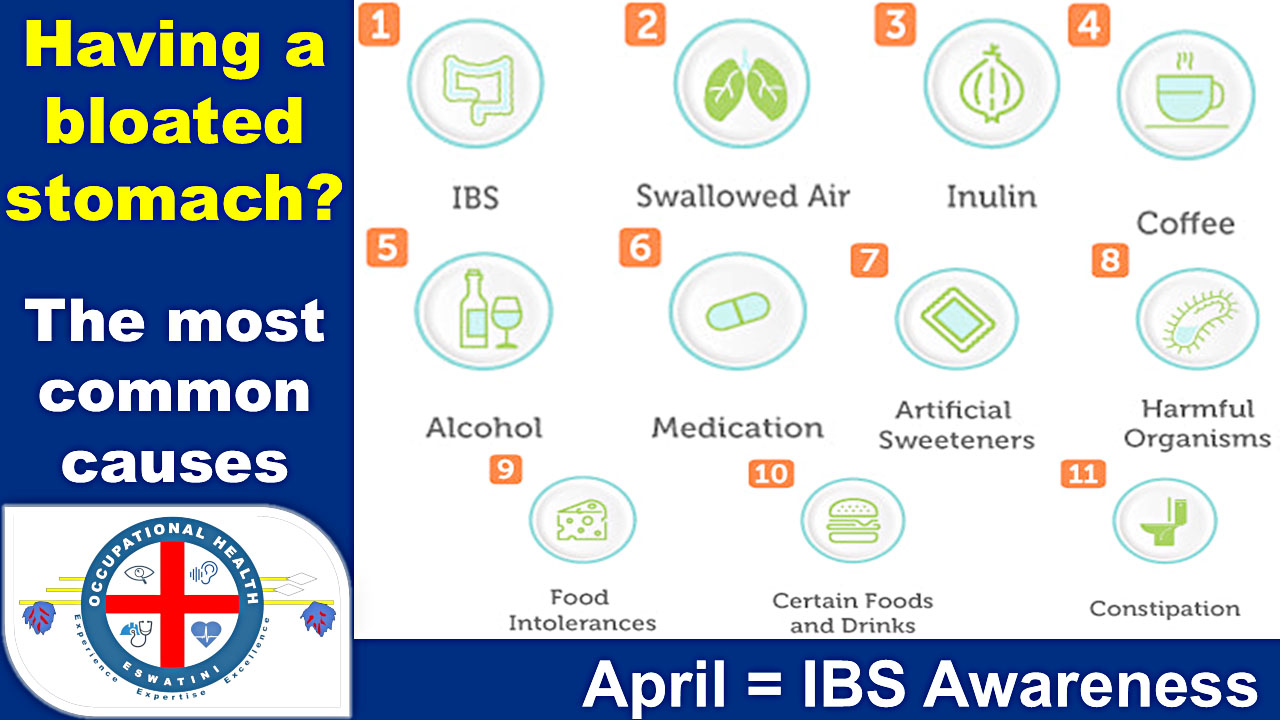
Mrs B is a working 26-year-old female complaining of feeling bloated the past 3 months. Her abdomen even swells up after eating, as if she is pregnant, which reduces a few hours later.
What is bloating?
Bloating is mostly caused by excess intestinal gas. If it mainly occurs after eating, it’s likely a digestive issue. It might be as simple as eating too much too fast, or you could have a food intolerance or other condition that causes gas and digestive contents to build up. Your menstrual cycle is another common cause of temporary bloating. Sometimes a bloated stomach can indicate a more serious medical condition.
What causes bloating in the stomach?
- Gas is a natural byproduct of digestion, but too much intestinal gas means there’s too much fermentation going on i.e., carbohydrate malabsorption, small intestinal bacterial overgrowth (SIBO), functional digestive disorders or irritable bowel syndrome (IBS).
- Digestive contents can build up in your digestive system when there is a backup or restriction in your digestive tract or when the muscles that move digestive contents along are somehow impaired i.e., constipation, bowel obstruction, motility disorders or recent weight gain.
- Menstrual cycle. As many as 3 in 4 women say they experience abdominal bloating before and during their menstrual periods.
- Persistent bloating causes may include Ascites, pancreatic insufficiency, peptic ulcers, gastritis or enteritis (often seen with H. pylori infection or when drinking too much alcohol.
- Cancer involving ovaries, uterus, colon, pancreas, stomach or mesenteries.
Important findings during consultation:
Mrs B recently started a new job, 4 months ago, which is causing severe stress. Her abdominal swelling is less over weekends.
DrT’s advice:
See your doctor to confirm the cause, which is most likely IBS,
- Remedies to help reduce bloating will depend on the cause of your bloating:
- Reduce gas forming food in your diet.
- Herbal teas, including peppermint, chamomile, ginger, turmeric and fennel can aid digestion and help process gas.
- Peppermint oil capsules help your intestinal muscles relax.
- Antacids have been shown to relieve inflammation in the digestive tract and help pass gas more easily. Antacids often include the active ingredient simethicone, which works to pass gas by grouping smaller gas bubbles together.
Simethicone is also available separately.
- Magnesium supplements help to neutralise stomach acid and relax the intestinal muscles.
- Probiotics can help supplement or rebalance your gut bacteria.
- Psyllium husks are a popular fibre supplement that can help you poop more regularly.
- Regular exercise with a focus on core body strengthening can help combat abdominal bloating.
Get screened: You might need an internal camera probe inspection, gastroscopy (from mouth to small intestines and/or colonoscopy from anus to small intestines.
More to follow…
Part 2 is available on The Times of Eswatini (X), dr.thys (Instagram) and OccHealthEswatini (Facebook).
Need advice on a health concern?
World Parkinson’s Day is observed on 11 April. For Dr.T’s advice, send your health topic related concerns via email talkingtodrt@gmail.com or direct message to dr.thys (Instagram).



















Leave a comment