

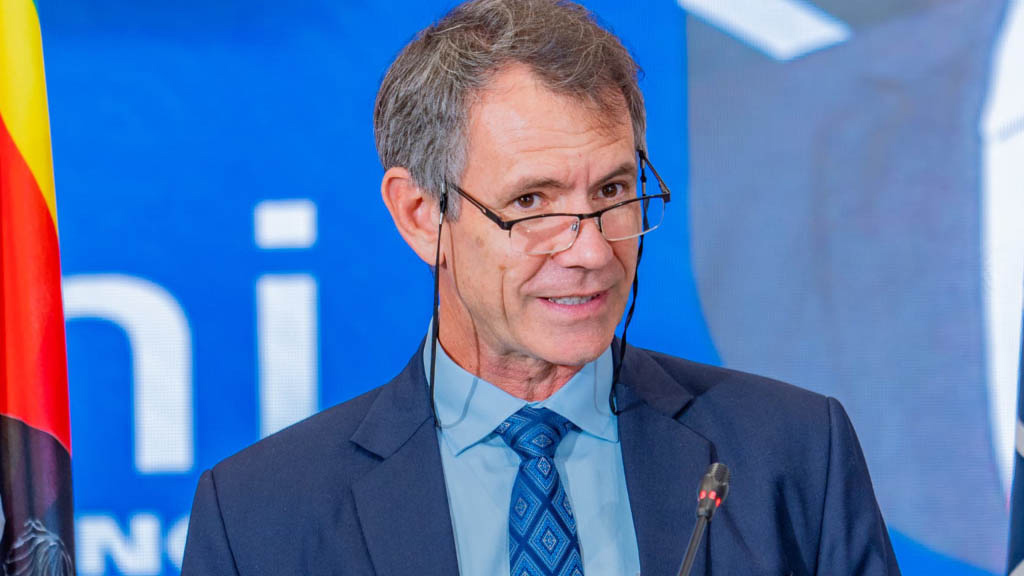
MBABANE – Finance Minister Neal Rijkenberg has cautioned that rating agencies such as Moody’s Ratings could downgrade the country’s outlook.
This is if government’s borrowing continues to rise.
The next specific calendar date for Moody’s to publish a scheduled credit rating review for Eswatini is not currently public. Moody’s evaluates sovereign ratings annually or as-needed, with their most recent action for Eswatini being an affirmation at B2 with a stable outlook issued in late 2024. In his weekly Finance in Focus address, Rijkenberg said the kingdom had spent years rebuilding confidence among international financial institutions, transforming Eswatini from what was once viewed as ‘virtually uninvestable’ into a country regarded as attractive to investors. However, he said recent increases in public debt have raised concerns that those gains could be reversed if borrowing is not carefully managed. “We have unfortunately gone from 40 per cent last year to 45 per cent debt, and this year we might be going to 50 per cent debt-to-GDP,” he said.
According to the minister, this level of indebtedness would be viewed as a ‘red light’ by institutions that assess Eswatini’s fiscal health, including the International Monetary Fund, the World Bank and Moody’s Ratings.
He explained that these organisations publish assessments that heavily influence whether international financiers are willing to lend to governments and businesses operating within a country.
“The world of finance looks at these reports before deciding whether finance is available to Eswatini,” he said. Rijkenberg said previous IMF, World Bank and Moody’s reports had painted a bleak picture of Eswatini’s economy, citing an unsustainably high government wage bill, widening fiscal deficits, volatile Southern African Customs Union (SACU) revenue, spending outside approved budgets and concerns surrounding the country’s political system. He said government undertook major reforms to address these concerns. Moody’s Investors Service rates the Kingdom of Eswatini at B2 with a stable outlook. A credit rating is a letter grade given by financial agencies to show how likely a country is to pay back its debts. It acts like a financial ‘report card’ for global investors.
The B2 rating means the country is considered a ‘highly speculative’ investment, meaning there is some financial risk, but the government is stable enough to manage its current debts.
The stable outlook means Moody’s expects this rating to stay the same for the near future. Moody’s upgraded Eswatini from B3 to B2 because the government has made good progress on fiscal consolidation, a plan to reduce government spending and pay off old debts. Eswatini has successfully paid back suppliers it owed money to and kept its public debt-to-GDP ratio lower than similar countries. A debt-to-GDP ratio compares how much a country owes to the total value of everything it produces. Having a B2 Stable rating is good news for Eswatini. It tells the world that the country is safer to invest in, which helps the government borrow money at lower interest rates. This saves money that can be used for local building projects.
Among the measures implemented were a public service hiring freeze that reduced the wage bill from 42 per cent of government expenditure to 32 per cent before rising slightly to 33 per cent following this year’s salary review.
Government also reduced the fiscal deficit from about 7.5 per cent of gross domestic product (GDP) to around two per cent, stabilised public debt at roughly 40 per cent of GDP, established a SACU Stabilisation Fund to cushion fluctuations in customs revenue, and maintained expenditure within approved budgets for several consecutive years. These reforms, he said, fundamentally changed international perceptions of Eswatini. “The reports changed the narrative from saying virtually Eswatini is uninvestable towards saying Eswatini is investable,” Rijkenberg said. He said the improved ratings opened significantly more financing opportunities for local businesses while allowing government access to international funding that had previously been unavailable. The minister attributed much of the country’s improved economic performance to this renewed investor confidence. Eswatini’s average economic growth, he said, increased from around two per cent before the COVID-19 pandemic to approximately five per cent in recent years, driven largely by greater access to financing for business expansion.
*Full article available on Pressreader*
















Leave a comment