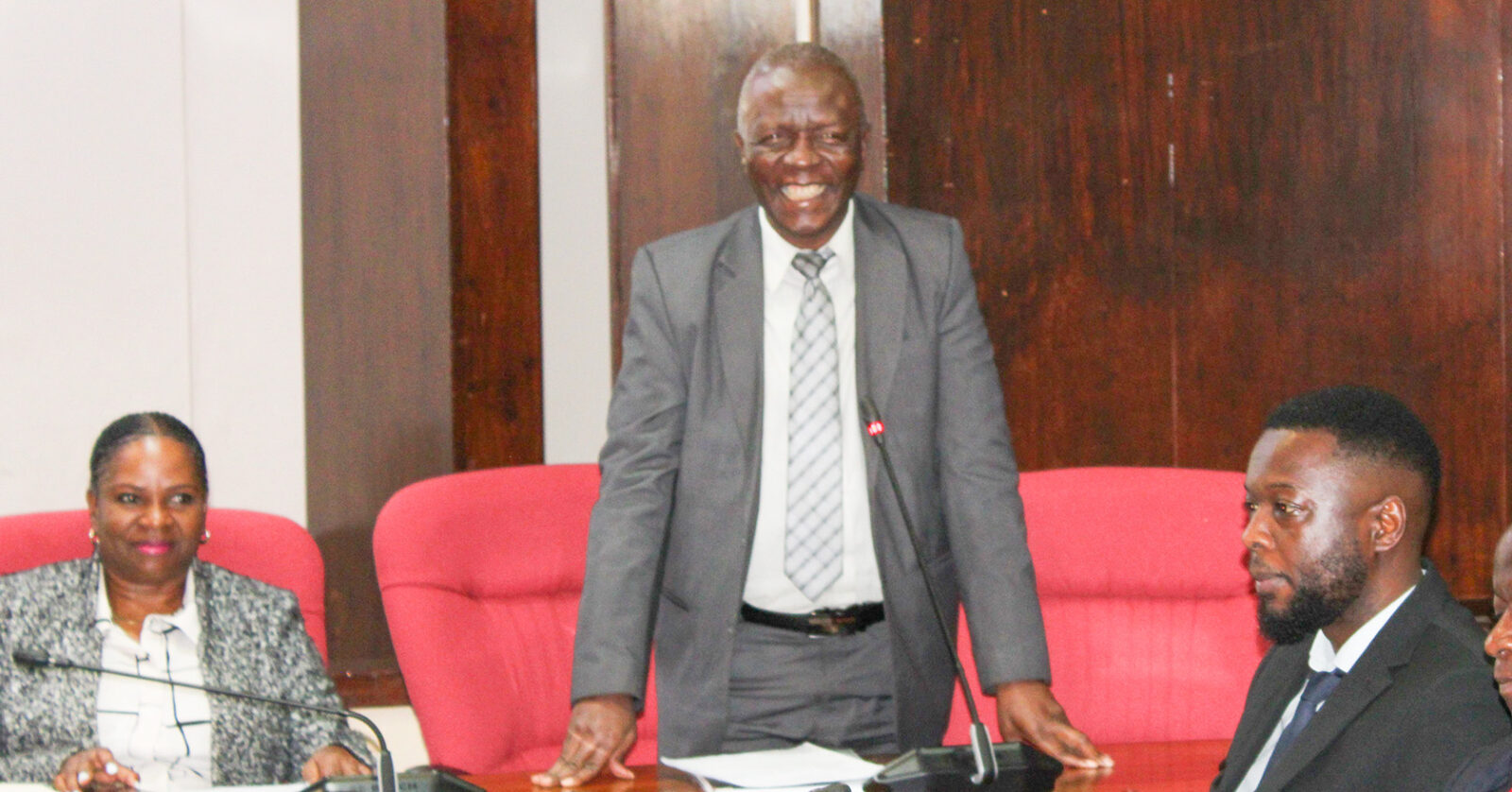
LOBAMBA – Minister for Justice and Constitutional Affairs, Prince Simelane has clarified the status of third-country nationals deported from the United States of America to Eswatini.
The minister insisted that they are not prisoners despite being accommodated at correctional facilities. He made the remarks yesterday while responding to questions from Members of Parliament during the Portfolio Committee debate on the Ministry of Justice and Constitutional Affairs’ first quarter performance report for the 2026/27 financial year.
The issue was raised after MPs sought clarity on the memorandum of understanding (MoU) between Eswatini and the United States, particularly on the number of deportees expected, the funding arrangement and reports that the deportees were allowed to move freely outside the correctional facility.
Mbabane East MP Welcome Dlamini questioned whether the funding received by government covered all 160 deportees reportedly provided for under the agreement or whether additional funding would be provided if more individuals arrived. He also asked whether there was room to renegotiate the financial terms, arguing that the amount appeared inadequate.
Dlamini further raised concerns over reports that some deportees had been seen shopping at The Gables Shopping Centre and were receiving a monthly allowance of E500.
He also questioned provisions in the MoU that reportedly allowed the United States to deport even individuals classified as terrorists, saying Parliament needed clarity on the country’s obligations under the agreement.
Ntondozi MP Vulinjini Ngwenya said the issue continued to generate public concern and urged the minister to provide definitive information on the number of deportees expected. He also questioned whether Eswatini’s correctional facilities had the capacity to accommodate additional deportees when existing facilities were already under pressure.
Ngwenya further sought clarity on who was funding the deportees’ upkeep, noting reports that funds provided under the agreement were being managed by the National Disaster Management Agency (NDMA).
Responding, Prince Simelane rejected the characterisation of the deportees as prisoners, saying such descriptions created an inaccurate impression of Eswatini’s role under the agreement. “Referring to the third-country nationals as prisoners does not put the country in good light. These are not prisoners. They can visit anywhere. Under United Nations guidelines, we are supposed to have a proper facility to accommodate such people,” he said.
The minister also dismissed claims that the deportees were receiving preferential treatment at taxpayers’ expense, explaining that the monthly allowance and other living expenses were financed through funds provided by the United States Government.
“They do receive E500 per month and are taken to do their shopping. They are not going to run away. They are human beings; it is just that they are not wanted in the United States,” Prince Simelane said.
Ngwenya, however, questioned why individuals who were not considered inmates were being housed at correctional facilities instead of alternative accommodation.
In response, the minister acknowledged that the current arrangement was not ideal but reiterated that the immigrants were not serving prison sentences. “It is true that these are not prisoners. Some of them were simply arrested for entering the United States illegally,” he said.