MBABANE – Three Malawian nationals were allegedly lured to Eswatini under the false premise of agricultural employment.
While in the country, they were reportedly subjected to forced labour. The revelations are contained in the Private and Cabinet Office first quarter performance report, which was formally tabled in Parliament.
According to the detailed performance review of the Prevention of People Trafficking and People Smuggling Secretariat, the Royal Eswatini Police Service is currently actively investigating one harrowing case of potential trafficking that lays bare the ruthless exploitation of foreign nationals. The matter is before Parliament.
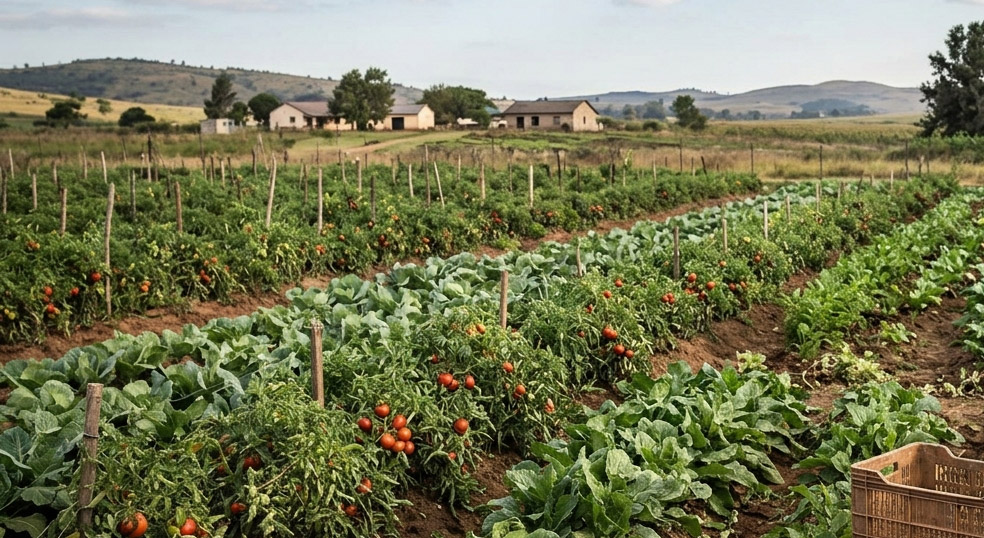
The three male victims were reportedly recruited from Malawi with the promise of legitimate work in the vegetable farming sector. However, upon their arrival in Eswatini, the grim reality of their situation materialised when they were subjected to forced labour, stripped of their autonomy and forced to work under coercive conditions. This case forms the centrepiece of the secretariat’s first-quarter report, highlighting the acute challenges faced by the Kingdom in its bid to eradicate modern-day slavery.
The secretariat, which operates under the legislative framework of The People Trafficking and People Smuggling (Prohibition) Act of 2009, is mandated to coordinate, evaluate and monitor the national implementation of anti-trafficking programmes. The report meticulously details how the state apparatus is mobilising under the four core pillars of prevention, prosecution, national co-ordination and international co-operation to respond to such heinous crimes.
The investigation into the plight of the Malawian men is being handled through the Tripartite mechanism, a specialised coalition comprising the Royal Eswatini Police Service, the Directorate of Public Prosecutions and the secretariat itself. Despite the gravity of the ongoing investigation and the clear identification of the victims, the report delivers a sobering assessment of the prosecution landscape, noting that during the period under review, there were no new cases that commenced prosecution and crucially, no cases were concluded within the country’s courts.
While the wheels of justice may be turning slowly in the courtroom, the State’s protective mechanisms have been vigorously activated. The report reveals that there are currently three victims under direct State care, a critical intervention managed in close collaboration with the Department of Social Welfare, the Royal Eswatini Police Service, the Directorate of Public Prosecutions and various non-governmental organisations. Recognising the vital need for safe havens, the Inter Agency Task Force has concluded comprehensive assessments of three non-governmental shelters that have expressed a willingness to house victims of trafficking. These assessments were rigorous and phased. It is reported that an initial evaluation was conducted in December 2025, with the second and third stages being successfully concluded during the first quarter under review.
During the first quarter, the office initiated a strategic collaboration with the church, specifically reaching out to the Council of Churches, the Conference of Churches and the League of Churches. It is reported that the objective is to permeate the church forum with awareness, targeting not only the leadership, but the youth and adult congregations. During the period under review, an intensive awareness-raising activity was conducted within this faith-based sector, with one specific church being thoroughly sensitised. According to the report, this grassroots mobilisation has been supplemented by occasional public sensitisation campaigns executed through print and electronic media, featuring interviews on reported cases, statistical updates and vital precautionary messages designed to alert the public to the tricks used by traffickers.
At the strategic level, national coordination has been spearheaded by the Inter Agency Task Force, a multi-sector committee that has maintained a relentless schedule of meetings during the quarter to combat people trafficking and smuggling. A significant developmental milestone outlined in the report is the ongoing review of the National Strategic Framework and Action Plan (NSFAP) 2019-2025.
According to the report, the task force’s recommendations have been incorporated into this revised document, which has subsequently been handed over to the International Organisation for Migration (IOM) to ensure technical finesse. It is understood that once the IOM completes its technical review, administrative processes, including widespread stakeholder consultations, will commence. Furthermore, capacity building has remained a priority. The secretariat has continued to conduct training sessions in collaboration with the office of the national commissioner of the Royal Eswatini Police Service, the attorney general and the Director of Public Prosecutions.
Personnel from the Criminal Investigations Department and other police divisions have undergone intensive in-service training to better identify and handle trafficking syndicates. Looking ahead, the report outlines planned activities that include two vital trainings. The first targets regional supervisors within the tripartite stakeholders to ensure the standardised implementation of anti-trafficking protocols.
The second is tailored for the Emergency Response Team, which encompasses the Department of Social Welfare, Immigration, Prosecution, Police and Emergency Medical Services, ensuring that frontline service providers are fully equipped to deliver immediate victim care, support and protection. It is said that the kingdom continues to actively participate in the United Nations Office on Drugs and Crime United Nations Convention Against Transnational Organised Crime.
Under this umbrella, member States review their peers through the Protocol to Prevent, Suppress and Punish Trafficking in Persons, Especially Women and Children.
In a display of diplomatic engagement, Eswatini, in collaboration with Lithuania, is currently reviewing the nation of Uganda, while simultaneously partnering with Moldova to review Hungary. The kingdom is also slated to be reviewed by Haiti and Sierra Leone, although this process has experienced delays due to technical issues.
Additionally, Eswatini has thrown its weight behind global initiatives to combat the misuse of artificial intelligence and scam centres, which are increasingly being utilised by syndicates to recruit and ensnare victims for trafficking purposes.
On another note, during the quarter, the head of the public service supervised the successful execution of the 2026 Cabinet Retreat, a five-day intensive session where ministers signed a declaration to accelerate the “Nkwe” programme of action. This programme focuses heavily on economic growth, poverty eradication and employment, which are factors that are intrinsically linked to reducing the socio-economic vulnerabilities that traffickers exploit.
According to the report, this office provides essential policy advisory, administrative and secretarial support to the prime minister and the Cabinet, functioning as the chief advisor on management systems and government organisation, as enshrined in Section 74 of the National Constitution.
The administrative engine room of the government supported 11 comprehensive Cabinet meetings, seven standing committee on public enterprises meetings and facilitated 10 joint negotiations forums to maintain civil service alignment. It achieved a staggering 99.2 per cent efficiency rate in communicating final Cabinet decisions to relevant ministries within 48 hours of meeting adjournments and distributed 98.5 per cent of Cabinet materials to ministers at least 48 hours before scheduled meetings to ensure adequate preparation.
The report issues a stark warning regarding the e-cabinet system, which is failing to support legislative operations due to severe server capacity deficits and system-wide technical glitches. These infrastructure failures are preventing ministers from accessing critical Cabinet papers during active sessions and causing widespread delays in policy paper submissions.
In another development, the Government Security Office has successfully prequalified and shortlisted private security service providers to bolster security across government ministries, a move approved by the Eswatini Government Tender Board. The security office has secured a dedicated security service provider for the Prevention of People Trafficking and Smuggling victim shelter. The deployment of these professional guards commenced on July 1, 2026. To mitigate broader security risks, including the potential compromise of classified information related to human trafficking investigations, it is planning a series of robust interventions.
These include comprehensive security risk assessments across government ministries, the strengthening of protocols against the leaking of secret information at the Private and Cabinet Office and the creation of a database for pre-qualified private security service providers. The office is also guiding critical security upgrades within the Prime Minister’s Office, generously supported by Taiwan through the Ministry of Economic Planning and Development, alongside ensuring the continued protection of former prime ministers at their residences in Mahlanya, Nhlambeni and Dvumbe.