MBABANE – The Central Bank of Eswatini (CBE) has maintained its discount rate at 6.75 per cent for the eighth consecutive monetary policy meeting.
The Central Bank opted to support the country’s fragile economic recovery while keeping inflation firmly within its target range despite mounting global uncertainties.
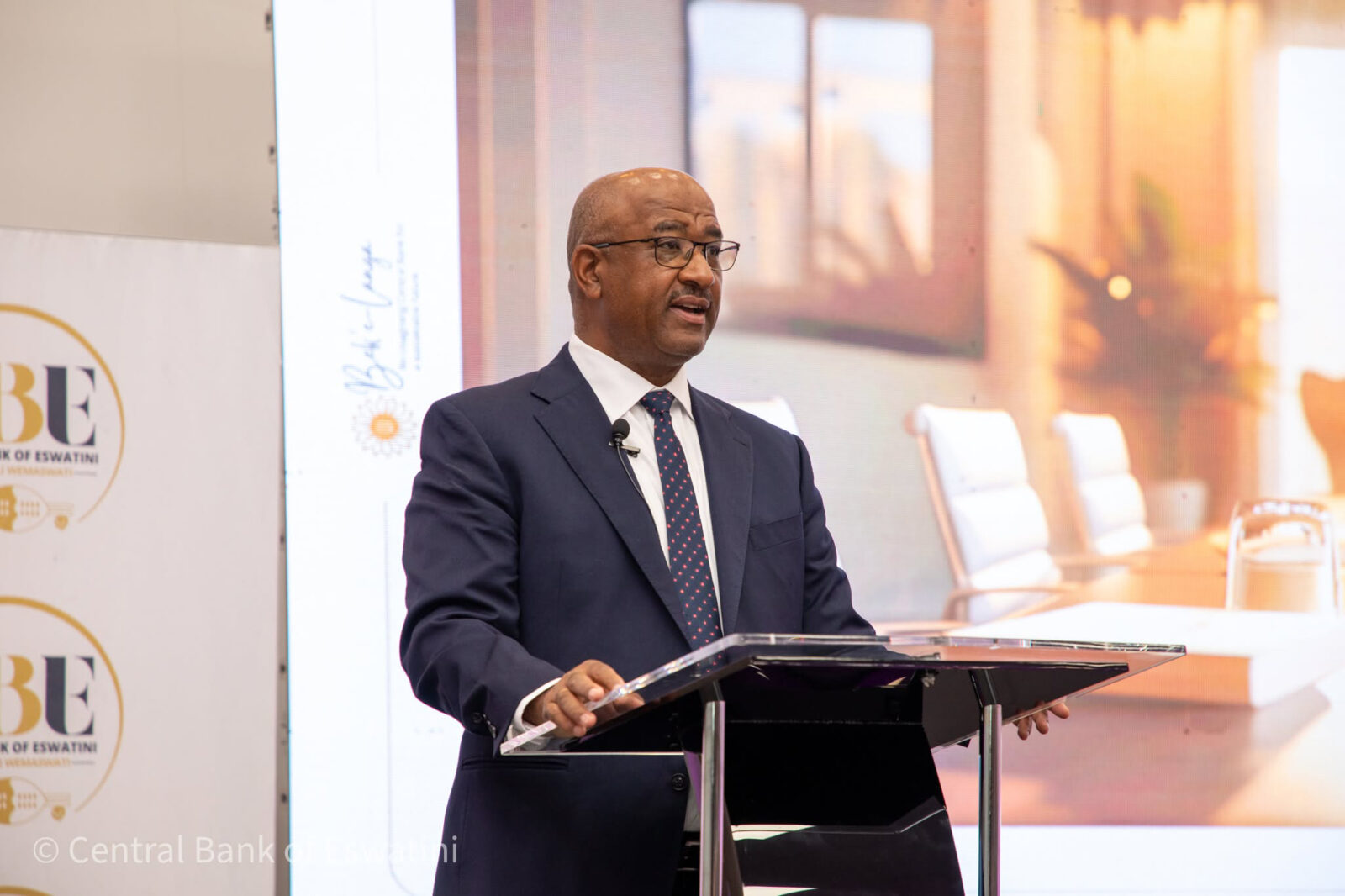
The decision announced on Friday means borrowing costs will remain unchanged for businesses and households, extending a monetary policy stance that has been in place since May last year. Consequently, commercial banks are expected to keep the prime lending rate at 10.25 per cent until the next Monetary Policy Consultative Committee (MPCC) meeting. The decision comes at a time when private sector borrowing continues to gather momentum, reflecting improved business confidence and stronger household demand for credit. However, it also coincides with a gradual increase in non-performing loans, underscoring the need for prudent lending practices. In announcing the latest monetary policy decision, CBE Governor Dr Phil Mnisi said the MPCC carefully assessed global, regional and domestic developments before deciding that leaving interest rates unchanged was the most appropriate course of action.
The Central Bank acknowledged that although risks to inflation remain elevated, particularly from developments in global oil markets, domestic price pressures have eased sufficiently to justify maintaining the current policy stance.
“The bank decided to keep the discount rate unchanged at 6.75 per cent,” the governor said, adding that the decision reflects the bank’s commitment to maintaining both price and financial stability while supporting sustainable economic growth.
The latest decision reflects a careful balancing act by policymakers.
While inflationary risks have become more pronounced internationally due to volatile energy markets and geopolitical uncertainties, tightening monetary policy at this stage could have undermined Eswatini’s ongoing economic recovery by making borrowing more expensive for consumers and businesses.
Instead, the Central Bank has chosen to maintain accommodative financing conditions, allowing investment and consumption to continue recovering while monitoring inflation closely.
The decision was also supported by encouraging inflation data. Headline inflation eased to 2.6 per cent in June 2026, down from 2.7 per cent in May, remaining comfortably within the Bank’s desired range. Consequently, the CBE revised its 2026 inflation forecast downward to 3.0 per cent, compared to the 3.31 per cent projected during the previous monetary policy review in May.
The improved outlook was largely attributed to moderating food prices and easing international oil prices over recent months. However, the medium-term outlook has become less favourable.
The bank raised its inflation projections for 2027 to 4.35 per cent from 3.74 per cent, while the 2028 forecast increased to 3.55 per cent from 3.30 per cent, largely reflecting uncertainties surrounding global energy markets.
Although these forecasts point to higher inflation in coming years, policymakers judged that immediate price pressures remain sufficiently contained to warrant keeping rates unchanged.
The prolonged period of stable borrowing costs has coincided with a notable expansion in lending activity across the economy. According to the Central Bank, credit extended to the private sector reached E23.9 billion at the end of May 2026, representing a 2.5 per cent increase compared to the previous month and a robust 10.6 per cent growth year-on-year.
The figures suggest businesses and households are increasingly taking advantage of relatively stable financing conditions to fund investment, expansion and consumption. Business lending accounted for much of the increase. Credit extended to businesses rose 3.2 per cent month-on-month to E13.2 billion, indicating companies continue to invest despite lingering global economic uncertainty.
This growth is viewed as a positive signal that firms remain optimistic about future economic prospects and are willing to expand productive activities.