Madam,
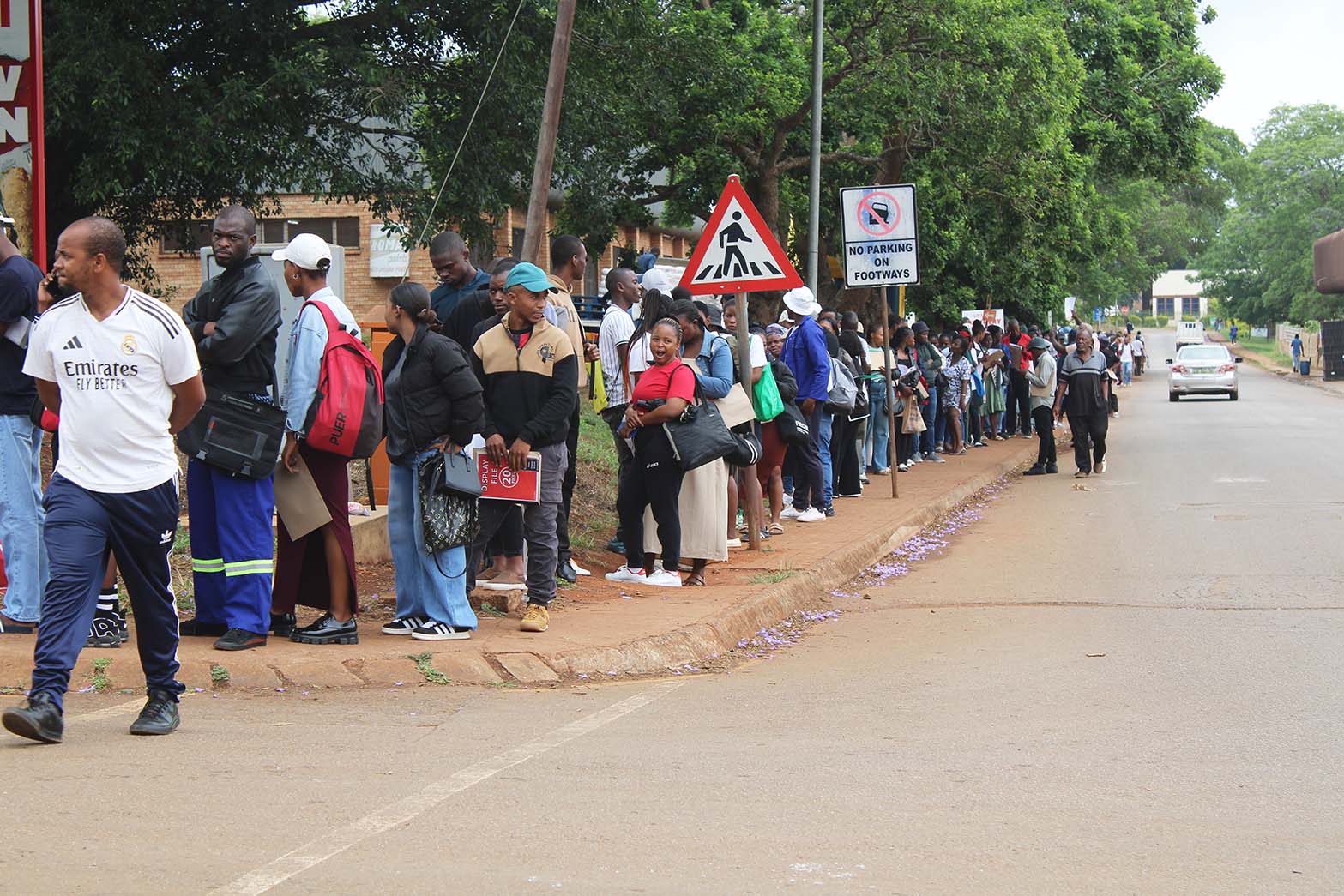
The long queues being witnessed at our police regional headquarters amid the recruitment exercise should give this country serious food for thought. They reveal a truth that we sometimes prefer to ignore: Unemployment in Eswatini is not merely a statistic published in reports; it is a painful daily reality for thousands of young people desperately searching for a chance to earn a living.
Mind you, these people are youth within the 35-year bracket. What is even more disheartening is that, looking at the overwhelming turnout, one cannot help, but wonder how many of those young people will actually make it into the police service. For every successful applicant, there will be many others who will return home disappointed, having pinned their hopes on an opportunity that may never come. The same enthusiasm was witnessed during the recent army recruitment exercise, when young people turned up in large numbers at their tinkhundla centres to try their luck, hoping to secure employment.
While joining the police or the army is a noble calling for those who genuinely wish to serve, we must also acknowledge that, for many, the immediate motivation is survival. They want a paying job, an income to support themselves and their families and money to put food on the table. There is nothing shameful about that.
With youth unemployment estimated at 52.2 per cent, we should be asking ourselves what happens to all those who leave school, colleges and universities with qualifications, but find no place in the economy. How long can a generation remain hopeful when every door seems to be closed? How many applications must one submit, how many interviews must one attend and how many years must one spend waiting before society begins to recognise the psychological damage caused by prolonged unemployment?
Perhaps we have underestimated the mental health implications of this crisis. Unemployment does not only empty people’s pockets; it also slowly erodes their confidence, dignity and sense of purpose.
Imagine spending years studying, sacrificing financially and emotionally, only to graduate and discover that the qualification you worked so hard to obtain does not guarantee even the most basic opportunity. Worse still, some employers demand years of experience from graduates who have never been given an opportunity to gain that experience.
The consequences can be devastating. Repeated rejection, financial dependence, social pressure and the inability to meet basic needs can contribute to anxiety, depression, hopelessness and feelings of worthlessness. For some young people, alcohol and drug abuse become an escape from realities they feel powerless to change. Others withdraw from society, while some struggle silently because mental health support remains inaccessible, unaffordable or surrounded by stigma.
We must also be careful not to confuse unemployment with criminality. Being jobless does not make someone a criminal, just as having a mental health condition does not make someone dangerous. However, economic exclusion, untreated psychological distress, substance abuse and exposure to violence can create conditions in which social problems become more difficult to address. The growing concerns about gang activity, violent crime, mob justice and drug-related conflicts should, therefore, compel us to look beyond the immediate incidents and examine the circumstances surrounding them.
What is needed is a deliberate investment in job creation, skills development, entrepreneurship and accessible mental health services. Government must also engage the private sector to create meaningful pathways for graduates and young people without experience. Internships, apprenticeships and entry-level opportunities should not remain privileges available to a fortunate few. They must become practical bridges into employment.
Our young people do not need endless speeches reminding them that they are the leaders of tomorrow.
They need opportunities to participate in the economy today. They need to earn, contribute, raise families and live with dignity. Perhaps the queues at police headquarters should be treated as more than evidence of successful recruitment. They should be a national warning. When thousands of young people compete for a limited number of jobs simply because they desperately need an income, something is fundamentally wrong.
Lihlelemaswati