

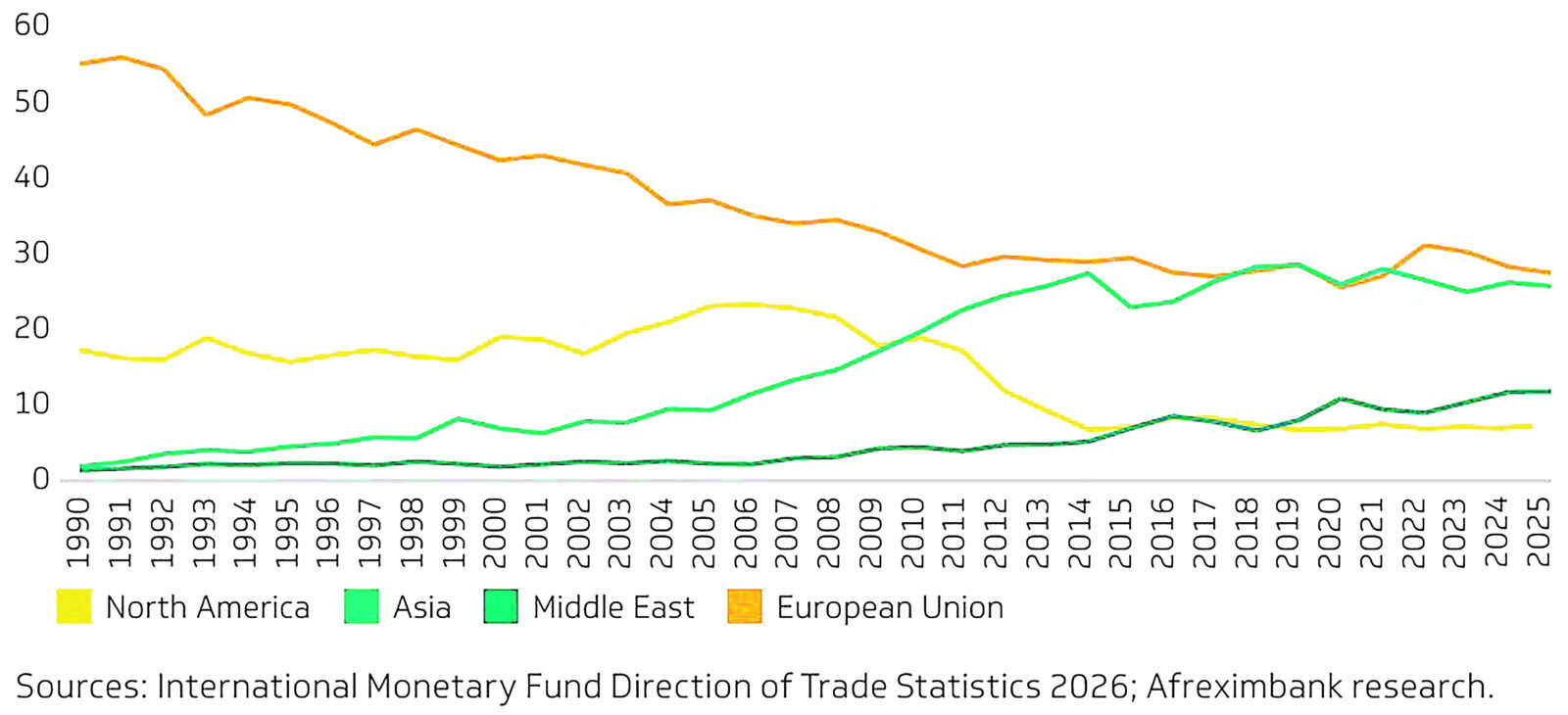
MBABANE – Global merchandise trade volumes grew by an estimated 4.6 per cent in 2025, up from 2.7 per cent in 2024, despite trade tensions and policy uncertainty.
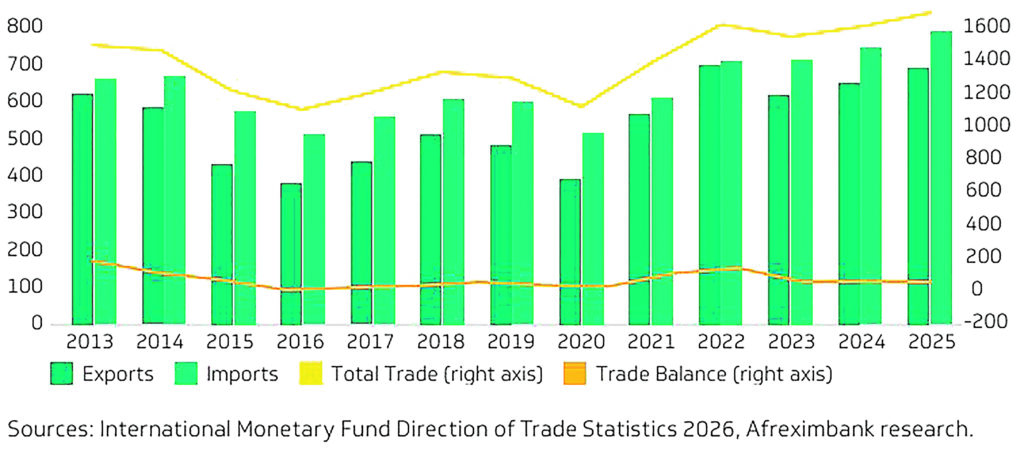
Meanwhile, Africa’s merchandise trade expanded by 6.1 per cent to approximately E24.3 trillion (US$1.5 trillion), highlighting the growing importance of African markets.
However, Afreximbank cautioned that stronger trade volumes should not conceal persistent weaknesses in infrastructure, productive capacity, value addition and access to trade finance.
The continent’s trade finance gap, estimated at US$74 billion (about E1.2 trillion), remains a major constraint to businesses seeking to participate in international and regional commerce.
Intra-African trade increased by 5.47 per cent to E3.46 trillion (US$213.8 billion) in 2025, from approximately E3.28 trillion (US$202.7 billion) in 2024.
South Africa remained the largest contributor, although its share declined from 20.8 per cent to 19.2 per cent.
South Africa imported approximately E162.6 billion (US$10.04 billion) from other African countries, while exports to the continent reached E503.6 billion (US$31.1 billion).
Its imports included mineral products such as crude oil, coal, petroleum and electricity, as well as precious metals, textiles and prepared foodstuffs.
Among these prepared foods were sugar and confectionery from Eswatini, Zambia and Mozambique.
South Africa’s exports were more diversified, including fuel, machinery, electrical equipment, vehicles, plastics, iron and steel, agricultural products, processed foods and chemicals.
The report said mineral fuels, metals and primary commodities continued to dominate intra-African trade, but manufactured and semi-processed goods were beginning to gain ground.
Manufactured goods trade grew faster than overall intra-African trade during 2025, albeit from a relatively low base, with expanding regional value chains emerging in areas such as agro-processing, cement, fertilisers and light manufacturing.
Afreximbank argues that Africa must use this momentum to move away from exporting raw materials and importing finished products by expanding processing and manufacturing capacity.

















Leave a comment