

MBABANE – Eswatini and 15 regional partners are moving to simplify border procedures and cut trade costs for small-scale traders.
The move is being driven through the Southern African Development Community (SADC) Simplified Trade Regime (STR), which seeks to make cross-border commerce easier and more inclusive.The regime is designed to facilitate informal cross-border trade through simplified customs procedures and relaxed certificate-of-origin requirements for eligible goods.
It also seeks to address complex rules of origin, eliminate non-tariff barriers and promote inclusive industrialisation across the region. SADC has 16 member states: Eswatini, Angola, Botswana, Comoros, the Democratic Republic of Congo, Lesotho, Madagascar, Malawi, Mauritius, Mozambique, Namibia, Seychelles, South Africa, Tanzania, Zambia and Zimbabwe.
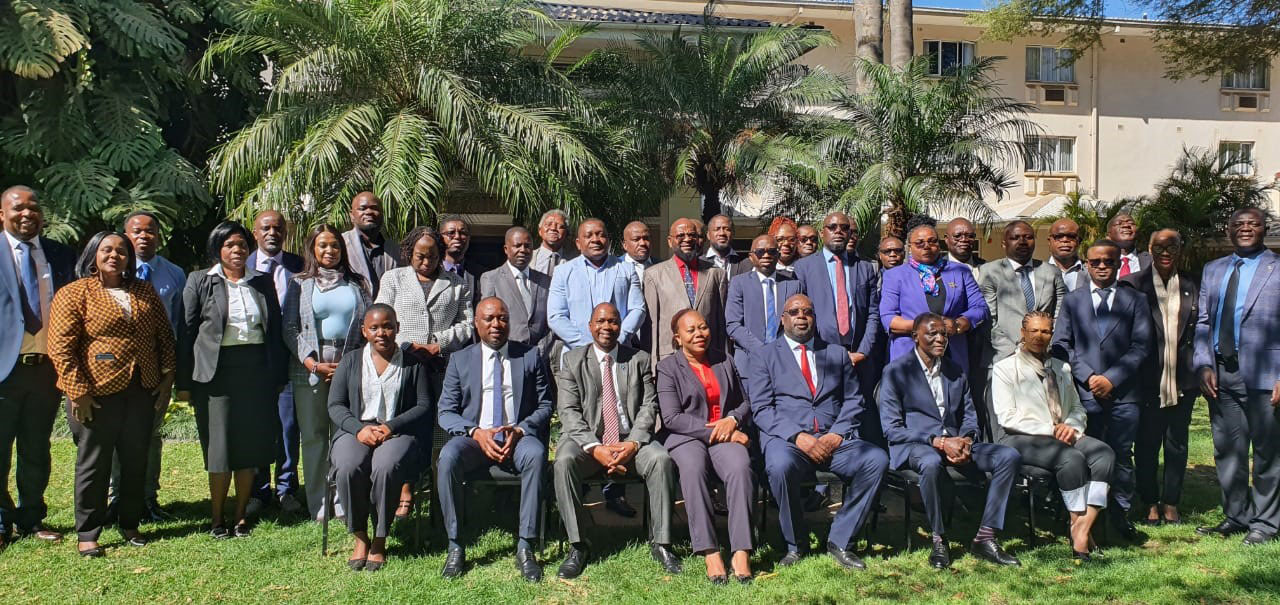
The latest push was reinforced at a high-level policy dialogue forum held in Lusaka from August 4–5, where 50 delegates examined how to implement the STR. The forum brought together parliamentarians, revenue officials, trade policy and gender experts, as well as representatives of cross-border traders from Malawi, Mozambique, Tanzania, Zambia and Zimbabwe.
Participants focused on practical challenges at border posts, including capacity gaps among border agencies and traders. Zambia’s Director of Trade in the Ministry of Commerce, Trade and Industry, Margaret Chikuba, said small-scale cross-border trade was an important driver of economic growth. She said complex border procedures disproportionately affected women and young entrepreneurs, making the STR important in reducing trade costs and expanding access to regional markets.
Zimbabwean Member of Parliament Clemence Chiduwa called for practical solutions to compliance bottlenecks faced by traders at shared borders.
He said timely implementation of the STR was necessary to ensure the benefits of the SADC Free Trade Area reached small-scale traders.
Alcides Monteiro, Senior Programme Officer for Customs and Task Manager of the Trade and Transit Facilitation Project at the SADC Secretariat, said an effective trade regime could benefit governments and businesses. He said improved customs efficiency could strengthen revenue collection while reducing transaction costs and accelerating border clearance for the private sector. Despite the proposed reforms, recent field assessments found that many border officials and traders had limited awareness of simplified trade procedures.
The assessments also identified digital exclusion, cumbersome manual processes and inadequate border infrastructure as challenges that could undermine implementation.
Participants raised concerns about corruption, harassment and unsafe conditions at border posts. They called for gender-responsive policies and minimum standards of treatment for traders, particularly women and young people who depend heavily on small-scale cross-border trade.
The forum reviewed existing trade facilitation initiatives and explored links between the SADC STR and simplified arrangements under COMESA, the East African Community and the emerging Tripartite framework. It produced policy recommendations for consideration by SADC policy organs. These include greater regional harmonisation beyond bilateral arrangements, higher consignment value thresholds and self-certification mechanisms aligned with developments under the African Continental Free Trade Area.
The Lusaka meeting followed capacity-building and sensitisation workshops conducted in July at the Kasumulu–Songwe, Tunduma–Nakonde and Zobwe–Mwanza border posts. The workshops involved Malawi, Mozambique and Tanzania and were intended to prepare border authorities and traders for implementation of the simplified regime. The developments come shortly after the ninth SADC Industrialisation Week, held in Durban, South Africa, from July 27–31. The event brought together governments, businesses, development partners, academics and researchers to discuss regional industrialisation, economic integration and sustainable growth.
One of the key priorities was removing non-tariff barriers and improving market access to strengthen regional value chains. Through cooperation involving SADC, the German Government and the European Union, 45 of 54 identified non-tariff barriers have been resolved, representing 83 per cent.
More than 27 000 electronic Certificates of Origin have also been issued, saving businesses about E355.7 million (€19 million) in trade costs through digital trade facilitation.
More than E74.9 million (€4 million) has been mobilised from public and private partners to strengthen pharmaceutical manufacturing and improve access to affordable, quality-assured medicines and sexual and reproductive health commodities.
The Botswana Leather Association has also grown from 20 to 130 members, strengthening collaboration, market access and competitiveness in the regional leather sector.
SADC Deputy Executive Secretary for Regional Integration Angele Makombo N’tumba said the region has the resources, innovation, partnerships and determination needed to build a more prosperous and industrialised economy.
SADC Business Council Chairperson and Business Unity South Africa chief executive Khulekani Mathe said sustainable industrial development could not be achieved by governments alone.
He said partnerships with the private sector, development finance institutions and development partners were essential to accelerating regional industrial priorities.
The Lusaka forum ended with member States committing to accelerate bilateral negotiations, implement pilot border initiatives and strengthen public-private collaboration.
The objective is to turn regional trade frameworks into practical measures that make it easier for both large businesses and small-scale traders to move goods across SADC borders.















Leave a comment