

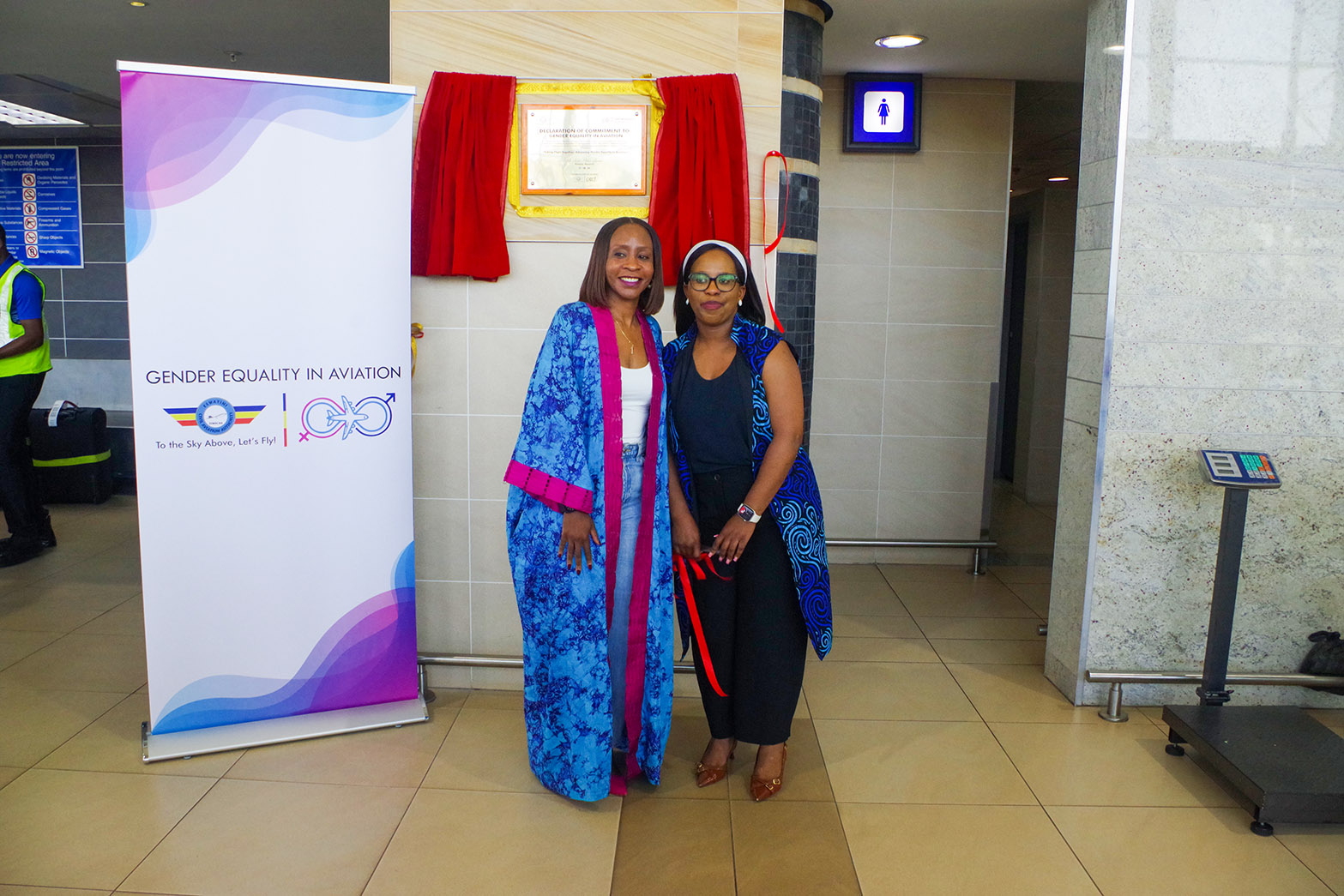
SIKHUPHE – The Eswatini Civil Aviation Authority (ESWACAA) has launched a Gender Equality Friday initiative to increase women’s participation in aviation, address workplace barriers and create opportunities for women to enter, remain and advance in the industry.
Launching the initiative at King Mswati III International Airport in Sikhuphe on August 8, 2026, ESWACAA Director General Andile Mtetwa-Amaeshi said the programme was about more than promoting gender equality, describing it as an important part of workforce planning, succession planning, safety and national resilience.
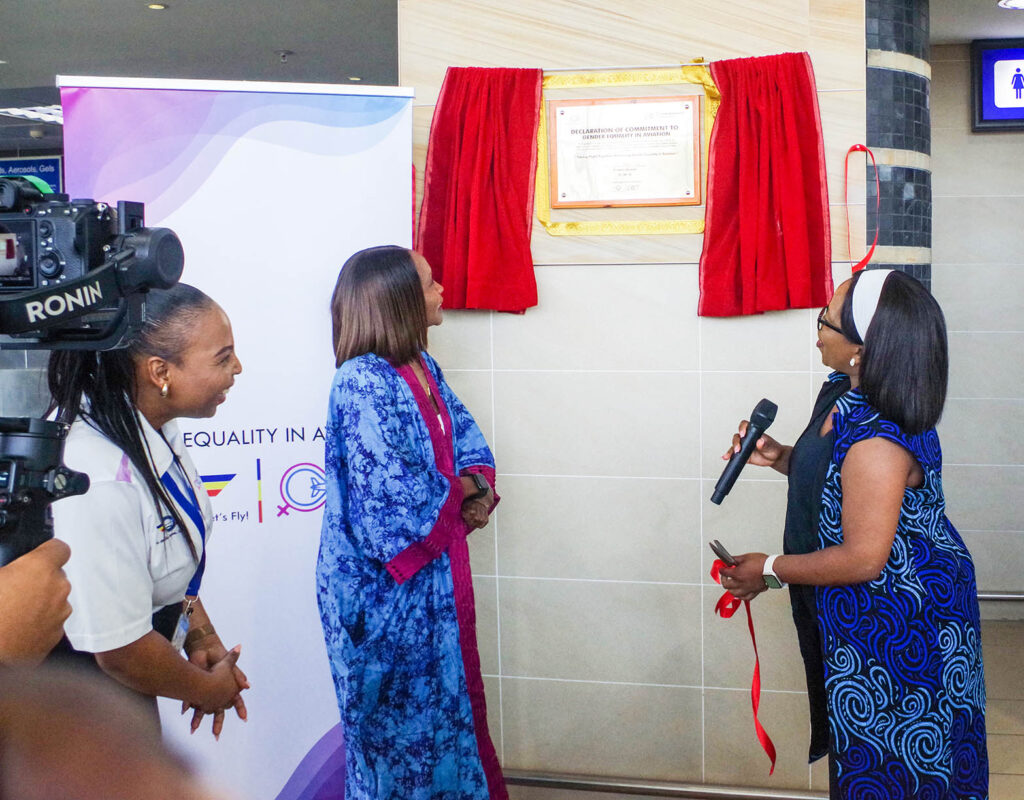
The launch was symbolised by the unveiling of a commemorative plaque by Mtetwa-Ameshi and Director for Gender and Family Issues under the Deputy Prime Minister’s Office, Nomzamo Dlamini.
Mtetwa-Amaeshi said women remained significantly under-represented in technical and leadership positions, including aviation engineering, air traffic control, piloting and other specialised careers.
She said the shortage of women meant Eswatini was not making full use of its available talent, particularly as Africa’s aviation industry was expected to grow and requires more skilled professionals.
Mtetwa-Amaeshi revealed that there was only one woman in aviation engineering and three women air traffic controllers.
“Women are not statistics to us. They are colleagues,” she said.
Adding, she said the industry needed to examine workplace conditions that could discourage women from entering or remaining in aviation.
Mtetwa-Amaeshi recounted an incident at an aircraft maintenance organisation where women reportedly had no appropriate facilities to change into their work gear finding themselves utilising a corner, while male colleagues whistled at them.
She said such behaviour created an environment in which women could not thrive, she warned that harassment and unsupportive workplaces could drive women away from aviation.
The Director General also raised concerns about unconscious bias in recruitment and workplace assumptions about women’s ability to perform physically demanding jobs.
She stressed that promoting women did not mean lowering professional or safety standards.
“Safety does not recognise gender,” she said, adding that competence and safety standards remained non-negotiable.
Mtetwa-Amaeshi said Gender Equality Friday would provide a platform to regularly assess progress, monitor representation, review workplace policies and identify barriers to women’s participation.
ESWACAA also plans to engage schools, universities, training institutions, airlines, government and other stakeholders to expose young people, particularly girls, to aviation careers beyond piloting and cabin crew.
Dlamini welcomed the initiative and called on men to actively support women’s advancement.
“To men in aviation, gender equality is not a women’s agenda. It’s a development agenda,” she said.
She urged men to challenge stereotypes, create opportunities for women and help build safe workplaces.
Dlamini said women brought diversity, innovation and entrepreneurship, but cautioned that gender equality should not be measured by numbers alone.
She said it was equally important to determine whether women were able to participate meaningfully, develop professionally and advance into leadership positions.
“When the industry advances, the country advances,” Dlamini said.













Leave a comment