

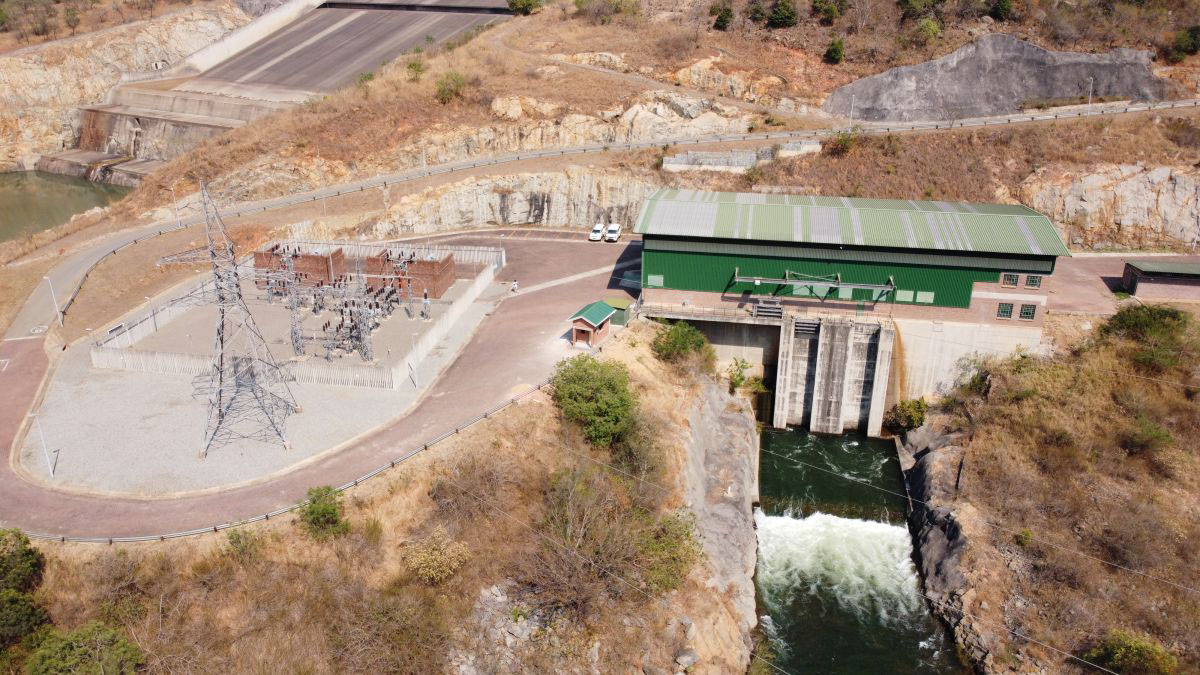
MBABANE – EEC has opened a significant investment and engineering opportunity through a tender for the development of an additional 10-megawatt (MW) hydropower generating unit at the Maguga Hydropower Station.
The utility is seeking suitably qualified engineering, procurement and construction (EPC) contractors, developers, investors or consortiums capable of not only constructing the new power unit, but also arranging or providing the financing required to bring the project to fruition.
The opportunity comes as the Eswatini Electricity Company (EEC) seeks to close a financing gap that has delayed the planned expansion of the Maguga facility. Construction of the additional 10MW hydropower unit at the existing Maguga Power Station site has been impeded by financial challenges the utility has been experiencing in the recent past.
To close the financing gap, the utility wishes to appoint a suitably qualified EPC contractor, developer, investor, or EPC/developer/investor-led consortium that can provide or arrange the required project financing and enter into commercial agreements that will be beneficial to both parties. According to the Request for Proposals (RFP), the existing Maguga station has two 10MW generating units, while the proposed expansion would add a third 10MW unit alongside the existing plant. The project is therefore being positioned as more than a conventional construction tender, with EEC inviting private-sector capital, international engineering expertise and structured finance to participate in the expansion of the country’s renewable energy infrastructure. The RFP provides investors with several possible routes to participate in the project. These include an EPC-plus-finance arrangement, where the successful contractor would deliver the project on a turnkey basis while arranging financing through mechanisms such as export credit, commercial debt or development finance.
Another option is a Build-Own-Operate-Transfer (BOOT) or Independent Power Producer (IPP) model. Under this arrangement, a developer would finance, construct, own, operate and maintain the facility for an agreed period under a long-term Power Purchase Agreement before transferring the asset to EEC or another designated entity. EEC has also made provision for an operation and maintenance tariff model, under which the utility would retain ownership while a developer operates and maintains the plant for an agreed tariff.
The RFP indicates that the final commercial structure could ultimately be a combination of these models, depending on negotiations with shortlisted bidders, financing arrangements and regulatory approvals. An indicative concession period of between 20 and 30 years from the commercial operations date has been proposed where a concession or BOOT structure is adopted, with the term intended to support project bankability.
This creates an opportunity not only for construction companies but also for infrastructure investors, project developers, financial institutions, export credit agencies and development finance institutions to participate in the project.
The engineering scope is extensive.
The successful bidder will be expected to undertake detailed engineering and design for the new generating unit and associated facilities, procure and manufacture equipment, transport and instal components, execute civil and hydraulic works, undertake steel works and install electro-mechanical and electrical systems. The scope further covers control and protection systems, transmission or substation modifications, testing, commissioning, performance testing, reliability runs and eventual handover.
The project is classified as a brownfield expansion, meaning the new facility must be integrated into an existing operational hydropower station.
This creates opportunities for specialist engineering companies with experience in hydropower extensions, electro-mechanical installations, grid integration, automation, civil works, SCADA systems, cyber and physical security, environmental management and project commissioning. The successful bidder will also be responsible for training EEC personnel and providing operation and maintenance manuals, spare parts and special tools.















Leave a comment