

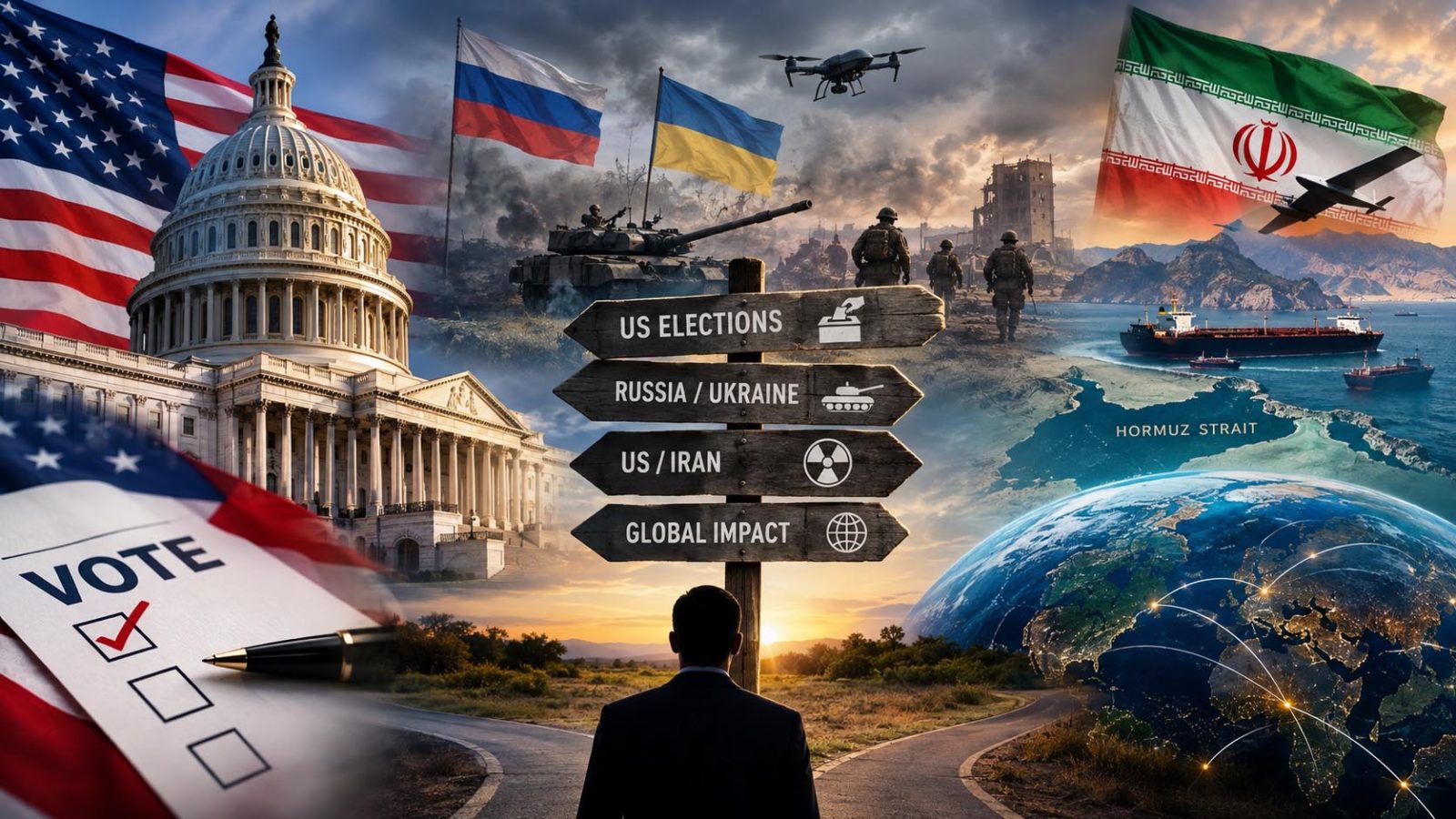
There is an event coming in two months’ time that could have quite a significant impact on what will happen thereafter in many countries.
That event is the programme of US elections that is taking place in November 2026. It is a mid-term election (the next full national elections are November 2028) but it may produce an outcome that will influence US Government policy across the world.
Indications are, at present, that the Republican Party will lose the vote in the House of Representatives but retain it in the Senate. The much diminished popularity of the leader of the Republican Party – mainly the president – is not likely to impact sufficiently in the Senate for two reasons. Firstly, the majority of American voters are so deeply attached to their political party – Republican or Democrat – that Republicans might be unhappy with the present leader but will look optimistically towards the next one. Voting against their party is very much a last resort.
The second reason is that, in the mid-term elections, while the House of Representatives has all 435 seats up for election, only one third of the Senate seats are on the table (not literally!). That limitation will result in any shift towards the Democrats having a lesser effect on the existing Republican majority. Nevertheless, losing its majority in just one of the Houses will almost certainly see the Republicans subjected to investigations in areas such as why the USA went to war with Iran in the first place.
All the more reason why every effort will be made by the US Government to downplay the extent of the continuing warfare with Iran. Voters tend to have short memories, so if there is a relatively peaceful period until November, combined with lower fuel prices – very unlikely – any sharpness in the USA voting public will soften.
And, even if there is a continuing impasse with Iran, the US leadership will get the credit if it successfully motivates any peaceful initiatives in the Russia/Ukraine war. That must have been one of the reasons for the recent American CIA and official envoy visits to Moscow. There will, naturally, be other objectives in that visit. Persuading Russia to avoid hitting NATO must be high on the list. The US has pulled back substantially on its military aid to Ukraine, so attacks on NATO countries – largely Europe – would reflect badly on the US withdrawal.
Russia and Ukraine are deadlocked. Russia wants to keep the land that it has captured and prevent Ukraine from joining NATO. Firstly, you don’t invade and then pretend to be negotiating fairly for retention of the same land. And prevention from NATO membership would undermine Ukraine’s sovereign status and integrity. Putin wants to be able to control a smaller Ukraine and limit the power of NATO and the spread of proper democracy. Ukraine won’t give in to that lot.
A great deal of the recent publicity attached to the Russia/Ukraine war has suggested that Russian military power has declined substantially while Ukraine’s clever use of drones has turned the tables from the early Russian supremacy and occupancy. That is a factor that has compensated for the declining USA support.
But what the world is ignoring is the extent of the North Korean support for Russian attacking power. It is understood that no fewer than 8 600 North Korean fighters have joined the ranks of the Russians. That’s a lot of extra manpower. What would be an interesting outcome of that assistance is where all those North Koreans get a taste of the outside world, and what a dysfunctional regime they come from and then do something about it.
Nevertheless, a strike by Russia against a NATO country – one from the constituent group in Europe – will cause considerable alarm across the board, among countries that have hitherto felt confident of never being drawn into the conflict. And if Russian morale has dropped – the average life of a soldier on the front line is believed to be only 35 minutes – it becomes more likely that its leader will seek more extreme measures to frighten the opposition. Nobody is safe.
Regarding the US/Iran war, Iran has ‘upped the ante’, meaning it has raised its demands. It requires formalisation of its unilateral control of the Hormuz Strait, with tolls costing as much as US$1 million to take a ship through. The US won’t allow that. The US is demanding that Iran stop uranium enrichment and allow independent inspections of that status. When ‘talking’ to the US representatives, Iran did agree to a temporary stalling of uranium enrichment. But that may now be just US wishful thinking. And Iran could easily continue with underground enrichment activities. The US (and world) want Iran to stop funding Middle East troublemakers. Iran wants its confiscated money back.
Iran is perhaps more deeply embedded in the war. Unlike the US, it has no need to satisfy its people. It simply wipes out thousands when they have the decency to demand that human rights be respected. Forgive me for droning on about the drones, but Iran has them too and proving quite effective. “War does not determine who is right – just who is left.” (Bertrand Russell).
















Leave a comment