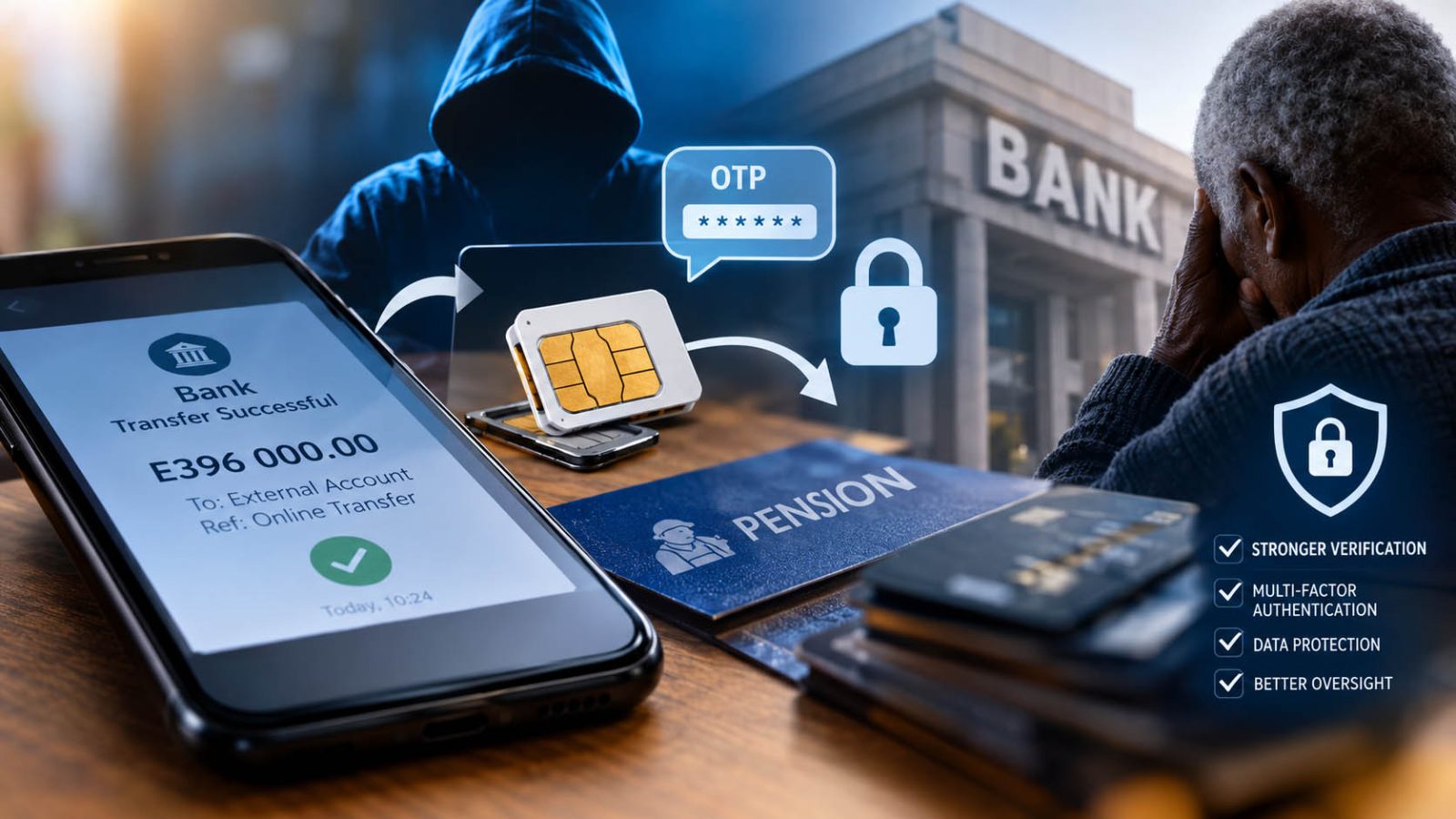
The recent case of a pensioner losing nearly E396 000 through alleged bank fraud has shaken public confidence in the country’s financial system. Beyond the criminal charges now before the courts, the incident raises profound questions about institutional responsibility, the adequacy of digital security protocols and the enforcement of data protection laws. At stake is not only the victim’s financial security, but also the credibility of the country’s banking sector in an era of rapid digitalisation.
Fraudsters allegedly hijacked the victim’s mobile number through a SIM swap, intercepting OTPs and accessing his account. This exposes weaknesses in SMS-based authentication and institutional data protection safeguards.
SIM swap vulnerability
A crucial dimension of this case lies in the mechanics of SIM swapping itself. Ordinarily, mobile operators require strict verification before issuing a replacement SIM card. This typically involves the presentation of a valid national ID, the physical presence of the number holder and, in some cases, the provision of three frequently dialed numbers or a police report in the event of theft. These requirements are designed to ensure that only the rightful owner can authorise a SIM swap. Yet, the fraudsters have successfully exploited weaknesses in this process. The pensioner’s ordeal illustrates how a compromised SIM swap can become the gateway to financial fraud. Once the victim’s mobile number was hijacked, the suspects were able to intercept the OTP sent via SMS, thereby authenticating transactions without the victim’s knowledge. This highlights the need for mobile operators to strengthen their verification protocols and for regulators to enforce stricter compliance. A multilayered approach, combining ID verification, biometric checks and realtime alerts to customers, could significantly reduce the risk of unauthorised SIM swaps.
Institutional responsibility and security protocols
Banks are custodians of public trust. Their responsibility extends beyond safeguarding deposits to ensuring that digital platforms are resilient against evolving cyber threats. I
n this case, several questions demand urgent answers: How were the victim’s banking credentials obtained, what monitoring systems were in place to detect unusual transfers from a pensioner’s account and why was SMS-based OTP still the default authentication method despite its well-documented vulnerabilities to SIM swap fraud? Globally, financial institutions are moving towards multifactor authentication that combines device recognition, biometric verification and app-based tokens. The country’s banks must accelerate adoption of these protocols. Moreover, insider involvement, as alleged in this case, underscores the need for stringent employee vetting, continuous monitoring and clear accountability mechanisms.
Legal framework: data protection, cybercrime
The Data Information Protection Act provides a statutory foundation for safeguarding personal information. It obliges institutions to ensure confidentiality, integrity and lawful processing of customer data. Yet, legislation is only as effective as its enforcement. If banks fail to comply with these obligations, they not only expose customers to financial loss, but also undermine the credibility of the regulatory framework itself. Complementing this are the Computer Crime and Cybercrime Act and the Money Laundering and Financing of Terrorism (Prevention) Act, under which the suspects now face charges. These laws criminalise unauthorised access, fraudulent transfers and the laundering of illicit proceeds. However, the case illustrates a persistent gap: Enforcement tends to be reactive, addressing breaches after they occur rather than compelling institutions to adopt preventive safeguards.
This incident should serve as a wakeup call for policymakers and regulators. Strengthening the country’s digital financial ecosystem requires a multipronged approach. Regulatory oversight must be enhanced, with the Central Bank and financial regulators enforcing compliance with data protection standards, including mandatory audits of digital security protocols. Technology standards must be raised, requiring banks to adopt multifactor authentication and advanced fraud detection systems, while phasing out SMS-based OTPs for highrisk transactions. Crossborder cooperation is essential, given that funds were moved to South Africa, making regional collaboration on cybercrime and money laundering investigations a necessity. Finally, consumer redress mechanisms must be strengthened so that victims of digital fraud have clear avenues for compensation, reinforcing public trust in the financial system.
User vigilance
While institutions bear primary responsibility, users must also exercise vigilance. Digital banking places powerful tools in the hands of consumers, but it also demands heightened awareness. Customers should regularly update banking apps and mobile operating systems, enable biometric authentication where available, monitor accounts for unusual activity and report suspicious transactions immediately. They must also treat sudden loss of mobile network service as a potential red flag for SIM swap fraud. Public education campaigns are critical and banks together with regulators must invest in awareness initiatives that empower consumers to protect themselves in the digital environment.
Rebuilding trust
Trust is the currency of modern banking. Once eroded, it is difficult to restore. The pensioner’s ordeal is not merely a personal tragedy; it is a systemic warning. If customers perceive that their data and deposits are unsafe, they may retreat from digital platforms, undermining financial inclusion and modernisation efforts. Rebuilding trust requires transparency. Banks must communicate openly about breaches, outline corrective measures and demonstrate commitment to reform. Regulators must show that laws are not symbolic but enforceable. Policymakers must ensure that the country’s digital transformation is anchored in robust data protection.