
MBABANE – Somalis and Ethiopians account for 60 to 70 per cent of cases of non-compliance identified so far among businesses operating on Swazi Nation Land (SNL).
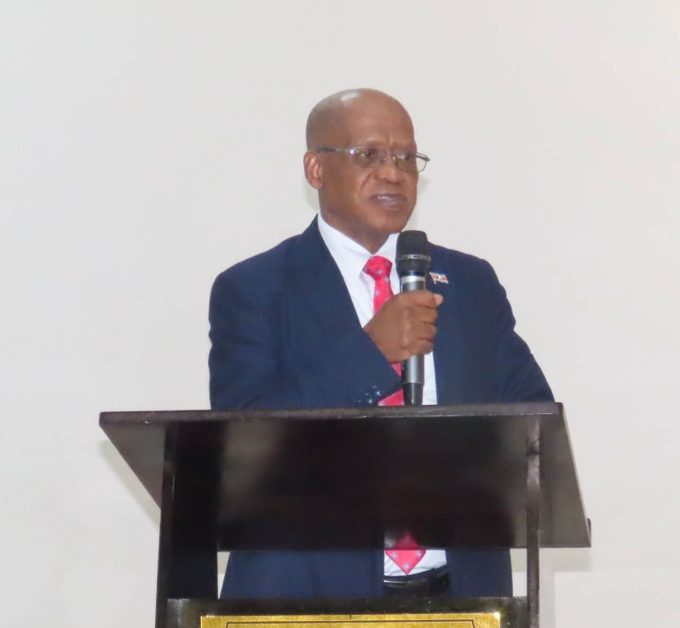
This is according to Minister for Commerce, Industry and Trade Manqoba Khumalo.
Khumalo said the affected business operators either do not have the correct legal documents to remain in Eswatini or lack the required documentation to operate businesses in the country.
“It’s actually Somalis and Ethiopians who either don’t have the correct legal documents to be in the country or don’t have the requisite legal documents to operate a business in the country.
“They form about 60-70 per cent of the cases we have found non-compliant so far,” he said.
The minister was speaking amid the ongoing inspections of businesses across the country to establish whether they were complying with the laws and regulations governing commercial operations.
He explained that the inspections were not being conducted under the Citizens Economic Empowerment Act, as some people had understood, but were aimed at enforcing an existing law dating back to 1975.
Khumalo said the law was clear that foreigners are not allowed to trade on Swazi Nation Land.
He said the ministry had embarked on the exercise because of challenges in enforcing the long-established legislation.
“The law is clear that no foreigner will trade on Swazi Nation Land. This was already working according to the Trading Licences Order of 1975. This was through the inability to enforce the law,” he said.
He added that the law also prohibits emaSwati from obtaining trading licences and then renting them out to other people.
Khumalo stressed that the inspections should not be confused with the implementation of the Citizens Economic Empowerment Act. He said Parliament had resolved that the Act would only become operational once its regulations were in place.
He explained that the regulations still had to go through the parliamentary process before the new law could be implemented.
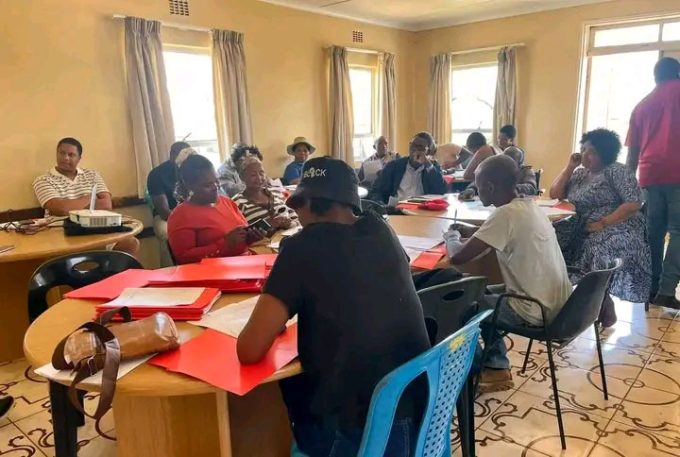
For now, he said, the ministry was enforcing existing legislation and had engaged close to 200 graduates for a three-month exercise to inspect businesses and establish compliance.
The Civil Service Commission (CSC), he said, had granted the ministry permission to recruit the graduates for the exercise because the ministry had been struggling with staff shortages.
Khumalo said the shortage of personnel had previously meant that inspections were conducted only occasionally, leaving the ministry unable to enforce the law consistently.
He said he had personally joined the inspection teams at one point to encourage them and ensure that they did not target businesses that were already complying with the law.
“You can’t inspect people who are already complying with the law,” he said.
The minister said the exercise had also exposed challenges arising from the closure of shops, particularly the possibility of leaving communities without convenient access to goods and services.
He acknowledged that some people who had received permission from the country to work were being frustrated by the closures.
He said government had to consider the effect of the exercise on the public, especially where businesses had already committed resources to their operations.
Khumalo said he was open to a transitional arrangement that would prevent unnecessary inconvenience to consumers while ensuring that businesses ultimately complied with the law.
“I am very amenable to having a transitional arrangement which will not frustrate the public. People should not suffer and go to far places,” he said.
He said the inspection exercise was scheduled to end on November 19, as indicated in the ministry’s Second Quarter Performance Report.
Khumalo said he would present a report to Cabinet, after which the timeframe for any transitional arrangement would be considered.
“I need to go to Cabinet and present a report. We are now going to consider the timeframe. I am happy as long as at the end of the day there will be compliance with the law,” he said.
The minister also defended the inspections against claims that they were frustrating legitimate foreign investors.
He maintained that the exercise was not intended to target compliant business operators but to address violations of the law.
He further raised concerns about some businesses allegedly failing to use speed-point facilities and not banking money locally. He said such practices had implications for tax collection, particularly because wholesaling and retailing accounted for a significant part of the country’s gross domestic product (GDP).
Khumalo said businesses in these sectors need to comply with their obligations, including those relating to tax.
He thanked Cabinet for supporting the inspection exercise and acknowledged the CSC for granting the ministry dispensation to engage the graduates for three months.