

MBABANE – More investors are venturing into Eswatini’s mining sector, but economic impact remains largely unrealised as the industry continues to focus on raw mineral extraction with minimal local processing.
This was an assessment by Minister for Natural Resources and Energy Prince Lonkhokhela, who delivered a candid speech at the Second Africa Mineral Strategy Group (AMSG) Roundtable on Critical Mineral Development in Africa.
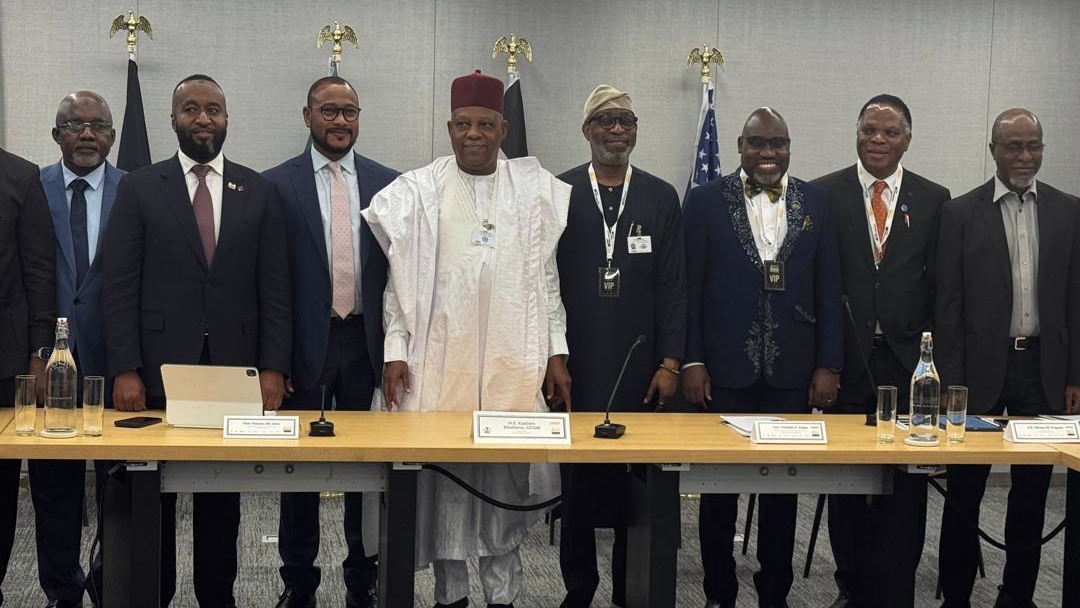
The event was a side meeting to the ongoing United Nations (UN) General Assembly where the Africa mineral strategy group held a round table meeting of African ministers.
Speaking before African heads of State, ministers and international delegates, Prince Lonkhokhela emphasised that while the country’s mining potential is undeniable, its contribution to national development remains marginal.
“More investors are entering the mining industry but the impact of the mining is yet to be realised as it remains in the extractive phase. Mineral processing is a pariah. It is so minimal, and this must change,” he declared.
The minister’s remarks come at a time when Africa is intensifying efforts to leverage its vast mineral wealth for economic transformation. The AMSG meeting, convened under the theme ‘Forging a Common African Voice, Advancing Global Partnerships,’ sought to align mineral development strategies across the continent, with a focus on critical minerals essential for green energy technologies, industrialisation and defence industries.
It is worth noting that latest data from the Central Statistical Office paints a challenging picture for Eswatini’s mining sector.
Despite the influx of investors, mining and quarrying contribute only 1.3 per cent to the country’s gross domestic product (GDP) according to the 2024 GDP updates.
The situation worsened in the first quarter of 2025 when output for mining and quarrying activities fell sharply by 28.9 per cent, a stark contrast to the 13.5 per cent growth recorded in the previous quarter. The decline was driven primarily by the coal subsector, which suffered a 31.5 per cent year-on-year fall in output following weak demand from South Africa.
Temporary stoppages in the South African steel industry Eswatini’s key coal export market further slowed production, exposing the sector’s vulnerability to external shocks.
Coal has long been the backbone of Eswatini’s mining sector. The country is known for producing some of the world’s best anthracitic coal, second only to Siberia, Russia. Yet, as Prince Lonkhokhela pointed out, its contribution to the economy remains disproportionately low compared to its potential.
*…
Linking mining to industrialisation, job creation
MBABANE – Prince Lonkhokhela challenged African leaders to ensure that mineral wealth drives industrialisation, energy access and job creation across the continent.
“We believe that the benefits of Africa’s mineral wealth must not only fuel industries abroad but must also power development at home: Creating jobs, expanding energy access and building inclusive prosperity,” he said.
The minister lamented the paradox of resource-rich African regions remaining impoverished despite decades of mining activity, calling on the AMSG to work tirelessly to change the status quo.
“The AMSG should work tirelessly to change the status quo, which perpetuates poverty of mineral-rich areas, even after years of mining operations,” he said, noting that beneficiation and local processing were key to reversing this trend.
Economists agree that Eswatini needs to diversify its mining sector beyond coal and invest in beneficiation to create value chains that support local industries.
Currently, most minerals are exported in raw form, limiting opportunities for downstream industries such as metallurgy, manufacturing and technology development.
*Full article available in our publication.














Leave a comment