

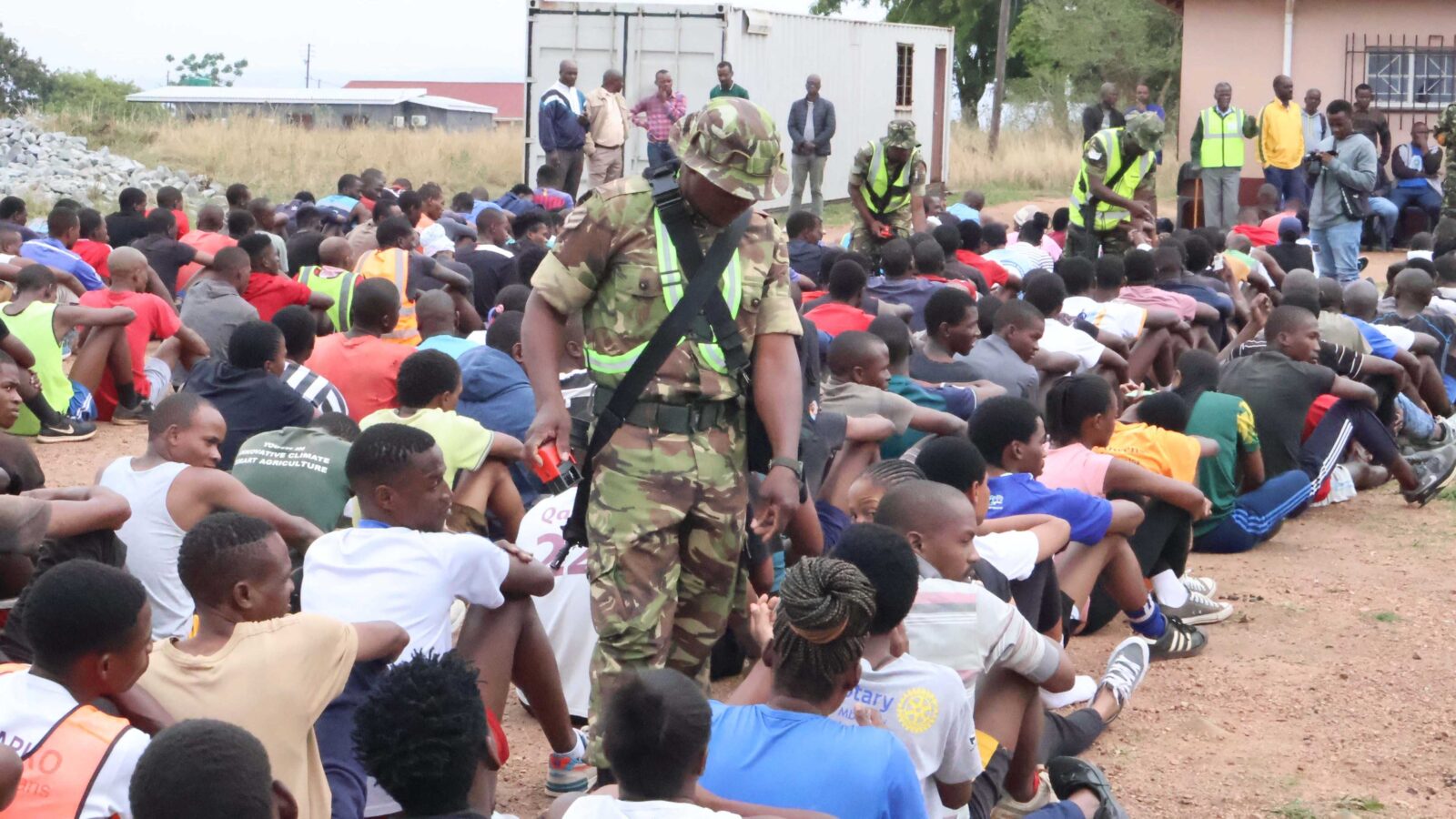
There’s something deeply sobering about watching a line of school pupils among army hopefuls. During the ongoing army recruitment exercise, one cannot help but notice how many of the eager, sweating young men and women sprinting through their 3.2km runs are still in school; some in their final year, others with another year to go. What’s striking is not just their determination, but their willingness to trade chalkboards for camouflage, textbooks for boots and exams for endurance runs.
Many of these young people are not running from something, they’re running towards something. Stability, a salary, a chance to help at home. A uniform that guarantees three meals a day and a sense of belonging in a world where opportunity has become the rarest commodity. In their eyes, the army isn’t just a career option; it’s an escape route from the long, painful queue of qualified but jobless graduates.
It’s hard to blame them, though, because for years, young emaSwati have been told that education is the key to success, yet the door it is meant to unlock seems jammed shut. The reality on the ground is cruelly visible: Graduates roaming the streets with folders of CVs, tertiary certificates collecting dust, while the rent collector never misses a day. In that reality, a military uniform suddenly looks more practical than a degree.
This shift, where school-going youth are ready to drop out for a shot at army life, is not just a passing trend; it’s a national alarm bell. It signals a growing disillusionment with our education system and a job market that fails to reward those who follow the ‘right path’. When a child decides that the shortest route to survival is not through the classroom, but through a 3.2km run, we must admit that something has gone very wrong.
Government needs to go back to the drawing board, urgently. Education in Eswatini must be more than theory and examination passes; it must prepare young people for real economic participation. The system continues to churn out dreamers in a market that demands doers. Young people are not lazy or entitled; they’re simply observant. They are watching their brothers and sisters graduate only to return home empty-handed. They are connecting the dots faster than policymakers are redrawing them.
We cannot fault the youth for being pragmatic, but we can fault ourselves as a society for allowing education to lose its promise. The problem isn’t that young people no longer believe in learning, it’s that they no longer see what learning earns them. Until government reforms the curriculum to align with market needs, incentivises industries to hire locally and restores confidence in the dignity of academic pursuit, we’ll keep seeing our classrooms empty while the army queues overflow.
Perhaps, the loudest message from these recruitment lines is not about patriotism, but about desperation. Until that changes, we may continue to produce more soldiers than scholars, not because our youth have failed the system, but because the system has failed them first.
For comments please email khulileb.thwala@gmail.com



















Leave a comment