

MBABANE – Blame game.
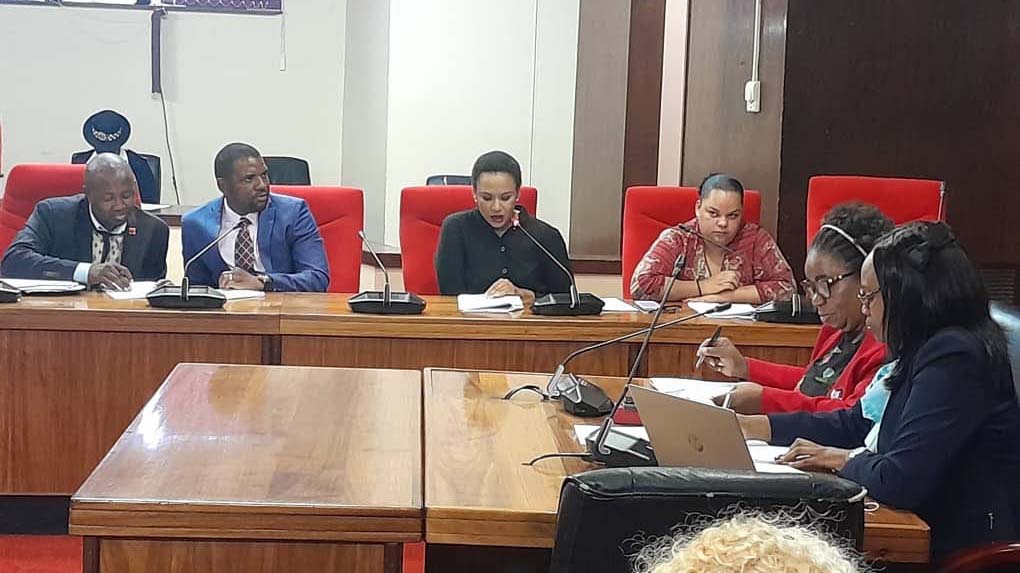
This phrase served true for what transpired inside the Senate Chambers yesterday as the Eswatini Association of Pharmaceutical and Medical Suppliers (EAPMS) attributed its problems to the Ministry of Health, while the latter also came to its defence.
This was during the stakeholder submission on the Eswatini Medial Suppliers Agency Bill, 2025, an Act to provide for the establishment of the Eswatini Medical Supplies Agency, the conversion of the Central Medical Stores Department into the Eswatini Medical Supplies Agency, the efficient and effective procurement, storage and distribution of essential medical supplies within the public health sector.
Member of the association, Rocky Mkoko, submitted that it was post COVID-19 that the issue of drug shortages in the country took a turn for the worst. He said when many governments across the globe came out to the open to declare that the outbreak of the virus had dug deep into their purses, Eswatini Government did not do that.
He revealed that instead, the ministry suggested that it should shift from total subcontracts to framework contracts.
A ‘Total Subcontract’ refers to a complete subcontract agreement that details the total scope of work, terms and financial arrangements for a third-party subcontractor’s performance under a main contract. A framework contract is an agreement between a buyer and one or more suppliers that establishes the terms for future contracts over a set period, such as price and quality standards.
Mkoko submitted that in the past, government used total subcontracts but due to financial constraints, as it is claimed, the ministry switched to the framework contracts and they started sidelining local suppliers in preference for foreign suppliers they deemed ‘affordable’.
He said this type of contract is a disadvantage because of a lack of guaranteed work and the risks from inaccurate demand forecasts, and that is partly how they landed into the obtaining situation. “The question then is, how do I procure, not knowing whether government will come to buy or not. For example, I had belief that the Parliament select committee would make a stop at my business to appreciate damages that occurred when government switched the procurement system. Volumes of drugs were spoilt,” he said.
He stated that the nature of the contracts adopted by the ministry post COVID-19 were the ones that contributed massively to the obtaining situation as far as supply of drugs is concerned and as suppliers, they had been failed by the ministry.
Executive Committee member, Paulette Fortune, submitted that the problem that the country is enduring in the health sector is the shortage of the supply of drugs and in the last 18 months, they have seen a major increase in the crisis that the country is facing in healthcare facilities.
*…
EAPMS wants local suppliers prioritised
LOBAMBA – Eswatini Association of Pharmaceutical and Medical Suppliers (EAPMS) is proposing that the agency should prioritise local drugs suppliers than opting for direct procurement from manufacturers.
In its proposed addition to the Bill, the association wants to include a provisions (o) and (p) in Section 6 of the Bill which reflects that the agency shall advance the economic empowerment measures and preferential procurement initiatives contemplated in The Citizens Economic Empowerment Act, 2003 in the procurement, storage and distribution of medical supplies to health facilities owned by government.
*Full article available in our publication



















Leave a comment