


MBABANE – MSMEs are rich with potential, creativity and resilience – yet their ability to scale and meaningfully contribute to economic growth remains heavily constrained by a widening skills gap.
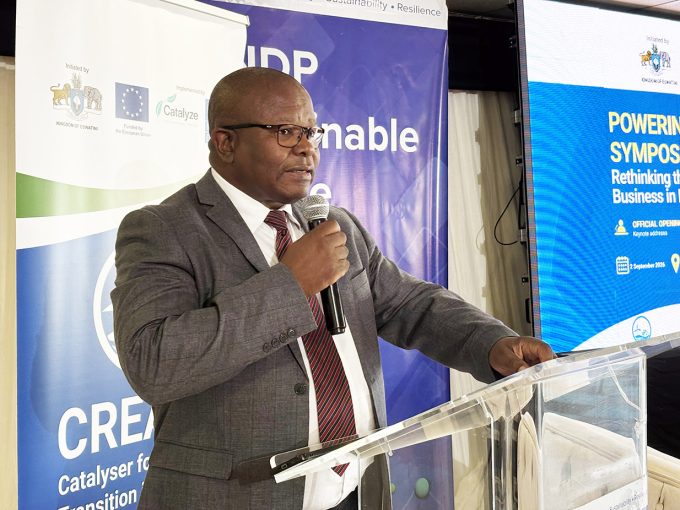
This is the central message delivered by Erik Azulay, a globally recognised Fulbright Specialist in Incubation and Entrepreneurship Development, who has just concluded a six-week mission in the kingdom. Azulay, an international expert with extensive experience in innovation ecosystems and start-up development, was invited by SEDCO and the Ministry of Commerce, Industry and Trade to assess the national incubation environment and advise on how Eswatini can strengthen support systems for entrepreneurs.
His visit focused on two key exercises: supporting the SEDCO business incubator programme and conducting a full review of the national business incubation programme. Azulay is the Director and Founder of the Alliance for Commercialisation and Innovation Research (ACIR) and has worked on entrepreneurship and commercialisation projects in numerous countries including India, Kazakhstan, Hungary, Chile, Korea, Israel, Egypt, Mexico and the United States.
He has evaluated technology and innovation programmes for the US Department of State, the World Bank, the National Science Foundation and other international institutions.
Speaking in an interview with the Times of Eswatini Business Desk, Azulay stressed that while there is no shortage of entrepreneurial talent in the country, many MSMEs lack the critical business skills required to grow, attract investment and operate sustainably.
According to Azulay, one of the biggest constraints facing MSMEs is the absence of strong, practical training in business fundamentals.
“Entrepreneurs here have passion and a strong work ethic,” he said. “But what many need urgently is upskilling — training on how to run a business, how to develop viable ideas, how to understand numbers and how to speak the language that banks speak.”
He highlighted that funders repeatedly raised the same concern during his assessment: They have funds available, but struggle to find bankable proposals.
“Banks talk business. Banks talk figures. Entrepreneurs talk ideas. These are two different languages,” he added. “A strong incubation system teaches entrepreneurs to speak the banks’ language.”
He emphasised that this issue directly affects access to finance, which is one of the most frequently cited barriers for MSMEs in Eswatini. During his research, Azulay came across a report indicating that 70 per cent of MSME loans in Eswatini become non-performing.
*…
Delayed payments choking MSME growth
MBABANE – Another major challenge Erik Azulay identified is delayed payments by major clients, including government ministries and large private companies.
“Delayed payments absolutely cripple MSMEs,” he warned. “A business cannot survive if it delivers work and then waits months to be paid. Cash flow is everything for a small business.”
He urged both government and large enterprises to strengthen payment systems to ensure MSMEs receive timely compensation for services rendered.
Despite the challenges, Azulay highlighted numerous opportunities for local entrepreneurs – especially in value addition across sectors such as timber, sugar and manufacturing.
*…
SEDCO upgrades incubator programme
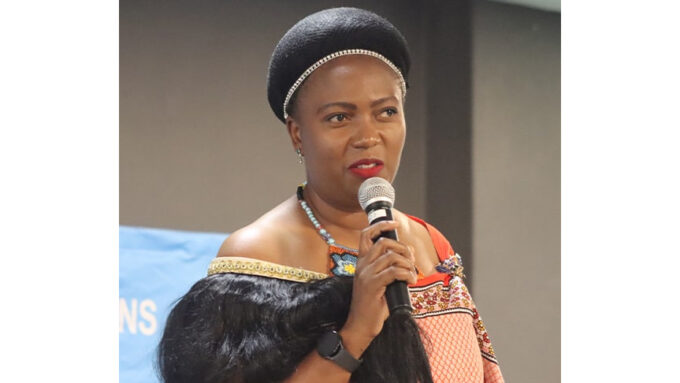
MBABANE – SEDCO Chief Executive Officer Khethiwe Mhlanga confirmed that Erik Azulay’s technical assistance aligns with SEDCO’s current plans to upgrade its incubation programme.
She said the programme – which operates across various SEDCO estates – provides affordable workspace, business training, mentorship and market facilitation.
However, SEDCO is eager to strengthen the model in line with global best practice.
*Full article available in our publication

















Leave a comment