

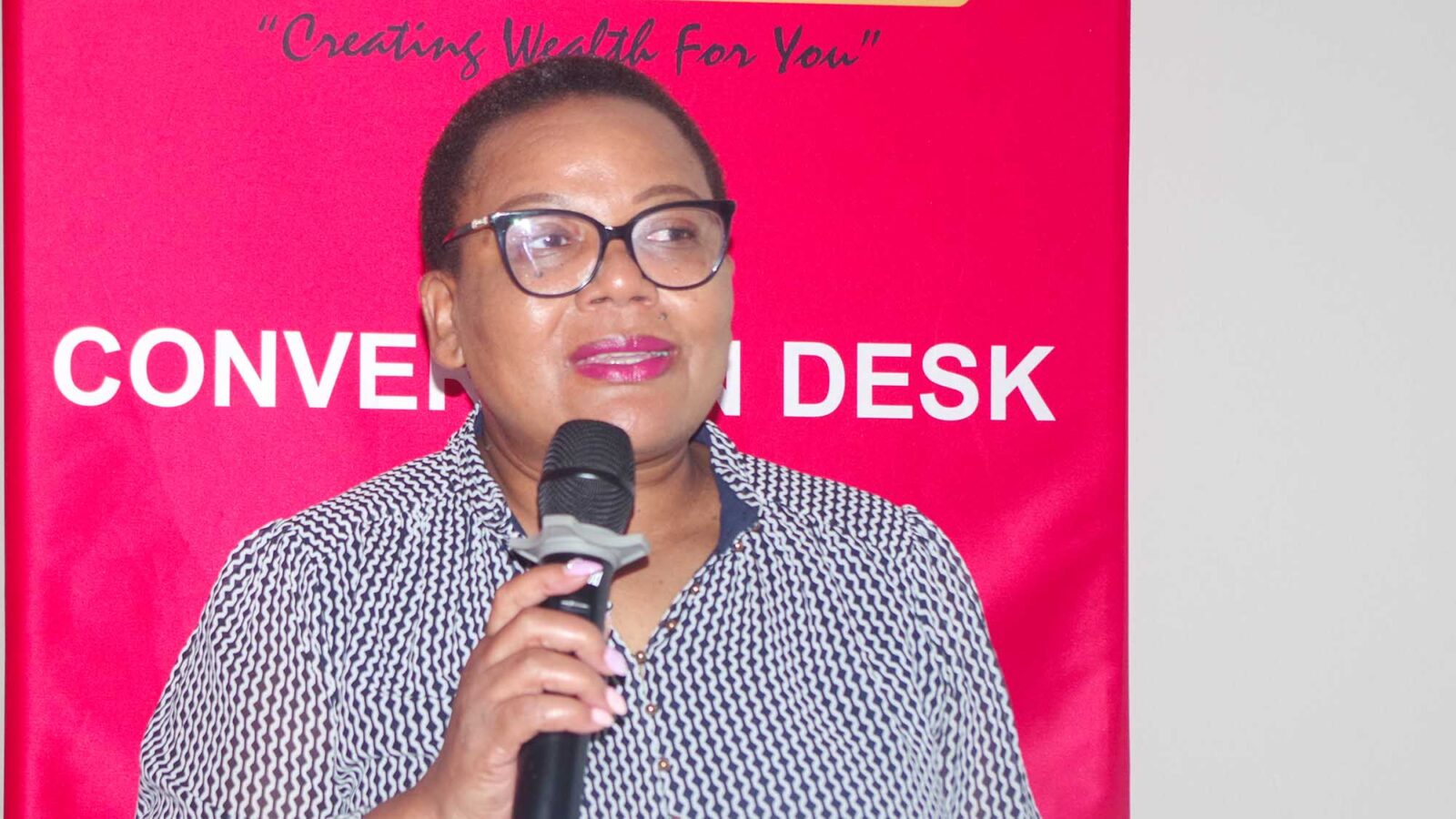
MBABANE – The Swaziland Building Society (SBS) has spent in excess of E20 million over the past decade to transition into a fully fledged commercial bank.
This was revealed yesterday by Managing Director Mbali Sibanyoni during a press briefing held at the Mountain View Hotel, where she confirmed that the institution is now in the final stretch of its long-running conversion process.
Sibanyoni explained that the conversion journey, which began in 2012, has now reached a major milestone, with the Central Bank of Eswatini (CBE) granting SBS a provisional medium-size commercial banking licence. Once fully operational, the new institution will trade as SBS Bank Eswatini.
The MD clarified that the ‘medium-size commercial bank’ designation refers strictly to the CBE’s categorisation framework, which groups banks according to their balance sheet size. SBS, she said, falls within this middle tier because its balance sheet remains comparatively smaller than that of existing commercial banks in the country.
Securing this licence required extensive compliance work and consultations with regulators. Sibanyoni highlighted that approval for conversion was granted jointly by the Financial Services Regulatory Authority (FSRA), the CBE, and the Ministry of Finance, under Section 67 bis of the Building Societies Act.
“This collaboration by the tripartite ensured that all regulatory and legal requirements for converting a building society into a commercial bank were met,” she said.
SBS Bank Eswatini is currently undergoing registration as a Public Company, a process expected to be completed this month (December 2025).
Yesterday, management confirmed that the certificate of registration has already been issued, and the next step is to submit it to the FSRA to remove SBS from the register of Building Societies.
This final step is projected to be completed early next year, officially marking the transition from Swaziland Building Society to SBS Bank Eswatini.
Sibanyoni assured members that all transitional procedures are progressing according to schedule, setting the stage for the formal launch of the bank in 2026.
One of the most significant changes for members will occur on January 2, 2026, when existing permanent shares are converted into ordinary shares, based on the Election Forms submitted during the Special General Meeting (SGM) held on November 15, 2024.
Members who did not submit Election Forms will automatically be allocated redeemable shares, which will remain valid for a 90-day decision period running from January 5 to April 4, 2026.
Those who still have not made a decision by April 4, 2026 will have their Redeemable Shares automatically converted into a Term Deposit.
*…
New entrants to strengthen competition – CBE
MBABANE – The recent licensing of SBS Bank Eswatini and Letshego Eswatini Bank marks a positive step in the ongoing development of the banking sector.
When delivering the Annual Financial Stability Review on Monday, the Central Bank of Eswatini Governor, Dr Phil Mnisi, said these new entrants are expected to strengthen competition, expand access to financial services, and provide consumers with more options.
Dr Mnisi said as with all institutions, the Central Bank will apply its standard, risk-based supervisory framework to ensure that operational, prudential and market-conduct standards are consistently maintained, supporting a resilient and well-functioning financial system.
He said, however, their entry may also introduce new operational and market conduct risks that will require proactive supervisory engagement.
The governor said going forward, maintaining prudent credit standards and forward-looking monitoring will remain key to safeguarding systemic resilience.
The Minister for Finance, Neal Rijkenberg, backed the conversion, stating that the development is particularly significant because the transition from a building society to a commercial bank will expand SBS’ range of products and services available to clients.
“The most phenomenal part is that we now have a bank owned by thousands of emaSwati. As the bank grows, the value of their shares will grow as well, creating real wealth for local shareholders,” he said.
The minister also highlighted that ‘we haven’t issued a banking licence for a long time in the country, so just the fact that we’ve opened up as a country, issuing banking licences really does show that the country and Central Bank believe that there is an opportunity in this space’.
*…
Plans for liquidity mechanism within 3 years
MBABANE – SBS Bank Eswatini plans to introduce a liquidity mechanism within its first three years of operation.
This may include a listing on the Eswatini Stock Exchange (ESE) or the establishment of an over-the-counter (OTC) trading platform.
She said this mechanism would allow shareholders to buy and sell shares more freely, creating enhanced liquidity and fostering investor confidence.
To help members navigate the transition, SBS clarified the meaning of key share classes:
Permanent shares: Existing shares currently held by members.
Redeemable shares: Temporary share category for members who have not yet chosen between Ordinary Shares or Term Deposits.
Ordinary shares: Shares that members will hold after conversion, tradable OTC or potentially via the stock exchange.
Term deposit: A deposit instrument similar, though not identical, to Permanent Shares, offering members a secure savings option.
*Full article available in our publication


















Leave a comment