

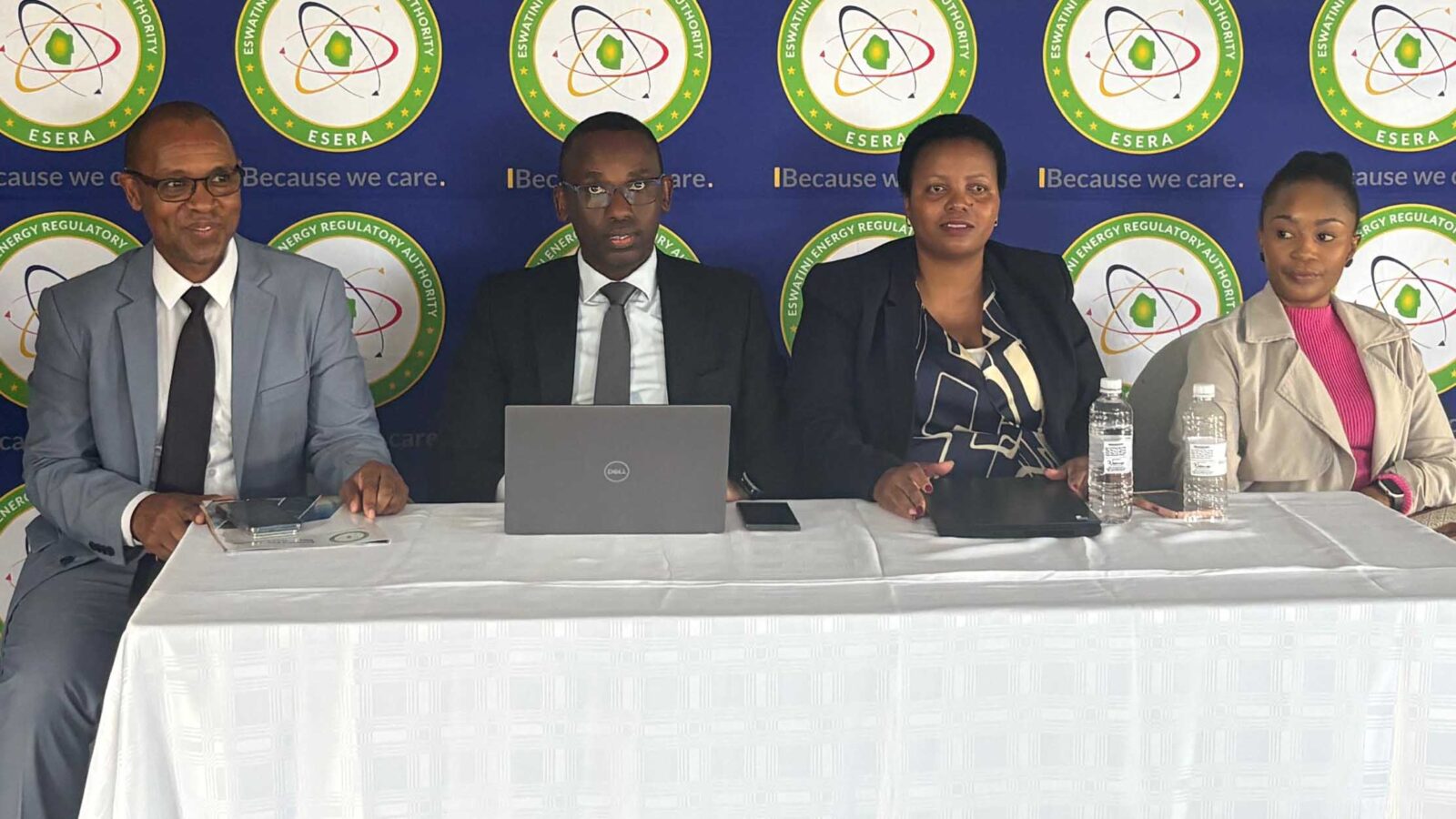
MBABANE – EEC has applied for an average electricity tariff increase of 20.67 per cent for the 2026/27 financial year.
The entity has cited rising import costs and an under-recovery recorded in the previous financial period. The proposed increase was announced by the Eswatini Energy Regulatory Authority (ESERA) which confirmed that the Eswatini Electricity Company (EEC) has formally submitted a tariff adjustment application for review in line with the Energy Regulatory Act and the Electricity Act. If granted, this will mean that for E100, consumers will get only 32 units. Currently, 40 units cost E100. If the application is granted, each unit will cost E3.01.
According to ESERA Chief Executive Officer Sikhumbuzo Tsabedze, EEC’s application is driven by developments during the current 2025/26 financial year, including the expiry and renegotiation of several Power Purchase Agreements (PPAs).
The renegotiated agreements, as revealed by Tsabedze, have resulted in material changes to import tariffs, significantly increasing EEC’s cost of supply. In addition to higher import tariffs, the utility has also cited an audited under-recovery from the 2024/25 financial year, which has further weakened its financial position. “As a result, EEC is applying to the authority for an increase in the revenue requirement for 2026/27 by E437 883 115,” said Tsabedze.
He said the amount is made up of E175 065 326 linked to import tariff escalations, mainly adjustments from power suppliers, including NTCSA/Eskom, EDM and USL, as well as E262 817 788 arising from the 2024/25 under-recovery. Tsabedze explained that, under normal circumstances, electricity tariffs for the 2026/27 financial year would have increased by an average of seven per cent.
However, the additional revenue requirement has resulted in EEC seeking a much higher adjustment. “This translates to an additional 13.67 per cent on top of the seven per cent average tariff increase for 2026/27. Therefore, instead of increasing the 2026/27 tariffs by an average of seven per cent, EEC is requesting an increase of 20.67 per cent,” stated Tsabedze.
The proposed tariffs, if approved, would take effect from April 1, 2026.
*…
Consumers Forum calls for EEC investigation
MBABANE – The Eswatini Consumers Forum has challenged the Eswatini Energy Regulatory Authority (ESERA) to institute a full investigation into the utilisation of funds by EEC.
The call comes after ESERA announced that the Eswatini Electricity Company (EEC) had submitted a tariff adjustment application for an average 20.67 per cent electricity tariff increase, which would take effect in April should it be granted.
Reacting to the development, the Eswatini Consumers Forum Chairman, Mandla Ntshakala, said the proposed adjustment placed an excessive burden on electricity users, particularly against the country’s prevailing economic conditions.
The forum argued that even the initial seven per cent increase, which had been expected to take effect in April, was already unaffordable for many households. “The seven per cent that was initially proposed was already too much for consumers to bear, and the 20.67 per cent being proposed now is even worse,” said Ntshakala.
The organisation further stated that the tariff application failed to take into account the socio-economic realities facing a large segment of the population. According to the forum, more than 30 per cent of the population lives below the poverty line, making a tariff increase of this magnitude particularly damaging.
“To effect a tariff increase this high is worsening the livelihoods of emaSwati from bad to worse. This is a very bad move for consumers, especially given the turbulent economic landscape in the country,” Ntshakala said.
*Full article available on Pressreader*
















Leave a comment