

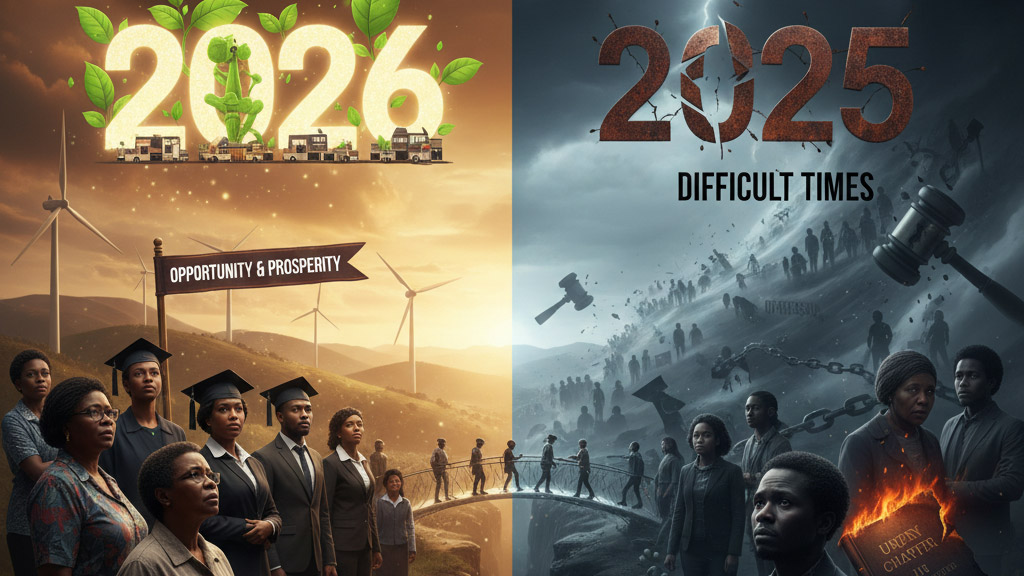
We are grateful that we are now in 2026. Those who have made it have an opportunity to pursue their dreams. Once again, we thank the Almighty God who has provided us the opportunity to cross over to the new year. In our article last week, we reflected on 2025. The year was frankly difficult for millions around the world, particularly in Eswatini. Hence, those who were facing struggles of poverty, unemployment, gender-based violence, broken families, oppression, those who lived in countries at war and many other social ills, would like to quickly forget 2025.
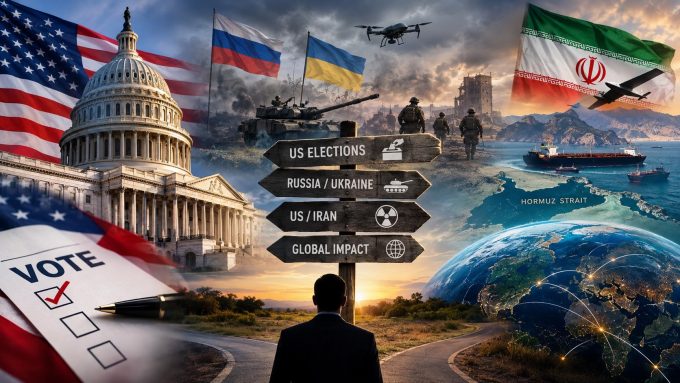
While we all wish for a better year, the recent developments happening in faraway lands where the President of Venezuela was captured by the United States security forces and dragged to US Courts, has shocked the world, both democratic and non-democratic countries. This is because international law, in this instance, has been undermined such that many are asking a difficult question: Is the rule-based system being done away with? Is the United Nations Charter being torn apart by the very country that global citizens look up to for the protection of order at a global level?
It has been interesting that while many countries have expressed shock and disagreement with the United States Government, many more have shied away from outright condemnation of this act. Some like Eswatini, have claimed neutrality. It reminds me of words by Pastor Martin Niemöller, who said: ‘First they came for the communists and I did not speak out because I was not a communist. Then they came for the socialists and I did not speak out because I was not a socialist. They came for the trade unionists and I did not speak out because I was not a trade unionist. Then they came for the Jews and I did not speak out because I was not a Jew. Then they came for me and there was no one left to speak out for me’.
As the world order gets threatened, those who have opted to be silent will only realise the danger when they face the same fate and unfortunately, there will be no one to speak for them.
I am personally worried about President Mauro’s human rights record in his motherland. It has been alleged that thousands of civilians and political opponents have been jailed, many more have lost their lives, while about 7 million are refugees. However, what happened to him does not make it right simply because some of his people around the world were unhappy. It is my hope that the world will unite and put pressure so that this situation can be resolved amicably.
I wish that human rights and dignity should define relations between citizens and their government. The Human Rights Charter in Eswatini 2005 Constitution, should not be just good on paper, but should be a lived experience for all emaSwati.
Poverty and unemployment should be high on the agenda of government, where government should mobilise the private sector to play a significant role in helping the country address these national crisis. We as citizens are also not to be spectators, we should also play our role in ensuring that those who are employed work hard for the country’s economy to improve. Resources should be made available to strengthen small business enterprises, including access to capital to expand their businesses and employ emaSwati, especially young people. Start-up funds should also be accessible to young people keen on starting their own businesses. This should be supported through training, mentorship and an enabling legislative environment.
The country should resolve to unite against corruption. This is because it is the majority that depends on government services that lose out in terms of services. A national movement should emerge that will send a strong message that corruption in Eswatini will be systematically addressed. Those involved should face the long arm of the law.
Institutions that have been suspected of corruption should not deny the problem, but should investigate and put in place policies that will send a strong message that it is wrong.
The gender-based violence scourge should be addressed once and for all. Women and girls should feel safe again. This should include mobilisation of men and boys who should be part of the movement: ‘Not in my name’.
The good men in society drawn from all sectors of society, including policymakers, the church, non-governmental organisations, education sector, the private sector, traditional authorities, youth associations should form part of the movement that will reject the notion that women and girls can be owned by those they love.
Let us not ask ‘what government will do for us but what we can do for our country’, as US former President J.F Kennedy asked the Americans.













Leave a comment