

MBABANE – There could be a strong reason for Minister for Finance Neal Rijkenberg to talk about the necessity of moving many people from informal to formal employment.
In his budget speech delivered on February 27, 2026, the minister said: “The Opium and Habit-forming drugs (Amendment) Bill, 2025 was gazetted towards the end of the last Parliament session and is ready for tabling and onward processing through Parliament. If this is passed, it should move many people from informal to formal employment and create thousands of new jobs.”
If his speech is read together with Eswatini’s focus report of 2025 compiled by the African Development Bank (AfDB), the country could be losing a lot of money in unpaid tax. According to the AfDB report, the informal sector represents 37.4 per cent of the gross domestic product (GDP). The official GDP is E88 billion. Thirty-seven per cent of E88 billion is E32.912 billion.
GDP is the total value of goods and services produced inside a country’s borders during a specific period. It is simply a scorecard used to measure the overall size and health of a nation’s economy. The bank, which finances some of the country’s major infrastructural projects, noted that the informal economy remains a significant barrier to fiscal sustainability as it was also employing about 61.9 per cent of the workforce.
AfDB further observed that informal sector activities largely escape taxation, driven by high indirect tax burdens, limited enforcement capacity and a reliance on self-employment.
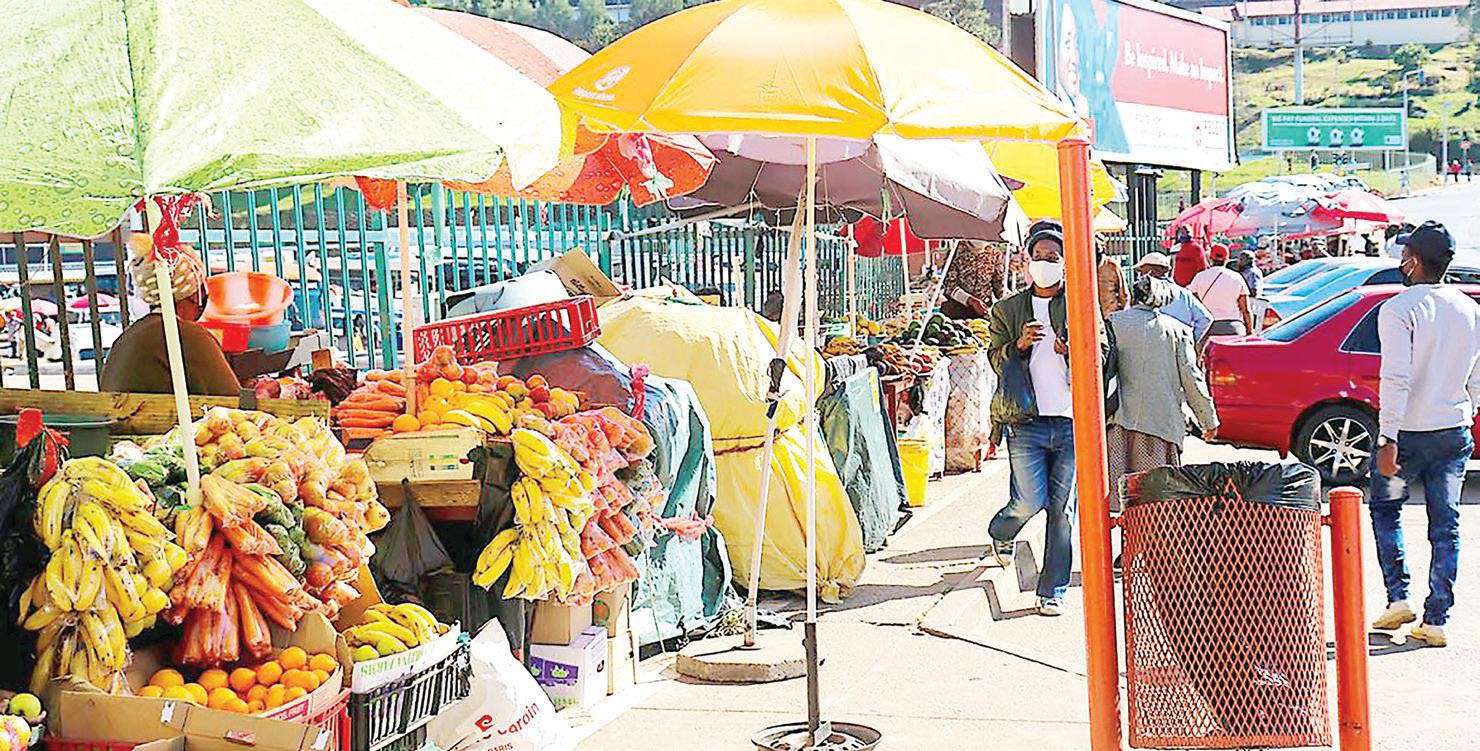
These businesses are typically unregistered, operate on a micro-scale, rely on daily cash or mobile money and operate from homes, roadsides or transport hubs.
The most common informal businesses include but are not limited to street and market traders.
For example, the most visible sectors involve hawkers selling fresh fruits, vegetables, second-hand clothing (locally called bend and pick/dobha phansi) and everyday household goods from pavements, bus ranks and municipal markets. There are also widespread informal businesses known as chicken dust and food stalls. These businesses are often unregistered, typically identified through open-air fast-food operators preparing and selling roasted meat (chicken, beef), braaied maize and localised meals near busy pedestrian areas or townships.
There are also mobile and community spaza shops, which are typically small, home-based convenience stores operating without formal licences, supplying everyday necessities like bread, sugar, paraffin and airtime to local neighbourhoods.
To further illustrate how big the informal economy is, the shadow economy also takes into account informal public transport providers who often operate privately-owned, unregistered or semi-regulated minibuses, school buses as well as informal pickup trucks.
There are also other essential informal services such as grass-cutters, bush mechanics, shoe-shiners and domestic or care workers who secure jobs by word-of-mouth rather than through formal employment agencies.
The country’s major and small towns are also home to significant house call hairdressers and barbers, with many individuals operating mobile or open-air salons while others set up chairs in parks or travel directly to client homes to provide braiding, shaving and hair treatments.
In its observations, the bank said while government offers various tax incentives, including reduced corporate rates and exemptions to attract FDI, such measures are often insufficient in the absence of strong governance, reliable infrastructure and legal certainty. It is said that Eswatini must urgently implement comprehensive tax reforms and strengthen governance to improve fiscal sustainability and attract much-needed investment. The bank further noted that in the extractive sector, outdated legal frameworks lack transparency requirements, such as the public disclosure of company payments.
*Full article available on Pressreader*











Leave a comment