

MBABANE – Eswatini must diversify financing sources, strengthen tax reforms and deepen regional integration to withstand rising global economic shocks, the AfDB has warned in its report.
The African Development Bank (AfDB) Group has urged Eswatini to urgently diversify its financing sources, deepen engagement with multilateral development banks for concessional financing and risk mitigation and leverage diaspora remittances and climate-aligned financing instruments such as green bonds.
This is contained in the latest African Economic Outlook 2026 report themed ‘Mobilising Africa’s Development Financing at Scale in a Fragmented World’, where the continental lender warned that African countries, including Eswatini, must strengthen domestic resource mobilisation and improve access to long-term capital amid growing global economic uncertainty.
The report said revenue-backed financing instruments linked to tolls and fuel levies could strengthen the country’s creditworthiness, while regional integration and stronger regulatory and debt management frameworks would improve access to long-term capital.
“Priority actions include strengthening domestic revenue mobilisation through digital tax reforms and improved public investment management, developing domestic bond markets and debt management capacity and expanding bankable public-private partnerships and climate-resilient infrastructure projects to crowd in private capital at scale and support inclusive and sustainable development outcomes,” the report stated. The AfDB’s recommendations come as Eswatini, like many African economies, faces mounting pressure from rising global uncertainty, supply chain disruptions, debt vulnerabilities, inflationary risks and constrained fiscal space.
*…
Eswatini growth outlook remains positive
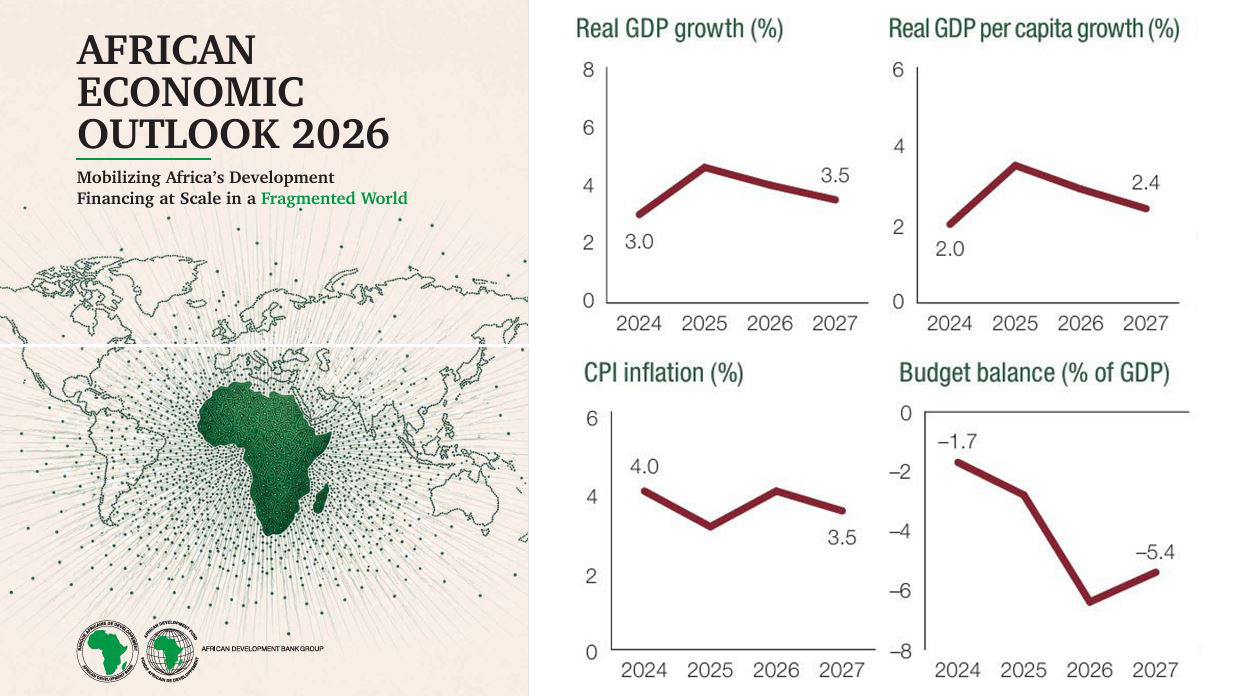
MBABANE – For Eswatini specifically, the AfDB projects real gross domestic product (GDP) growth of 4 per cent in 2026 before moderating slightly to 3.5 per cent in 2027.
Inflation is projected at 4 per cent in 2026 and 3.5 per cent in 2027.
The report also forecasts that Eswatini’s current account deficit will stand at one per cent of GDP in 2026 before widening slightly to 1.2 per cent in 2027, while the fiscal deficit is projected at 6.4 per cent of GDP in 2026 and 5.4 per cent in 2027.
While the growth outlook remains relatively stable, the AfDB cautioned that the country remains vulnerable to rising import costs, tightening global financial conditions and weaker external demand.
Southern Africa’s economic growth is expected to slow from 2.3 per cent in 2025 to 2.1 per cent in 2026 due to supply chain shocks and disruptions associated with ongoing geopolitical tensions in the Middle East.
The report warned that the spike in global oil and gas prices is fuelling inflationary pressures across Africa, especially for oil-importing economies such as Eswatini.
According to the AfDB, disruptions to trade flows through the Strait of Hormuz have increased shipping costs, insurance premiums and fuel prices globally.
The report highlighted that more than 13 per cent of Africa’s imports pass through the Strait of Hormuz, making countries heavily dependent on imported fuel and fertilisers particularly vulnerable to rising costs.
For Eswatini, this could translate into higher fuel prices, increased transport costs and rising food inflation, placing additional pressure on households and businesses.
The AfDB also noted that higher oil prices have widened trade and current account deficits across Africa and triggered currency depreciations in at least 29 African countries.
*Full article available on Pressreader*

















Leave a comment