

White maize (Zea mays L.) is a strategic staple crop in Eswatini and across Southern Africa. As the crop approaches harvest, it becomes highly vulnerable to insect pests that reduce grain quality, weight and market value. Soil Science and Plant Nutrition Research Officer Bongani Mvubu says post-harvest losses during storage can exceed 30 per cent if proper protection measures are not implemented.
PART A: Field Protection and Maturity
Major field pests at maturity
At physiological maturity (black layer formation; husks drying; moisture ±20–25 per cent), maize is vulnerable to insect infestation.
Major field insect pests at maturity
Fall armyworm
Damage at harvest stage:
- Larvae feed on cobs and kernels.
- Creates entry points for fungal infections (e.g., aflatoxin contamination).
- Reduces grain quality.
Control measures:
- Late-season scouting (2–3 weeks before harvest).
- Targeted application of recommended insecticides where infestation exceeds threshold.
- Biological control agents (e.g., Bacillus thuringiensis products).
- Early harvest to reduce exposure period: Harvest when moisture is between 18 per cent and 22 per cent to reduce insect exposure.
- Field hygiene: Remove heavily infested cobs and destroy crop residues after harvest to eliminate pest breeding grounds.
Maize weevil (field-to-storage transition pest)
Damage:
- Begins infestation in the field on drying cobs.
- Lays eggs inside kernels.
- Infestation continues in storage.
Control measures:
- Timely harvesting once moisture reaches 20–22 per cent.
- Avoid leaving mature cobs in the field.
- Maintain clean surroundings around fields
Field protection best practices before harvest
Timely Harvesting
- Harvest when moisture is 18–22 per cent.
- Delayed harvesting increases insect exposure.
- Avoid over-drying in the field.
Field hygiene
- Remove heavily infested cobs.
- Destroy crop residues after harvest.
- Control volunteer maize plants.
Bird and rodent protection
- Field fencing.
- Community watch systems.
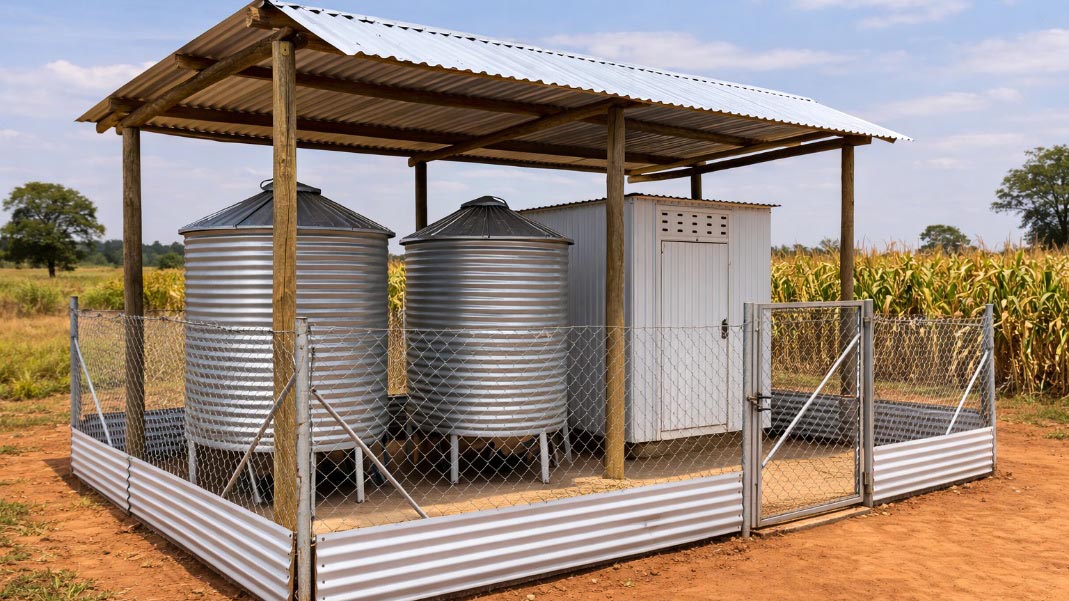
- Use of raised cribs (1m above ground with rat guards).
PART B: Post-harvest handling and drying
Proper drying is the most important insect control step.
Drying recommendations
- Dry maize to 12–13 per cent moisture for safe storage.
- Use raised platforms, tarpaulins, or drying cribs.
- Avoid direct contact with soil.
- Do not heap moist maize overnight.
Signs maize is dry:
- Hard kernels.
- Crisp husks.
- Metallic sound when grains are poured.
When to shell maize
Maize should be shelled once it has reached the safe storage moisture level of 12–13 per cent. Shelling too early when moisture is high (above 15 per cent) can cause mechanical damage to the kernels, making them more susceptible to mold and secondary pest infestations.
Storage diseases (fungal/mold)
While the guide focuses on insects, moisture management is key to preventing storage diseases:
- Aflatoxin Contamination: Often follows insect damage (like Fall Armyworm) which creates entry points for Aspergillus fungi.
- Prevention: Ensure grain is dried below 13% and maintain a cool, dry storage environment to prevent mold smells and heating.
PART C: Storage protection against insects
Storage methods for white maize protection
Hermetic storage (recommended)
- Use triple-layer hermetic bags (e.g., PICS bags).
- No insecticide required.
- Kills insects by oxygen depletion.
- Suitable for smallholder farmers.
Chemical grain protectants
Use only registered products approved in Eswatini.
Common active ingredients:
- Actellic Super (Pirimiphos-methyl + Permethrin)
- Deltamethrin dust formulations
Application guidelines:
- Apply at recommended dosage (do not overdose).
- Mix thoroughly with clean, dry grain.
- Wear protective clothing.
Botanical and traditional options
- Neem leaf powder.
- Wood ash (thin layers between grain).
- Chilli powder (repellent effect).
Note: These are moderately effective and best for small-scale storage.
Monitoring during storage
Inspect grain monthly for:
- Live insects.
- Powder residues.
- Heating or moisture buildup.
- Mold smell.
If infestation is detected:
- Sun-dry grain immediately.
- Re-treat if necessary.
- Improve ventilation.
“When these practices are implemented correctly, post-harvest losses can be reduced to below 5 per cent, ensuring food security, improved income and better grain quality for household consumption and marketing,” he concluded.


















Leave a comment