

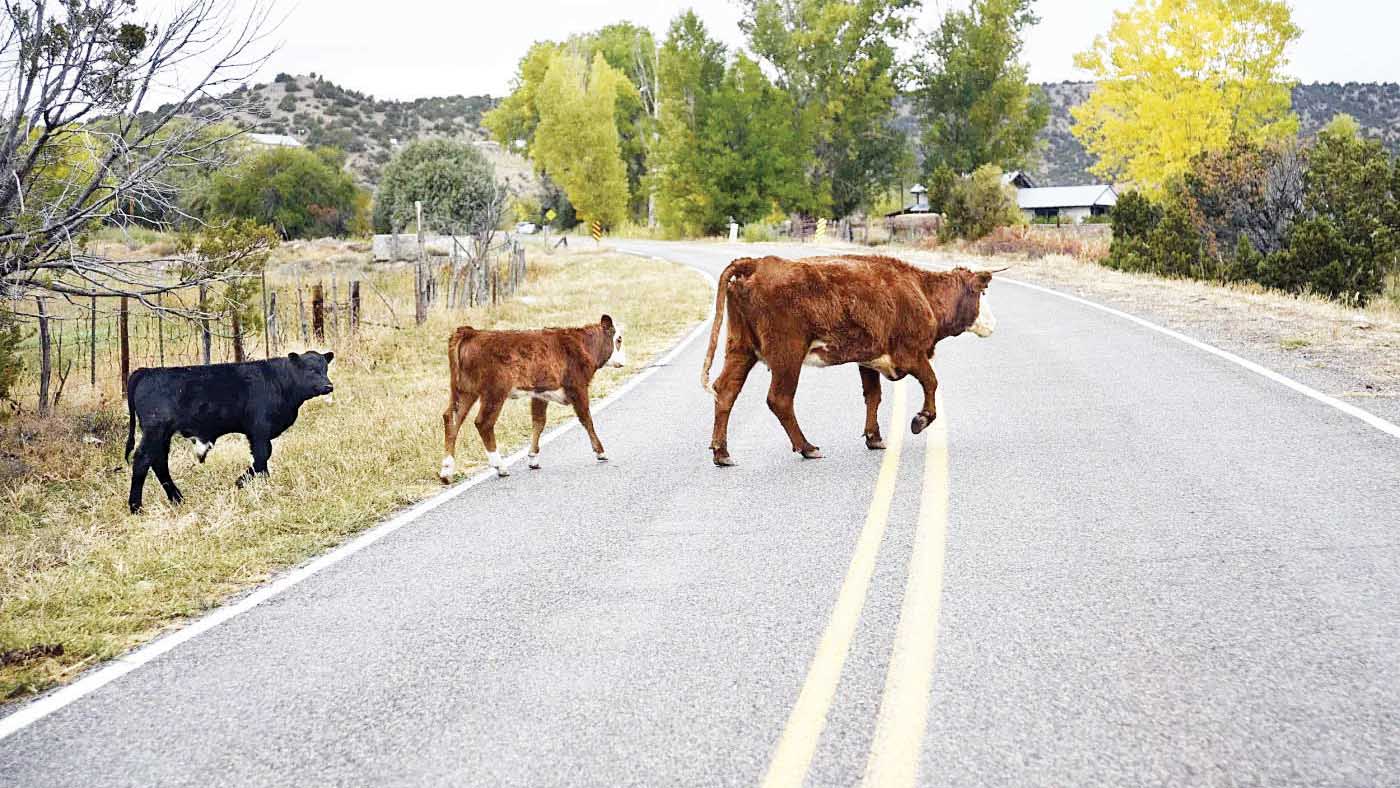
The winter season will soon be tightening its grip and we see daylight hours shortened, motorists will be increasingly driving in low-visibility conditions in the evening and early mornings. Beyond the seasonal challenges, a persistent and growing danger is putting lives at risk on the country’s roads, stray livestock.
Cattle roaming freely onto public roads have become a serious safety hazard, contributing to accidents that often result in fatalities, injuries, damage to vehicles and even loss of livestock. Authorities say the situation is becoming more alarming, particularly during early mornings and evenings when visibility is at its poorest.
Information supplied by the Royal Eswatini Police Service (REPS) highlights that stray livestock continue to pose a major threat to road users.
As a law enforcement agency, REPS is urging farmers to take full responsibility for their animals and ensure they are properly always secured, away from public roads.
Police have also emphasised that they act swiftly when livestock are found wandering, especially at night or during peak traffic hours when the risk of collisions is significantly higher.
In addition, the Ministry of Agriculture has issued a stern warning to farmers, stressing that failure to control livestock is directly contributing to road accidents. The ministry has called on livestock owners to take immediate and responsible action to keep animals off the roads, warning that negligence will not be tolerated.
The law is clear on the matter. Section 77(1) of the Road Traffic Act No. 6 of 2007 prohibits any person from allowing livestock to be on public roads. Offenders face a fine of up to E2 000 or imprisonment of up to one year.
Authorities further caution that wh e n l ive s to c k are being moved, proper safety measures must be followed. At night, animals should be accompanied by a visible red or white light to alert motorists. Farmers are also advised to avoid moving livestock during peak traffic periods, as animals can easily become uncontrollable and stray into traffic, causing serious accidents. For repeat offenders, the penalties remain firm. The law states that livestock owners are fully liable if their animals cause an accident. Under Section 77(7) of the same Act, owners can face fines or imprisonment if their negligence leads to a collision. Meanwhile, livestock found roaming on roads may be impounded. In terms of Section 77(6), police and traffic officers are authorised to seize such animals and place them in designated pounds or shelters. Owners are then required to follow official procedures to reclaim them, including paying a fee based on the number of days the animals have been held. Authorities are calling for collective responsibility, warning that failure to act could result in more preventable tragedies on the roads.
















Leave a comment