

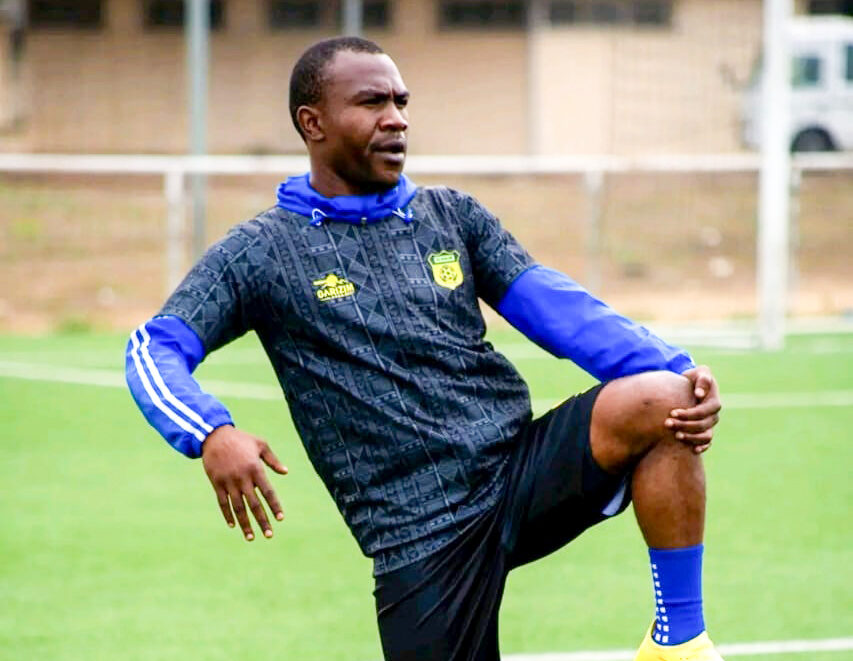
MBABANE – When a footballer secures a landmark move abroad, the narrative usually centres on career progression, tactical adjustments and lucrative wage packets.
For Eswatini international Junior Magagula, however, his dream transfer from Royal Leopard to Democratic Republic of Congo powerhouse AS Maniema Union has been instantly overshadowed by a terrifying reality off the pitch.
The gifted Sihlangu midfielder has stepped straight into a nation gripped by what experts consider one of its most severe Ebola outbreaks to date.
The human cost in the DRC is already staggering. According to recent reports, the death toll from this rapidly expanding epidemic has surged past 1 700, with official figures confirming 1 707 fatalities out of 3 802 recorded cases since the outbreak was declared on 15 May. The crisis, driven by the rare Bundibugyo strain of the virus, has forced health authorities into high gear; over 17 000 contacts are currently being monitored daily, while the World Health Organisation (WHO) races to advance experimental treatments and preventive vaccines at an unprecedented speed.
For Magagula, the anxiety stems from how the virus operates. Ebola spreads primarily through direct contact with the body fluids of an infected animal or person, as well as through contact with materials contaminated by these fluids. In the high-intensity, close-contact environment of professional sport, the threat is impossible to ignore.
While AS Maniema Union are based in Kindu, within the Maniema Province, the squad is far from isolation. Although the primary epicentre remains in neighbouring Ituri Province, the epidemic has relentlessly expanded into South Kivu and Tshopo. Because Maniema directly borders both affected regions, the threat of regional spillover remains critically high.
Furthermore, life in the domestic Linafoot league (DR Congo top division) guarantees ongoing exposure risks. Magagula and his new teammates will be forced to travel regularly across provinces, including high-risk zones in the east. The heavy flow of inter-provincial trade and travel along these transit corridors significantly heightens the danger for travelling squads.
The severity of the crisis was laid bare just months ago ahead of the 2026 International Federation of Association Football (FIFA) World Cup. The DRC national team were forced to cancel all domestic build-up events in Kinshasa.
These included a fan training session and an official send-off ceremony with Head of State Félix Tshisekedi, choosing instead to relocate their preparations to the safety of Belgium. Yet, despite the formidable shadow hanging over his client’s new chapter, Magagula’s Eswatini-based agent, Alimasi ‘Adebayo’ Saleh, remains publicly unfazed, insisting that ‘all is well’.
Whether that optimism holds true will depend on how effectively the club can insulate its new foreign star. Magagula has shown immense courage by trading the quiet domestic circuit of Eswatini for the fierce competition of Linafoot. Now, the midfielder faces the most daunting challenge of his career: Chasing glory on the pitch while navigating a lethal public health crisis off it.













Leave a comment