

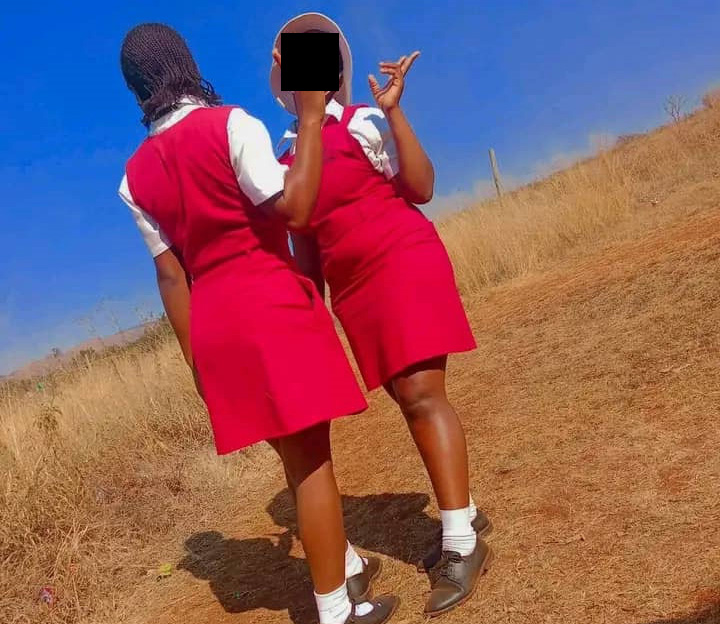
MBABANE – More than 12 000 pupils posting pictures of themselves in school uniform online have triggered fears that innocent school trends could expose children to predators and abuse.
Posting a picture in school uniform may look innocent for thousands of pupils across Eswatini, but parents are increasingly concerned about dangers children may not understand.
Eswatini News has established that posting photographs in school uniform has become an ordinary way for pupils across many schools in the country to participate in an online trend.
A visit to one of the commonly used groups showed massive activity from pupils and adults who had also joined, with some pupils posing alone while others appeared in groups, proudly displaying uniforms that identify the schools they attend.
However, behind the seemingly innocent photographs, parents are beginning to fear that the growing popularity of the Eswatini School Uniform Challenge, a Facebook group with more than 12 000 members, could be creating a digital catalogue of identifiable children that unscrupulous adults may exploit.
Parents who spoke to this publication said their concern was not that pupils were deliberately doing anything wrong. Rather, they feared children may not fully understand who is watching, saving, commenting on their posts or attempting to contact them.
The group contains pupils from high schools across the country, dominated mainly by children from rural communities, with some posts attracting dozens of comments and reactions.
When this publication searched the Facebook page, thousands of photographs of pupils in school uniforms were found.
The publication, after following the group for the better part of this week, found that male pupils appeared less likely to post individual pictures, although they were sometimes visible in photographs with female pupils.
Concerned parents pointed out that the issue was not about stopping children from expressing themselves online, but about what happens after the photograph has been uploaded.
Inappropriate
A parent from Lobamba, who requested anonymity because of the sensitivity of the matter, said she became concerned after noticing comments from men which she considered inappropriate on a platform involving schoolchildren.
She stressed that she was not opposed to pupils participating in social media trends, but feared that children could unknowingly attract adults with intentions far removed from the innocent purpose of the posts.
“I am deeply troubled by the presence of the group. I am in no way against it; however, it is the fear of what lies ahead which the children might be oblivious to,” she said.
Her concern centred on the possibility that a photograph intended simply to attract likes and comments could provide strangers with information about a child’s appearance, school and, potentially, social circle.
For a predator, she said such information could become the beginning of an attempt to establish contact.
The parent explained that, from her experience, the risk does not necessarily end with the photograph, since a child who receives a friendly comment may respond to a stranger.
This may then trigger a conversation that can move from the public comments section into private messages, where parents and guardians may have little visibility.
From there, a stranger can potentially ask for a telephone number, request another photograph or attempt to build an emotional relationship with the child. It is this possibility that has prompted calls for parents, schools and government to take the issue more seriously.

















Leave a comment