

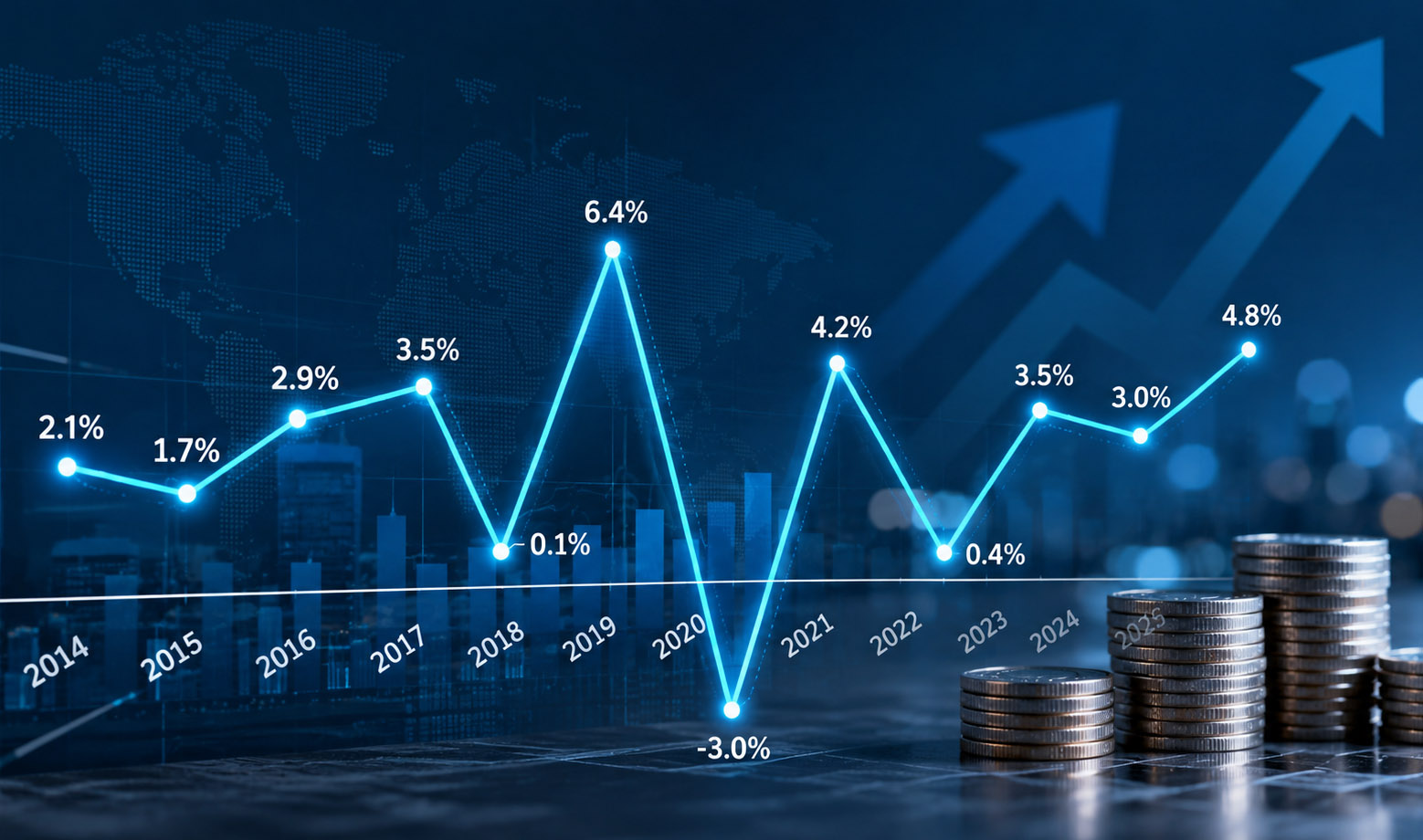
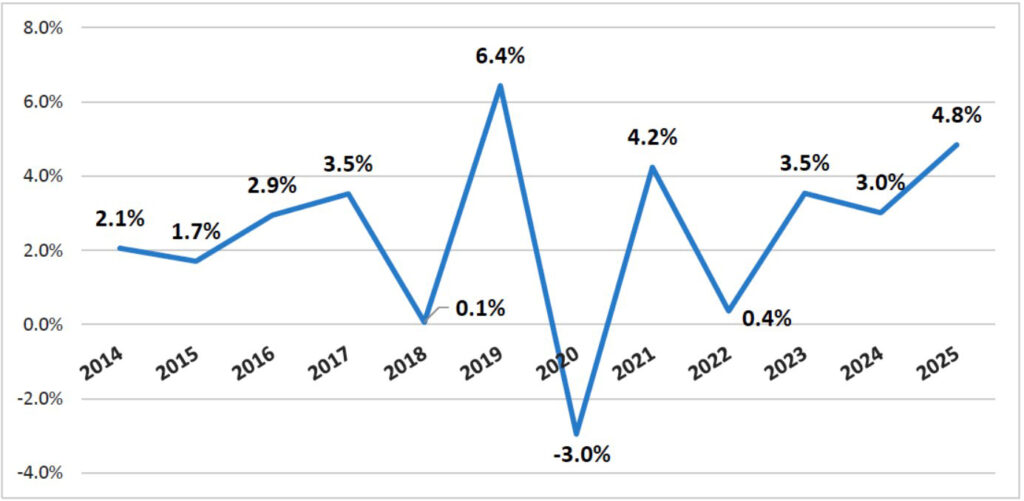
MBABANE – Eswatini’s Gross Domestic Product (GDP) reached E96.6 billion in 2025, with the economy recording real growth of 4.8 per cent, up from 3.0 per cent in 2024.
This is according to the Central Statistical Office (CSO).
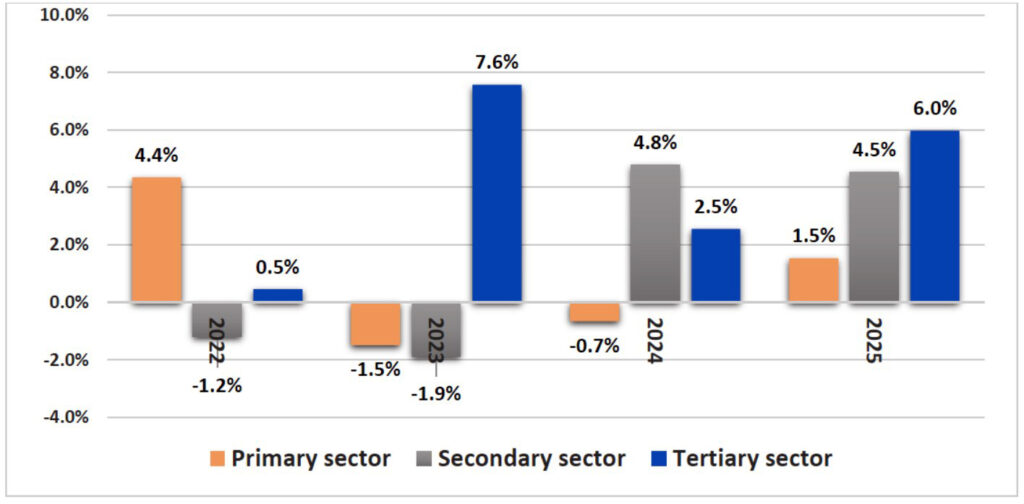
The latest Annual Gross Domestic Product Bulletin 2025 shows that the stronger economic performance was driven mainly by the tertiary sector, which expanded by 6.0 per cent during the year.
The GDP figure represents the monetary value of final goods and services produced within Eswatini’s borders during the year. The CSO compiles the national accounts in line with the System of National Accounts (SNA) 2008 and the International Standard Industrial Classification of All Economic Activities (ISIC), Revision 4.
The bulletin records GDP at current prices at E96.618 billion in 2025, compared with E90.866 billion in 2024. At constant 2019 prices, which are used to measure real economic growth after removing the effect of price changes, GDP increased from E72.251 billion to E75.749 billion.
The acceleration from the revised 3.01 per cent growth recorded in 2024 reflects a broad improvement across significant parts of the economy, although performance differed considerably between sectors.
The tertiary sector remained the largest contributor to economic activity, accounting for 52.3 per cent of GDP and recording real growth of 6.0 per cent.
Several service industries recorded particularly strong performances during the year.
Information and communication grew by 20.5 per cent, while professional, scientific and technical activities expanded by 11.7 per cent. Human health and social work activities increased by 7.9 per cent, while public administration and defence grew by 6.5 per cent.
Wholesale and retail trade, one of the economy’s major activities, expanded by 6.1 per cent, while financial and insurance activities grew by 1.8 per cent. Transport and storage increased by 4.1 per cent, while real estate activities grew by 2.7 per cent.
The bulletin also recorded particularly strong growth in ‘other services’, which increased by 30.8 per cent.
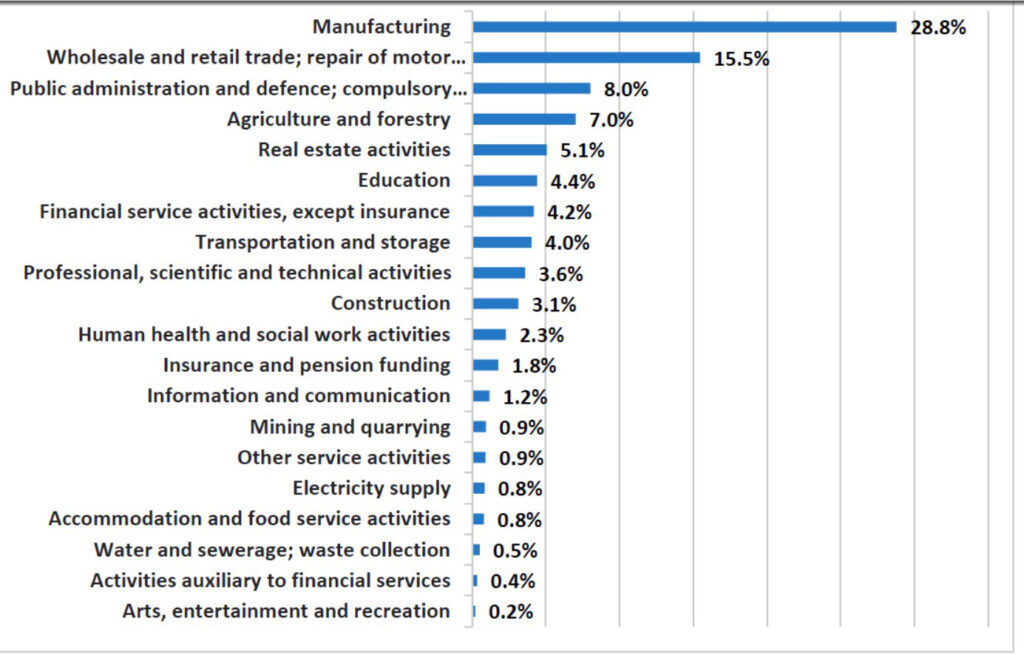
The composition of the economy underlines the importance of services, with wholesale and retail trade accounting for 15.5 per cent of GDP, public administration and defence 8.0 per cent, financial and insurance activities 6.3 per cent, and real estate 5.1 per cent.
















Leave a comment