MBABANE – Businessman and political activist Zweli Dlamini will remain in custody after the Supreme Court dismissed his appeal against the refusal of bail by the High Court.
The Supreme Court judgment cites the seriousness of the charges Dlamini faces, his dual citizenship and the risk that he could evade trial by crossing into South Africa.
The apex court upheld the High Court’s decision to deny Dlamini bail in a case involving charges under the Arms and Ammunition Act of 1964, the Explosives Act of 1961 and the Suppression of Terrorism Act of 2008. He is accused of being involved in a plot to destabilise the Incwala Ceremony last year.
Dlamini, who holds both Eswatini and South African citizenship, had challenged the refusal of bail, arguing that the lower court had misdirected itself when assessing whether he was likely to abscond and when considering his alleged medical conditions.
However, the Supreme Court, comprising Judge Margriet van der Walt, Judge Stanley Maphalala and Judge Jacobus Annandale, found no misdirection that justified interfering with the High Court’s decision.
The judgment stated that the High Court had relied on the particular facts and circumstances of the case in determining that refusing bail was in the interests of justice.
According to the judgment, the charges followed surveillance by the Royal Eswatini Police Service concerning an alleged suspected plot to disrupt the Incwala Ceremony.
The court stated that Dlamini, who is a member of PUDEMO, was arrested and charged after police investigations. The allegations against him included the possession of a military green M26 high-explosive grenade, a 9mm Glock semi-automatic pistol and various rounds of ammunition.
The judgment states that Dlamini pointed out the items to police at his residence in Eswatini.
The items listed included a Glock pistol with 15 rounds of live ammunition, an additional 15 rounds of 9mm ammunition, a 5.56 calibre magazine containing 20 live rounds, 26 rounds of 38mm ammunition, 23 rounds of 9mm ammunition and 15 rounds of 9 x 19mm ammunition.
Dlamini disputed aspects of the allegations. He alleged that he had been tortured and that the pointing out of the items had not been done freely and voluntarily.
He also stated that he held a South African firearm licence for the Glock pistol and believed the grenade was a dummy device that had attracted his interest because he operated a business in the security and self-protection sector.
According to the judgment, the Crown disputed his claim concerning the grenade, stating that a preliminary forensic assessment indicated that it was a live high-explosive fragmentation grenade.
The judgment also refers to information allegedly recovered from Dlamini’s mobile phone linking him to other persons of interest. Dlamini denied those allegations.
The Supreme Court did not determine his guilt in the appeal. It considered the allegations in the context of whether he should be released on bail pending trial.
A key issue in the appeal was whether Dlamini was likely to evade trial if released on bail.
The High Court had refused bail partly because the businessman had residences and business interests in both Eswatini and South Africa. The court was concerned that he could cross into South Africa, where he also had a home and business interests, if he decided not to attend trial.
Dlamini had proposed stringent bail conditions, including a high bail amount, reporting daily or weekly to a police station and surrendering his local travel document and South African identity documents.
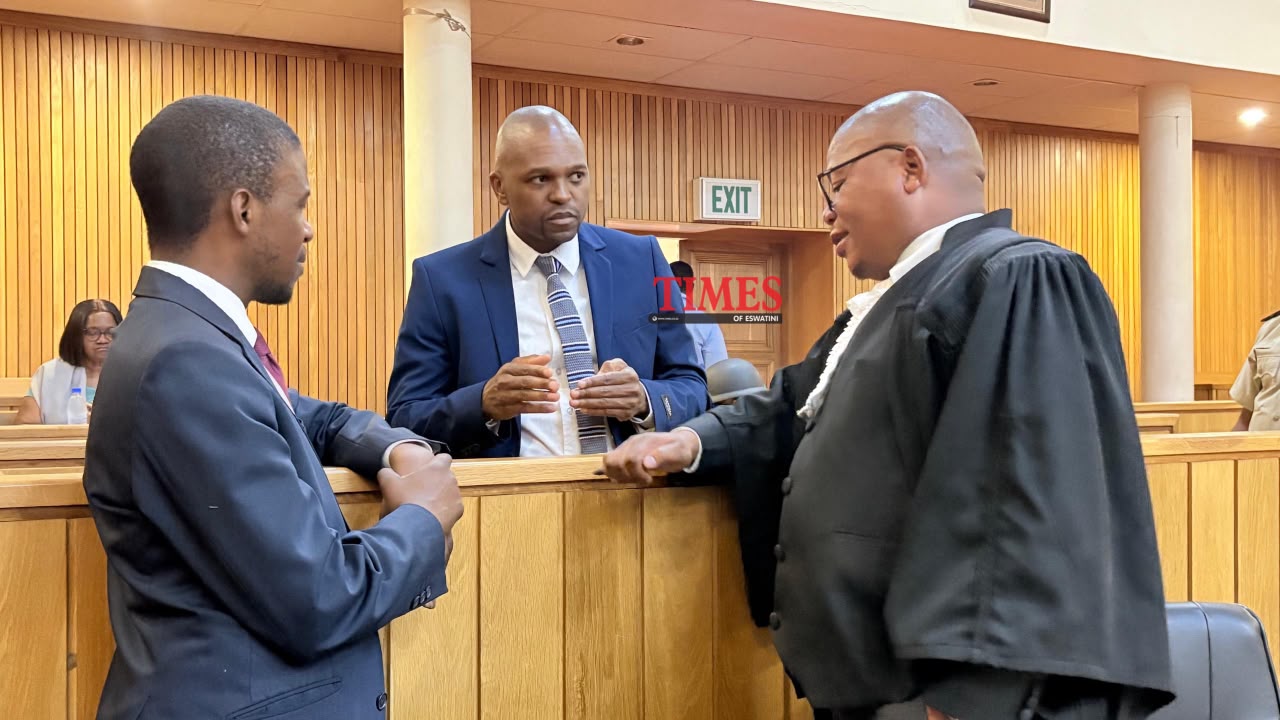
His legal representative, Human Rights Lawyer Sibusiso Nhlabatsi, also referred to the existence of an extradition treaty between Eswatini and South Africa.
However, the High Court found that the proposed conditions would not adequately prevent him from evading trial, considering the proximity of the two countries and the existence of informal border crossings.
On appeal, Dlamini argued that dual citizenship alone did not establish that he was a flight risk. His lawyer submitted that he had cooperated with police during his arrest and questioning and had undertaken under oath to comply with any bail conditions imposed by the court.
The defence also argued that there was no evidence that Dlamini had used informal border crossings, made preparations to flee or expressed an intention to evade trial.
The Crown opposed the appeal, maintaining that the circumstances supported the conclusion that there was a likelihood of absconding.
In its assessment, the Supreme Court considered Dlamini’s dual citizenship, residences and business interests in both countries, the seriousness of the charges and the potential consequences of a conviction.
The court noted that the alleged possession of a live fragmentation grenade and ammunition was materially different from cases involving non-violent conduct, such as chanting slogans or wearing political clothing.
It also considered the potential custodial sentence that could follow a conviction and the enforceability of any bail conditions.
“The likelihood of absconding did not have to be established through direct evidence of an intention to flee. Rather, the court had to examine the circumstances to determine whether there was alikelihood that an accused person would evade trial,” states the judgment.
The Supreme Court concluded that the High Court had relied on concrete facts and had not misdirected itself in refusing bail. Dlamini also argued that his health should have been considered when the High Court assessed his bail application.
He maintained that the necessary treatment was not adequately available at the correctional facility and that continued detention posed a risk to his health.
The Crown disputed the claim, stating that Dlamini had indicated during his arrest and when he was handed over to Correctional Services that he was not taking medication.
The Supreme Court noted that Dlamini had not attached medical documentation or an independent affidavit supporting his claims, despite having had an opportunity to do so.
In dismissing the appeal, the court stated that the circumstances justified the refusal of bail in the interests of justice. Principal Crown Counsel Mandla Dlamini appeared for the prosecution. The businessman’s trial is scheduled for November 2, 4 and 5, 2026.